Sustainable Growth and Competitive Advantage: Tesla Business Strategy in the EV Market

1 Introduction
The twenty-first century has witnessed a seismic transformation in the global automotive industry, driven largely by the twin imperatives of sustainability and technological innovation. As environmental concerns mount and governments across the world implement stricter emissions regulations, the demand for cleaner, more energy-efficient modes of transportation has escalated dramatically. Within this evolving landscape, the electric vehicle (EV) market has emerged as one of the most dynamic and disruptive sectors. Once dismissed as niche and impractical, EVs are now considered the future of mobility, with projections suggesting exponential growth over the next two decades.
At the center of this revolution stands Tesla, Inc., a company founded in 2003 with the ambitious vision of accelerating the world’s transition to sustainable energy. From its early beginnings with the Tesla Roadster—a luxury sports car built on the chassis of a Lotus Elise—to its present status as the world’s most valuable carmaker by market capitalization, Tesla’s trajectory is nothing short of extraordinary. Unlike traditional automakers, Tesla has not only manufactured vehicles but also fundamentally redefined the contours of the automobile business model. Its vertically integrated strategy, direct-to-consumer sales approach, investments in battery technology, and development of autonomous driving capabilities collectively represent a paradigm shift in how cars are designed, produced, marketed, and consumed.
Tesla’s success has also ignited a competitive response from both established giants such as Volkswagen, Toyota, and General Motors, as well as emerging players like BYD, Rivian, and NIO. As the EV market becomes increasingly crowded, Tesla’s ability to sustain its growth and defend its competitive advantage remains an important area of academic and professional inquiry.
The global EV market, valued at approximately USD 163 billion in 2020, is projected to exceed USD 800 billion by 2030. This growth is propelled by rising consumer awareness, improvements in battery efficiency, falling costs of lithium-ion technology, and supportive government incentives such as subsidies, tax rebates, and emissions targets. Yet, despite this growth, challenges persist—including supply chain vulnerabilities, regulatory uncertainties, and intense competition from both incumbent automakers and new entrants.In this context, Tesla serves as a fascinating case study of a company that has successfully positioned itself as a global leader in sustainable transportation. Examining Tesla’s strategy offers insights not only into how it has achieved rapid growth but also into whether its competitive advantage can be sustained in the long run.
1.2 Rationale of the Study
The rationale for this dissertation stems from the growing academic and managerial interest in sustainable growth and competitive advantage in the era of disruptive innovation. Tesla is more than an automaker; it is a technology company, a clean energy firm, and a disruptor in multiple industries simultaneously. Its unique trajectory provides fertile ground for analysis across multiple dimensions of business administration, including strategy, innovation, marketing, finance, and sustainability.Firstly, Tesla’s growth story challenges conventional wisdom. Unlike many startups, Tesla pursued an aggressive expansion strategy while maintaining an aura of exclusivity and technological superiority. This combination enabled it to grow rapidly while building strong brand loyalty. However, questions remain about whether Tesla can continue this pace of growth as competition intensifies and the EV market matures.
Secondly, Tesla’s competitive advantage is complex and multifaceted. It is derived not only from its cutting-edge technology—such as long-range batteries and autonomous driving software—but also from its brand positioning, charismatic leadership under Elon Musk, and vertically integrated supply chain. Understanding how these factors interact to sustain Tesla’s edge is vital for both scholars of strategy and practitioners in the field.Thirdly, the case study of Tesla offers valuable lessons for policymakers, investors, and competitors. Policymakers can better understand how regulatory frameworks influence EV adoption. Investors can gain insights into how sustainability and innovation create long-term value. Competitors, both traditional automakers and new entrants, can learn how to respond strategically to Tesla’s disruption.
In short, this dissertation seeks to contribute to the academic literature on sustainable business strategy while also offering practical insights for organizations navigating the challenges of rapid innovation and environmental responsibility.The central research problem addressed in this dissertation is: How can Tesla sustain its growth and maintain competitive advantage in the increasingly competitive and fast-evolving global EV market?
This problem arises from the tension between Tesla’s current market dominance and the challenges it faces moving forward. On one hand, Tesla has achieved extraordinary success, capturing global attention and setting new benchmarks in automotive technology. On the other hand, sustaining this advantage requires navigating a highly dynamic environment characterized by:
- Rapid technological changes (battery innovation, AI, autonomous driving).
- Regulatory pressures across different markets.
- Increasing competition from both incumbents and startups.
- Supply chain risks related to rare earth materials such as lithium and cobalt.
- Criticisms related to workplace culture, governance, and product quality control.
By exploring this problem, the dissertation aims to uncover whether Tesla’s current strategies are sufficient to secure long-term sustainability or whether new approaches are required.
This introductory chapter has laid the foundation for the dissertation by situating Tesla within the broader context of the EV industry and the global sustainability agenda. It has articulated the rationale for the study, defined the research problem, and established the aim, objectives, and research questions. The scope and limitations have been clarified, and the overall structure of the dissertation has been presented.
As the dissertation unfolds, the focus will shift toward a detailed exploration of the academic literature on competitive advantage and sustainability, followed by a rigorous case study analysis of Tesla. Ultimately, the study seeks to determine whether Tesla can continue to grow sustainably while maintaining its competitive advantage in a rapidly changing industry.

2. LITERATURE REVIEW
2.1 Introduction
The literature review serves as the intellectual backbone of this dissertation, providing a comprehensive exploration of the theories, frameworks, and scholarly debates that underpin the study of sustainable growth and competitive advantage. By analyzing established models of strategic management, innovation, and sustainability, this chapter situates Tesla within broader academic and industry conversations.The review is organized into four broad domains. First, it examines theoretical foundations of competitive advantage, including Porter’s frameworks, the Resource-Based View (RBV), and dynamic capabilities. Second, it explores the literature on sustainable business strategy, with an emphasis on corporate social responsibility (CSR), environmental, social, and governance (ESG) considerations, and triple bottom line approaches. Third, it discusses innovation and disruption theories, particularly Christensen’s theory of disruptive innovation and Schumpeter’s notion of creative destruction. Finally, the chapter reviews the emerging body of work on the EV industry, situating Tesla within the global context of sustainability, policy, and competition.
By synthesizing these diverse strands of literature, this chapter lays the foundation for the case study analysis of Tesla’s strategic growth and competitive positioning.
2.2 Theoretical Foundations of Competitive Advantage
2.2.1 Porter’s Frameworks: Five Forces and Generic Strategies
Michael Porter’s work remains foundational in strategic management. His Five Forces model (Porter, 1979) analyzes the competitive dynamics of an industry by examining five determinants: the threat of new entrants, the bargaining power of suppliers, the bargaining power of buyers, the threat of substitutes, and competitive rivalry among existing firms.In the context of the EV market, Porter’s framework highlights both opportunities and challenges for Tesla. On one hand, high capital intensity, technological complexity, and regulatory barriers make it difficult for new entrants to compete at Tesla’s scale. On the other hand, competition is intensifying as incumbents like Volkswagen and Toyota, alongside new entrants like Rivian and NIO, aggressively enter the EV space. The bargaining power of suppliers, especially those controlling scarce resources such as lithium and cobalt, also poses a significant challenge to Tesla’s supply chain.Porter’s generic strategies—cost leadership, differentiation, and focus—offer further insights into Tesla’s positioning. Unlike traditional automakers who compete primarily on cost, Tesla has pursued a differentiation strategy, emphasizing cutting-edge technology, superior range, autonomous driving capabilities, and brand prestige. At the same time, Tesla has signaled interest in cost leadership through its planned release of more affordable models, such as the long-discussed “Model 2,” aimed at mass-market adoption.The interplay between differentiation and cost leadership illustrates the complexity of Tesla’s competitive positioning. Scholars such as Hill (1988) argue that hybrid strategies are often unstable, but Tesla’s success suggests that it is possible to combine technological differentiation with gradual moves toward affordability. This unique hybrid positioning has become central to Tesla’s competitive advantage.
2.2.2 The Resource-Based View (RBV)
The Resource-Based View (RBV), popularized by Barney (1991), shifts the focus of strategy from external industry forces to internal firm resources and capabilities. According to RBV, firms achieve sustained competitive advantage when they possess resources that are valuable, rare, inimitable, and non-substitutable (VRIN framework).Applying RBV to Tesla reveals several critical resources and capabilities:
- Technological Innovation: Tesla’s battery technology, software integration, and autonomous driving algorithms are highly valuable and difficult to imitate.
- Brand Equity: Tesla enjoys strong brand recognition and consumer loyalty, especially in markets where sustainability and innovation are highly valued.
- Leadership: Elon Musk’s vision and charisma function as intangible resources, shaping investor confidence and public perception.
- Vertical Integration: Unlike many automakers, Tesla controls key parts of its supply chain, from Gigafactories to proprietary charging infrastructure.
These resources collectively contribute to Tesla’s unique market position. However, RBV also highlights the risks of resource erosion. For example, as competitors develop similar technologies or governments mandate open access to charging infrastructure, Tesla’s once rare and inimitable resources may become more common. This underscores the need for continuous innovation to maintain competitive advantage.
2.2.3 Dynamic Capabilities
While RBV emphasizes static resources, the dynamic capabilities framework (Teece, Pisano & Shuen, 1997) stresses the firm’s ability to integrate, build, and reconfigure internal and external competencies in response to changing environments. Dynamic capabilities are especially relevant in industries characterized by rapid technological change, such as EVs.Tesla exemplifies dynamic capabilities through its ability to:
- Innovate rapidly: From the Roadster to the Model 3, Tesla has consistently shortened product development cycles compared to industry norms.
- Scale production: The construction of Gigafactories in Nevada, Shanghai, and Berlin demonstrates Tesla’s ability to scale globally while adapting to local conditions.
- Reconfigure business models: Tesla has expanded beyond vehicles into energy storage and solar solutions, aligning its business model with broader sustainability goals.
- Leverage data: With millions of connected vehicles, Tesla gathers vast amounts of data that feed into its autonomous driving algorithms, creating a feedback loop that strengthens its competitive edge.
Dynamic capabilities provide a compelling explanation for how Tesla has maintained leadership in the face of intensifying competition. Yet, scholars caution that dynamic capabilities must be continuously nurtured; complacency can quickly erode a firm’s advantage.
By reframing consumer expectations, Tesla has shifted EVs from niche products to aspirational goods. This strategic move allowed Tesla to dominate the high-end EV market before competitors could respond effectively. However, as the industry matures, the blue ocean is becoming increasingly crowded, raising the question of whether Tesla can continue to create uncontested spaces or must adapt to red ocean competition.
2.3 Sustainable Business Strategy
In recent decades, sustainability has evolved from a peripheral concern to a central pillar of corporate strategy. Increasingly, businesses are expected to balance financial performance with environmental stewardship and social responsibility. This expectation is reflected in global frameworks such as the United Nations Sustainable Development Goals (SDGs) and in the rise of socially responsible investing. Firms that fail to embrace sustainability risk regulatory penalties, reputational damage, and declining competitiveness in a world where consumers and governments are demanding greater accountability.For Tesla, sustainability is not an adjunct to its business model—it is its very foundation. Unlike legacy automakers that have been forced to pivot from fossil fuel-based models, Tesla was born with the mission to “accelerate the world’s transition to sustainable energy.” As such, examining sustainability through theoretical lenses such as CSR, ESG, and the triple bottom line offers valuable insights into how Tesla has positioned itself as both a business leader and an environmental pioneer.
2.3.1 Corporate Social Responsibility (CSR)
Corporate Social Responsibility (CSR) is traditionally defined as a company’s commitment to operate in ways that enhance society and the environment, beyond compliance with laws and profit maximization. Carroll’s (1991) CSR Pyramid identifies four layers of responsibility: economic, legal, ethical, and philanthropic.
- Economic Responsibility: Tesla’s commitment to profitability is evident in its efforts to scale production and achieve economies of scale. While early years were marked by losses, Tesla’s profitability since 2020 demonstrates its ability to balance sustainability with financial viability.
- Legal Responsibility: Tesla operates in a highly regulated industry, complying with vehicle safety, environmental, and labor laws across multiple jurisdictions. At times, it has faced criticism for its labor practices, but it remains compliant with emissions regulations, often surpassing standards.
- Ethical Responsibility: Tesla’s ethical positioning stems from its mission. Producing zero-emission vehicles contributes directly to reducing global carbon footprints, a moral imperative in the face of climate change.
- Philanthropic Responsibility: Though less emphasized, Tesla’s expansion of charging networks and its decision to open patents for sustainable technologies reflect a quasi-philanthropic ethos, prioritizing industry-wide progress over proprietary control.
Tesla’s CSR approach illustrates how a company can align ethical responsibility with core business strategy, rather than treating CSR as a peripheral function.
2.3.2 Environmental, Social, and Governance
The ESG framework has become a dominant metric for evaluating corporate sustainability, particularly in the context of investment decision-making. ESG criteria measure a company’s performance in three dimensions:
- Environmental: Tesla’s environmental contributions are its strongest ESG dimension. Its EVs directly reduce greenhouse gas emissions compared to internal combustion vehicles, while its solar energy and battery storage solutions expand its environmental impact beyond transportation. Furthermore, Tesla Gigafactories are increasingly powered by renewable energy, reinforcing its low-carbon agenda.
- Social: Tesla’s social record is more complex. On one hand, it empowers consumers to participate in sustainability by purchasing EVs. On the other hand, critics point to labor disputes, workplace safety concerns, and allegations of limited diversity in leadership. These highlight the challenge of maintaining strong “S” scores in ESG evaluations.
- Governance: Tesla’s governance has also drawn scrutiny, particularly regarding Elon Musk’s outsized influence and unorthodox communication style. While Musk’s vision is integral to Tesla’s brand, governance experts argue that stronger institutional checks and balances are necessary for long-term stability.
2.3.3 The Triple Bottom Line (TBL)
John Elkington’s Triple Bottom Line (TBL) concept expands the definition of business success from a single focus on profit to include people, planet, and profit. This framework provides a holistic lens to evaluate Tesla’s sustainability.
- People (Social): Tesla has disrupted consumer perceptions by normalizing EV ownership, thereby empowering individuals to make environmentally responsible choices. However, internal criticisms about worker conditions suggest room for improvement in employee well-being.
- Planet (Environmental): Tesla’s environmental contribution is profound, with over 5 million EVs sold worldwide by 2023 (stat estimate), preventing millions of tons of CO₂ emissions. Its energy storage and solar products extend this impact beyond automobiles.
- Profit (Economic): Tesla achieved consistent profitability starting in 2020, validating its business model. Its market capitalization surpassing USD 800 billion in 2022 demonstrates investor confidence in its long-term vision.
The TBL framework illustrates that Tesla’s strength lies in the synergy between profitability and planetary impact, though the “people” dimension presents ongoing challenges.
2.4 Tesla’s Sustainability in Practice
The notion of sustainability at Tesla is not merely a branding exercise or a marketing add-on; it is central to the company’s DNA. From its inception, Tesla positioned itself as more than a car manufacturer—it envisioned itself as a sustainable energy company. This identity is deeply embedded in its mission statement: “to accelerate the world’s transition to sustainable energy.” To understand how this mission translates into business practice, Tesla’s sustainability can be examined across three interrelated levels: product-level sustainability, process-level sustainability, and system-level sustainability.
Product-Level Sustainability
Tesla’s products are the most visible manifestation of its sustainability agenda. Unlike traditional automakers who began with internal combustion engines (ICE) and later diversified into hybrid or electric models, Tesla’s product line has been fully electric from the beginning.
- Electric Vehicles (EVs): Every Tesla vehicle—whether the Model S, Model 3, Model X, Model Y, or the upcoming Cybertruck—is built around zero tailpipe emissions. By substituting fossil fuel combustion with battery-powered propulsion, Tesla’s vehicles directly reduce greenhouse gas emissions during use. Over the lifetime of ownership, Tesla EVs have been shown to emit significantly less carbon than ICE vehicles, even when accounting for electricity generation from mixed grids.
- Battery Technology: Tesla’s advancements in lithium-ion battery technology extend beyond performance (longer range, faster charging) to sustainability. Higher energy density means fewer resources are required for the same range, improving efficiency in material usage. Tesla is also investing in next-generation solid-state batteries and improved recycling systems, aiming to close the loop on resource consumption.
- Solar and Energy Products: Tesla’s sustainability extends beyond transportation through products like Tesla Solar Roof and Powerwall. These innovations promote decentralized renewable energy generation and storage, enabling households and businesses to reduce reliance on fossil fuels. By integrating mobility with home energy systems, Tesla creates an ecosystem of sustainability, positioning itself as a comprehensive clean energy provider rather than a single-product firm.
- Autonomous Driving and Efficiency: Tesla’s Autopilot and Full Self-Driving (FSD) capabilities are often framed as safety features, but they also contribute to sustainability. Autonomous driving can reduce traffic congestion, optimize routes, and lower energy consumption per mile, aligning with sustainability goals of efficiency and reduced emissions.
In sum, Tesla’s products embody sustainability by design, creating both direct environmental benefits and indirect societal benefits through innovation spillovers.
Process-Level Sustainability
Beyond products, Tesla has embedded sustainability into its production and operational processes. This dimension is critical because the environmental gains from EVs can be undermined if their production relies on carbon-intensive processes.
- Gigafactories: Tesla’s Gigafactories, located in Nevada, Shanghai, Berlin, and Texas, are not only production centers but also symbols of sustainable manufacturing. Designed to operate with renewable energy (solar, wind), these factories aim to achieve carbon neutrality. For instance, Gigafactory Nevada has been transitioning to a fully renewable energy-powered facility, setting a precedent for industrial-scale sustainability.
- Vertical Integration: Unlike traditional automakers who outsource large portions of their supply chains, Tesla has pursued vertical integration. This approach reduces inefficiencies, minimizes transportation emissions, and allows Tesla to maintain tighter control over sustainable practices within its supply chain.
- Material Sourcing and Recycling: Tesla has acknowledged the environmental challenges of mining lithium, cobalt, and nickel. To address this, the company invests in sustainable sourcing and develops closed-loop recycling systems. Tesla’s Redwood Materials initiative, for example, focuses on recovering valuable metals from used batteries to reduce dependency on mining.
- Energy Efficiency in Manufacturing: Tesla continuously explores energy efficiency improvements in its production processes. By designing more efficient stamping machines, paint shops, and assembly lines, Tesla minimizes energy waste while scaling production.
- Workforce and Operations: While Tesla has faced criticisms regarding worker conditions, its manufacturing scale-up has nonetheless created significant employment opportunities worldwide. Its training programs for EV-specific skills contribute to workforce sustainability by preparing employees for the future of green industries.
Tesla’s focus on process sustainability reflects a recognition that true environmental responsibility requires not only sustainable outputs but also sustainable inputs and operations.
System-Level Sustainability
Tesla’s sustainability agenda extends beyond individual products and internal processes to influence the entire system of mobility and energy. This broader impact represents perhaps the most ambitious and transformative aspect of Tesla’s strategy.
- Charging Infrastructure: Through the global Supercharger network, Tesla has created a backbone for EV adoption. These stations increasingly use renewable energy, reducing the carbon footprint of vehicle charging. By lowering range anxiety and enabling long-distance travel, Tesla has accelerated the systemic shift to EVs across markets.
- Open-Patent Policy: In 2014, Tesla announced that it would not initiate patent lawsuits against anyone who, in good faith, used its technology. This unprecedented move reflected a belief that advancing sustainable transportation required collective industry effort. By sharing intellectual property, Tesla encouraged other manufacturers to accelerate their EV programs, creating systemic benefits for the planet.
- Integration with Energy Grids: Tesla’s Powerpack and Megapack systems allow utilities to store renewable energy at scale, stabilizing grids that rely on intermittent sources such as solar and wind. By integrating EV adoption with renewable energy storage, Tesla promotes a circular energy ecosystem where cars, homes, and utilities are interconnected.
- Policy Influence: Tesla has also influenced government policy worldwide. By demonstrating the commercial viability of EVs, Tesla has strengthened the case for subsidies, emissions regulations, and infrastructure investments that support broader EV adoption. This systemic impact underscores Tesla’s role as both a market participant and a policy influencer.
Tesla’s sustainability in practice operates across three interconnected levels: products that eliminate tailpipe emissions and integrate clean energy, processes that emphasize renewable-powered manufacturing and recycling, and systems that reimagine mobility and energy infrastructure. Together, these efforts position Tesla not only as an automaker but as a sustainability pioneer influencing entire industries.The company’s integrated approach highlights the strategic potential of sustainability as both a moral imperative and a source of competitive advantage. Yet, its contradictions—particularly in social responsibility and supply chain ethics—demonstrate that true sustainability requires continuous reflection, adaptation, and improvement.
2.5 Criticisms of Tesla’s Sustainability
While Tesla has established itself as a pioneer of sustainable innovation, its record is far from unblemished. The company has been lauded for accelerating the adoption of electric vehicles (EVs) and advancing renewable energy solutions, yet critics argue that Tesla’s sustainability narrative often overlooks deeper structural and ethical issues. These criticisms span environmental, social, governance, and economic dimensions, revealing the complexities of aligning rapid corporate growth with genuine sustainability.
1. Environmental Criticisms
Battery Production and Resource Extraction
Tesla’s vehicles rely heavily on lithium-ion batteries, which require significant amounts of lithium, cobalt, and nickel—minerals whose extraction is linked to environmental degradation. Mining operations often involve deforestation, water pollution, and habitat destruction, undermining the very ecological goals Tesla champions. For instance, lithium mining in South America’s “Lithium Triangle” (Chile, Bolivia, and Argentina) consumes vast amounts of water in already arid regions, creating tensions with local communities.Cobalt mining, particularly in the Democratic Republic of Congo (DRC), has drawn global criticism due to both environmental destruction and human rights concerns. Reports suggest that artisanal cobalt mines often use unsafe practices and, in some cases, child labor. Although Tesla has pledged to source cobalt responsibly and reduce its reliance on the mineral, these commitments face scrutiny given the opaque nature of global supply chains.
End-of-Life Recycling
Another environmental concern involves the end-of-life stage of Tesla’s batteries. While Tesla has initiated recycling programs through partnerships such as Redwood Materials, large-scale closed-loop recycling remains limited. Critics argue that until robust recycling systems are in place, the long-term environmental footprint of Tesla’s EV batteries remains uncertain. Without comprehensive recycling infrastructure, the growth of EVs risks replacing oil dependency with mineral dependency.
Carbon Footprint of Manufacturing
Despite Tesla’s ambition to power Gigafactories with renewable energy, the reality has been mixed. Many of Tesla’s factories initially relied on grid electricity, which in some countries is still heavily fossil fuel-based. For example, Gigafactory Shanghai operates in a region where coal remains a dominant energy source, raising questions about the net carbon savings of Tesla’s vehicles. Critics contend that Tesla sometimes overstates its environmental impact by focusing narrowly on tailpipe emissions while downplaying the carbon intensity of its production processes.
2. Social Criticisms
Labor Practices and Working Conditions
Tesla’s rapid scale-up has come at a cost to its workforce. Reports of long working hours, high injury rates, and resistance to unionization have tarnished its social sustainability record. In 2017, a study by Worksafe (a labor safety organization) alleged that injury rates at Tesla’s Fremont factory were significantly higher than industry averages. While Tesla disputes these figures and claims improvements, concerns persist about the pressure employees face to meet ambitious production targets.
Union relations are another contentious issue. Tesla has consistently resisted unionization efforts, particularly in the U.S., where the United Auto Workers (UAW) has sought to organize its workforce. Critics argue that Tesla’s anti-union stance contradicts the principles of social sustainability, which emphasize fair labor practices and employee empowerment.
Diversity and Inclusion
Tesla has also faced criticism for its lack of diversity in leadership and allegations of workplace discrimination. A 2021 lawsuit filed by a California regulator accused Tesla of systemic racial discrimination at its Fremont factory, citing hostile working environments for Black employees. Tesla has denied wrongdoing, but such allegations undermine its image as a progressive, socially responsible company.
3. Governance Criticisms
Elon Musk’s Leadership Style
Tesla’s corporate governance has often been overshadowed by the outsized role of its CEO, Elon Musk. While Musk’s vision and charisma have propelled Tesla to global prominence, his unconventional communication style—particularly via social media—has created governance challenges. Controversial tweets about Tesla’s stock price or potential buyouts have drawn scrutiny from the U.S. Securities and Exchange Commission (SEC). Critics argue that Tesla’s board lacks independence and often fails to provide adequate checks on Musk’s influence.
Transparency and Accountability
Governance critics highlight Tesla’s limited transparency in certain areas, particularly around workforce issues, environmental data, and product safety. Unlike some competitors, Tesla has historically released less detailed ESG reporting, raising concerns about accountability. In the absence of standardized disclosures, investors and stakeholders often rely on Tesla’s self-reported data, which may emphasize successes while underreporting shortcomings.
4. Economic Criticisms
Reliance on Carbon Credits
For years, Tesla’s profitability depended heavily on the sale of regulatory credits to other automakers who failed to meet emissions standards. In 2020, Tesla earned over USD 1.6 billion from selling such credits, surpassing its net income. Critics argue that without these credits, Tesla’s financial sustainability would have been weaker. Although Tesla has since achieved profitability from core operations, the reliance on credits has raised questions about whether its business model is as robust as its market valuation suggests.
Product Affordability and Accessibility
Tesla’s vehicles, while increasingly affordable, remain out of reach for much of the global population. Critics contend that genuine sustainability must also encompass social equity—ensuring that clean technologies are accessible to a wide demographic. By focusing primarily on premium and mid-range vehicles, Tesla risks reinforcing sustainability as a privilege for the wealthy, rather than a universal good.
5 Accusations of “Greenwashing”
Tesla’s critics often accuse the company of greenwashing, suggesting that its marketing overstates its environmental benefits while underplaying its shortcomings. For instance, while Tesla highlights its role in reducing tailpipe emissions, it is less forthcoming about lifecycle emissions from production or resource extraction. Some analysts argue that Tesla has successfully cultivated an image of environmental sainthood, even as its practices reveal contradictions.
Tesla’s sustainability achievements are undeniable,it has accelerated the adoption of EVs, inspired global innovation, and reshaped public discourse on sustainable mobility. Yet, its record is marred by environmental, social, governance, and economic criticisms that complicate its narrative. The environmental costs of battery production, controversies around labor practices, governance challenges linked to leadership style, and reliance on carbon credits all raise legitimate questions about the depth of Tesla’s sustainability.
These criticisms do not negate Tesla’s pioneering role but underscore the need for ongoing accountability and improvement. For Tesla to truly embody sustainable growth and maintain competitive advantage, it must expand its focus beyond environmental leadership to address the full spectrum of sustainability,ensuring that its practices align consistently with its mission.
2.6 Innovation and Disruption Theories
Innovation has long been recognized as the lifeblood of competitive advantage. In industries shaped by rapid technological change, the ability to innovate not only determines survival but also defines market leadership. For Tesla, innovation is not confined to products but extends to processes, business models, and even entire ecosystems. To better understand Tesla’s role in the EV market, it is essential to examine the theoretical underpinnings of innovation and disruption, drawing on frameworks developed by scholars such as Joseph Schumpeter and Clayton Christensen.These theories provide lenses for analyzing Tesla’s transformative impact: Schumpeter’s concept of creative destruction explains how Tesla has challenged incumbent automakers, while Christensen’s disruptive innovation theory elucidates how Tesla reshaped market dynamics by redefining consumer expectations. Together, these frameworks help situate Tesla as both an innovator and a disruptor in the global automotive and energy industries.
2.6.1 Schumpeter and Creative Destruction
The Austrian economist Joseph Schumpeter (1942) famously described capitalism as a process of “creative destruction,” wherein new innovations continuously dismantle existing structures, replacing them with more efficient and advanced alternatives. In this framework, innovation is not incremental but revolutionary, destroying old industries while creating new ones.Tesla embodies this process of creative destruction. For decades, the automobile industry was dominated by internal combustion engine (ICE) vehicles, with incremental improvements in efficiency and safety but little fundamental change. Tesla’s all-electric approach disrupted this equilibrium, challenging the dominance of fossil fuels in transportation. By doing so, Tesla forced incumbents like General Motors, Ford, Volkswagen, and Toyota to rethink their strategies, accelerating the global transition to EVs.
The case of Tesla illustrates two important elements of Schumpeter’s theory:
- Destruction of the Old: Tesla has contributed to the decline of ICE vehicles by proving that EVs can be high-performing, stylish, and desirable, not merely utilitarian or eco-conscious compromises.
- Creation of the New: Tesla has simultaneously created a new paradigm where cars are integrated with software, autonomous capabilities, and renewable energy systems, redefining the very notion of mobility.
2.6.2 Christensen’s Disruptive Innovation Theory
Clayton Christensen’s theory of disruptive innovation (1997) distinguishes between sustaining innovations, which improve existing products, and disruptive innovations, which create new markets or transform existing ones by appealing to underserved or entirely new customer bases.Tesla’s trajectory is particularly interesting because it initially appeared to defy Christensen’s model. Instead of targeting low-end or underserved customers, Tesla entered the market at the high end with the Roadster and Model S—premium vehicles accessible to only a small, wealthy segment. Critics argued that this did not fit the “classic” disruptive path, where innovations start cheap and inferior before moving upmarket.
However, Tesla’s strategy can be understood as a hybrid disruption model:
- High-End Entry as Market Validation: Tesla began with luxury vehicles to build brand prestige, validate technology, and generate margins that could fund scale.
- Gradual Downmarket Expansion: With the Model 3 and forthcoming affordable models, Tesla is moving toward mass-market adoption, aligning more closely with Christensen’s disruptive trajectory.
- Market Redefinition: By combining performance, design, and sustainability, Tesla disrupted consumer expectations, transforming EVs from niche “eco-friendly” cars into aspirational lifestyle products.
Tesla’s disruption lies not only in the vehicles themselves but also in its business model innovations: direct-to-consumer sales, over-the-air software updates, vertically integrated supply chains, and global charging infrastructure. These elements disrupted entrenched industry practices, creating a fundamentally new automotive paradigm.
2.6.3 Open Innovation and Ecosystem Thinking
Beyond Christensen and Schumpeter, theories of open innovation (Chesbrough, 2003) and ecosystem innovation provide further insights into Tesla’s approach. Open innovation emphasizes that firms should not rely solely on internal R&D but leverage external knowledge, collaborations, and shared platforms.Tesla exemplifies open innovation in several ways:
- Patent Sharing: In 2014, Tesla announced it would not enforce its patents against competitors, signaling a willingness to share intellectual property for the sake of accelerating EV adoption. This move reflects Tesla’s systemic view of sustainability, recognizing that widespread adoption benefits the industry and, ultimately, Tesla itself.
- Collaborations with Suppliers and Governments: Tesla has engaged with governments (e.g., China’s support for Gigafactory Shanghai) and suppliers (Panasonic for batteries) to co-develop critical capabilities.
- Ecosystem Integration: Tesla’s products—cars, solar panels, Powerwalls, Superchargers—form an integrated ecosystem. This ecosystem approach extends innovation beyond product development to systemic transformation, blurring the lines between automotive, energy, and technology industries.
2.6.4 Industry Disruption and the EV Market
Tesla’s disruptive role must also be viewed within the broader context of industry disruption. Disruption occurs not only through technology but also through changes in consumer behavior, regulatory frameworks, and competitive landscapes.
- Consumer Behavior: Tesla redefined EVs from being viewed as compromises (short range, unattractive design) to being superior alternatives. This shifted consumer demand patterns, increasing expectations for performance, software, and sustainability.
- Regulatory Environment: Tesla has leveraged regulatory shifts, such as carbon credit markets and EV subsidies, to support growth. At the same time, its success has influenced regulators to adopt stricter emissions standards, further disadvantaging ICE incumbents.
- Competitive Dynamics: Legacy automakers are now investing billions into EV development, validating Tesla’s disruptive role. Yet, as competitors close the technology gap, the sustainability of Tesla’s disruption depends on its ability to maintain continuous innovation.
Tesla demonstrates that disruption is not a one-time event but an ongoing process. Its challenge lies in transitioning from a disruptor to a sustained leader in a market it helped create.
While Tesla exemplifies disruption, critics caution against viewing its success as inevitable or unchallenged. Disruption is often followed by incumbent adaptation, where established firms catch up or overtake pioneers. Automakers like Volkswagen and Toyota possess massive scale, global networks, and R&D capabilities that could threaten Tesla’s dominance. Furthermore, technological disruptions in adjacent areas such as hydrogen fuel cells or next-generation batteries could undermine Tesla’s current advantage. Christensen himself warned that disruptors often become victims of subsequent disruption if they fail to adapt. For Tesla, sustaining its competitive advantage requires vigilance, agility, and continuous innovation.
2.7 Comparative Insights: Other EV Players
While Tesla pioneered the modern electric vehicle (EV) revolution, it no longer operates in isolation. Over the past decade, a growing array of competitors—including Chinese EV manufacturers such as BYD and NIO, U.S. startups such as Lucid Motors, and legacy automakers like Toyota and Volkswagen—have entered the EV space. Each competitor brings different strengths, resources, and strategic orientations, collectively shaping the trajectory of the global EV market.Understanding how Tesla compares with these players is critical for assessing its long-term sustainability and competitive advantage. These comparative insights reveal both Tesla’s unique positioning and the challenges it faces as rivals close the gap.
BYD (Build Your Dreams)
Founded in 1995 as a battery manufacturer, BYD has emerged as one of Tesla’s most formidable global competitors. Based in China, BYD benefits from strong government support, a massive domestic market, and expertise in battery technology.
- Scale and Market Penetration: BYD overtook Tesla in 2022 as the world’s largest EV seller by volume, selling over 1.8 million EVs and plug-in hybrids combined. Unlike Tesla, which focuses exclusively on pure EVs, BYD produces both battery electric vehicles (BEVs) and plug-in hybrid electric vehicles (PHEVs), appealing to a broader consumer base.
- Battery Integration: BYD manufactures its own batteries, including the innovative “Blade Battery,” which emphasizes safety, durability, and cost efficiency. Vertical integration in batteries mirrors Tesla’s strategy but with stronger government backing.
- Government Alignment: BYD’s success is closely tied to Chinese industrial policy. China’s subsidies, EV mandates, and infrastructure investments have enabled BYD to scale rapidly, creating an ecosystem that strongly favors domestic champions.
- Global Expansion: BYD is expanding aggressively into Europe, Latin America, and Southeast Asia, targeting markets where Tesla is still building presence.
Comparison with Tesla: While Tesla maintains technological prestige and global brand recognition, BYD’s advantage lies in scale, affordability, and government alignment. Tesla dominates the premium EV segment, whereas BYD captures mass-market demand with a broader portfolio. Tesla’s challenge lies in matching BYD’s volume-driven growth without diluting its premium brand.
NIO
Founded in 2014, NIO represents the new wave of Chinese EV startups positioning themselves as “premium” challengers to Tesla.
- Battery-Swapping Model: NIO has pioneered a battery-swapping system that allows customers to exchange depleted batteries for fully charged ones in minutes, bypassing the need for long charging times. This model differentiates NIO from Tesla, which has invested heavily in its Supercharger network.
- User-Centric Ecosystem: NIO emphasizes customer experience through community-building initiatives, premium in-car services, and lifestyle branding. Its strategy extends beyond cars to cultivating loyal customer communities.
- Technology and Autonomy: NIO invests heavily in autonomous driving systems, rivaling Tesla’s Full Self-Driving (FSD) development. However, unlike Tesla’s vertically integrated approach, NIO partners with multiple technology firms to accelerate innovation.
- Financial Volatility: Despite strong brand positioning, NIO faces financial instability, with losses raising questions about its long-term sustainability.
Comparison with Tesla: NIO mirrors Tesla’s premium positioning but differentiates through service innovation (battery swapping and customer ecosystems). While Tesla focuses on hardware and software integration, NIO emphasizes customer experience as a strategic differentiator. Tesla’s risk is that NIO’s model, if scaled successfully, could undermine the perceived superiority of Tesla’s charging infrastructure.
Lucid Motors
Lucid Motors, based in California, represents one of Tesla’s closest U.S.-based challengers in the luxury EV segment.
- Luxury Positioning: Lucid targets the ultra-premium market with vehicles like the Lucid Air, which boasts industry-leading range (over 500 miles per charge) and high-end design. Its positioning mirrors Tesla’s early strategy with the Model S but with an even sharper focus on luxury and exclusivity.
- Technology and Range: Lucid’s strength lies in its proprietary battery and drivetrain technology, which deliver superior efficiency and performance. The Lucid Air’s range surpasses that of Tesla’s flagship Model S, challenging Tesla’s technological edge.
- Scale Limitations: Unlike Tesla, Lucid lacks production scale and infrastructure. Its vehicles remain expensive and niche, limiting accessibility to broader markets.
- Financial Backing: Lucid benefits from strong financial support from Saudi Arabia’s Public Investment Fund, providing long-term capital for expansion.
Comparison with Tesla: Lucid represents a direct threat to Tesla’s dominance in the luxury EV segment. While Tesla has expanded into mid-market vehicles (Model 3, Model Y), Lucid concentrates on the high end. Tesla’s advantage lies in scale and brand recognition, but Lucid’s technological advancements highlight the risk of Tesla losing its “innovation crown” in the luxury segment.
Toyota
As the world’s largest automaker by volume, Toyota brings immense scale and global reach. However, Toyota’s approach to EVs has been conservative compared to Tesla and its peers.
- Hybrid Focus: Toyota pioneered hybrid technology with the Prius, but it has been slow to fully embrace BEVs. Its emphasis on hybrids and hydrogen fuel cell technology reflects skepticism about the scalability of pure EVs.
- Scale and Resources: Toyota’s global manufacturing capabilities, supply chain strength, and brand trust remain unmatched. If it commits fully to EVs, it has the resources to scale rapidly.
- Strategic Conservatism: Toyota’s hesitance to fully embrace EVs has been criticized as a strategic misstep, especially as global regulations increasingly favor zero-emission vehicles.
Comparison with Tesla: Toyota’s caution contrasts with Tesla’s boldness. While Tesla embraced risk to redefine mobility, Toyota prioritized stability. However, Toyota’s sheer scale and financial resources mean that if it pivots decisively, it could threaten Tesla’s leadership, particularly in the mass market.
Volkswagen (VW)
Volkswagen, Europe’s largest automaker, has aggressively positioned itself as Tesla’s most serious legacy competitor.
- Massive Investment in EVs: VW announced investments exceeding €70 billion in EVs, batteries, and digital technologies through 2030, signaling a decisive pivot toward electrification.
- ID Series: VW’s ID.3 and ID.4 models target the mass-market EV segment, competing directly with Tesla’s Model 3 and Model Y. While Tesla emphasizes premium branding, VW leverages its affordability and global dealer networks.
- Platform Strategy: VW has developed the MEB platform, a modular EV architecture that enables multiple models across brands (Audi, Skoda, SEAT), allowing economies of scale Tesla cannot easily replicate.
- Global Reach: VW’s presence in Europe, China, and North America gives it a global advantage in scaling EV adoption.
Comparison with Tesla: VW mirrors Tesla’s global ambition but through scale and platform modularity rather than technological exclusivity. Tesla remains stronger in innovation and software integration, but VW’s ability to scale affordable EVs across multiple brands poses a long-term challenge.
When compared with BYD, NIO, Lucid, Toyota, and Volkswagen, Tesla’s competitive positioning reveals both strengths and vulnerabilities:
- Strengths: Tesla’s strengths lie in brand prestige, technological integration (battery + software + AI), vertical supply chain, and its ability to shape industry narratives. It remains the benchmark for EV innovation globally.
- Vulnerabilities: However, Tesla faces risks from multiple directions—BYD in scale and affordability, NIO in service innovation, Lucid in luxury technology, Toyota in resources and global reach, and VW in platform scalability.
The comparative analysis underscores that Tesla is no longer the sole disruptor. Instead, it operates within a highly competitive ecosystem where its continued advantage depends on maintaining innovation leadership while addressing weaknesses in affordability, social sustainability, and production scalability.The global EV market is now defined by plurality rather than monopoly. Tesla remains the industry leader in innovation and brand, but its competitors are rapidly advancing, each with distinct strategies that exploit Tesla’s vulnerabilities. BYD leverages scale and affordability; NIO emphasizes customer-centric ecosystems; Lucid challenges Tesla’s luxury dominance; Toyota brings unmatched resources; and Volkswagen harnesses platform scalability.For Tesla, this competitive landscape is both a threat and an opportunity. The threat lies in eroded market share as rivals close the technology gap. The opportunity lies in industry validation: Tesla’s success has compelled incumbents and startups alike to embrace electrification, creating a market that will grow exponentially. The ultimate question is whether Tesla can sustain its competitive advantage as the field it created becomes increasingly crowded.

3. RESEARCH DESIGN & METHODOLOGY
The foundation of any rigorous dissertation lies not only in the quality of its literature review or the richness of its analysis but also in the methodological framework that supports the inquiry. Research design and methodology provide a systematic blueprint that guides how data are collected, analyzed, and interpreted in order to answer the central research questions. In the context of this dissertation,“Sustainable Growth and Competitive Advantage: Tesla’s Business Strategy in the EV Market” a robust methodological approach is indispensable.Tesla represents a unique and complex case: it is both an innovator and a disruptor, operating at the intersection of automotive manufacturing, clean energy, digital technologies, and global supply chains. Understanding its strategy requires a methodology capable of capturing depth, context, and multidimensionality. This chapter therefore details the philosophical stance underpinning the study, the chosen research design, data collection methods, analytical framework, and considerations of validity, reliability, and ethics.
3.1 Research Philosophy
Research philosophy refers to the underlying worldview that shapes how knowledge is conceptualized and how inquiry is conducted. It provides a foundation for methodological choices by clarifying whether knowledge is best understood through measurable, objective phenomena (positivism), subjective interpretations (interpretivism), or a pragmatic combination of both.
For this dissertation, a pragmatic and interpretivist philosophical stance is adopted.
- Interpretivism: Tesla’s business strategy cannot be fully understood through numbers alone. Strategic decisions—such as market positioning, sustainability commitments, or responses to competitors—are shaped by context, leadership vision, and industry narratives. Interpretivism allows exploration of meanings, perceptions, and interpretations behind Tesla’s practices.
- Pragmatism: At the same time, this dissertation acknowledges the value of quantitative industry data, such as EV market share, financial reports, and sustainability performance metrics. Pragmatism permits methodological pluralism—using whatever methods best serve the research questions.
Thus, this dissertation follows a qualitative case study approach with selective quantitative support, allowing a holistic understanding of Tesla’s competitive advantage and sustainability.
3.2 Data Collection
3.2.1 Rationale for Secondary Data Use: The choice of data collection methods is a pivotal decision in any research design, as it directly affects the reliability and richness of findings. For this dissertation, secondary data serves as the primary source. The rationale is threefold:
- Accessibility and Scope: Tesla, as a publicly listed global company, generates a vast volume of publicly available data, including financial statements, sustainability reports, investor calls, and press releases. Similarly, the EV industry is subject to intense scrutiny from governments, analysts, and researchers, ensuring ample availability of credible sources.
- Practical Constraints: Accessing primary data from Tesla executives or internal operations is highly challenging due to commercial sensitivity. A secondary data strategy mitigates these access barriers.
- Comparative Insights: Secondary data enables systematic comparisons between Tesla and other EV players (BYD, NIO, Lucid, Toyota, Volkswagen), drawing from industry databases, market reports, and regulatory filings.
3.2.2 Types of Secondary Data Sources
- Corporate and Company Reports
Tesla’s annual reports, shareholder letters, SEC filings, and sustainability reports offer direct insights into its strategic intent, performance metrics, and self-reported sustainability achievements. For example, Tesla’s 2022 Impact Report outlines carbon reduction claims and renewable energy integration in Gigafactories.Competitor firms’ reports (e.g., BYD’s annual disclosures, VW’s sustainability commitments, Toyota’s EV roadmaps) provide benchmarks for comparative analysis.
- Industry Reports and Market Analyses: Industry databases such as BloombergNEF, International Energy Agency (IEA), McKinsey & Company, and Deloitte offer macro-level insights on EV adoption, policy environments, and supply chain challenges. These reports contextualize Tesla’s strategy within global EV trends.For example, the IEA’s Global EV Outlook provides data on EV penetration, infrastructure, and policy, useful for comparing Tesla’s growth against broader market movements.
.d. Media Articles and Independent Analyses: Major business outlets (e.g., Financial Times, The Economist, Wall Street Journal) and EV-focused media (e.g., Electrek, InsideEVs) provide timely coverage of Tesla’s developments, controversies, and industry reactions. Analyst blogs and investor commentaries are used cautiously, triangulated with more reliable data to avoid bias.
- Government and Policy Documents: Regulatory frameworks—such as U.S. federal EV subsidies, EU carbon regulations, and China’s NEV (New Energy Vehicle) mandates—are critical in shaping Tesla’s growth. Policy documents and legislative reports provide the institutional context.
3.2.3 Data Collection Process
The collection process followed a structured documentary research method (Bowen, 2009), ensuring consistency and rigor:
- Source Identification: Databases such as ProQuest, ScienceDirect, and Google Scholar were searched for academic sources, while company websites and financial databases (e.g., EDGAR for SEC filings) were used for corporate data.
- Inclusion Criteria: Sources were included if they (a) focused on Tesla or EV competitors, (b) addressed sustainability, innovation, or strategy, and (c) were published between 2010–2025 to ensure relevance.
- Data Extraction: Key data points (e.g., Tesla’s Gigafactory renewable energy usage, BYD’s vehicle sales volumes, VW’s EV investments) were systematically extracted and categorized by theme.
- Triangulation: To minimize bias, claims were validated across multiple sources. For example, Tesla’s sustainability claims were cross-checked with independent watchdog reports and third-party audits.
3.2.4 Strengths and Limitations of Secondary Data
Strengths:
- Broad coverage across financial, operational, and sustainability dimensions.
- Enables comparative cross-company analysis.
- Cost-effective and time-efficient relative to primary fieldwork.
Limitations:
- Bias in corporate self-reporting (Tesla’s impact reports may exaggerate benefits).
- Lack of granularity (certain operational or employee-level insights remain inaccessible).
- Dynamic industry conditions (data may become outdated quickly given the EV market’s rapid change).
To mitigate these weaknesses, the study emphasizes triangulation, critical evaluation of sources, and contextualization within academic theory.
3.3 Data Analysis
3.3.1 Analytical Framework: Given the qualitative nature of this research, thematic analysis (Braun & Clarke, 2006) was employed as the central analytical technique. This approach allows identification, analysis, and interpretation of recurring patterns in textual data. Tesla’s strategies were coded into themes such as innovation, sustainability, disruption, governance, and competitive positioning.Thematic analysis was complemented by framework analysis, where findings were interpreted through established theoretical models (e.g., Porter’s Competitive Advantage, Triple Bottom Line, Christensen’s Disruption). This ensured that insights were not only descriptive but also analytically grounded.
3.3.2 Coding Process
The analysis followed a structured coding process:
- Familiarization: All collected documents (Tesla reports, industry data, competitor comparisons) were read and annotated.
- Initial Coding: Segments of text were coded according to descriptive labels (e.g., “battery innovation,” “carbon footprint,” “union disputes”).
- Theme Development: Codes were grouped into broader themes such as “sustainability in practice,” “criticisms of Tesla’s sustainability,” “disruption and innovation,” and “comparative positioning.”
- Refinement: Themes were reviewed to ensure internal coherence and external distinctiveness. For example, “battery innovation” was separated into environmental (resource use) and technological (range, efficiency) aspects.
- Theory Mapping: Final themes were mapped onto theoretical constructs, e.g., Schumpeter’s creative destruction to Tesla’s role in replacing ICE vehicles, or the Triple Bottom Line to evaluate environmental, social, and governance performance
3.3.3 Integration of Quantitative Data
While qualitative insights formed the core of the analysis, selective quantitative data (e.g., EV sales volumes, market shares, carbon emission reductions) were integrated to enhance validity. For instance:
- Tesla’s 2022 delivery figures (1.31 million vehicles) were compared with BYD’s sales (1.86 million EVs/PHEVs) to contextualize Tesla’s competitive position.
- Financial indicators (e.g., Tesla’s reliance on regulatory credit sales) were used to critically evaluate sustainability claims.
- Market adoption curves (from IEA and BloombergNEF) were applied to test Tesla’s growth trajectory against industry trends.
This mixed-methods integration ensures that findings are both empirically supported and contextually rich.
3.3.4 Comparative Analysis
Comparative analysis served as a key methodological tool. Tesla’s strategy was systematically compared with those of BYD, NIO, Lucid, Toyota, and Volkswagen. The comparative lens addressed:
- Innovation Approaches: Tesla’s vertical integration vs. VW’s modular platform vs. NIO’s service-based differentiation.
- Sustainability Practices: Tesla’s renewable Gigafactories vs. BYD’s Blade Battery vs. Toyota’s hybrid-first approach.
- Market Positioning: Tesla’s premium-to-mass-market expansion vs. BYD’s affordability-driven scaling.
Comparative analysis enhanced external validity by situating Tesla’s practices within broader industry dynamics.
3.3.5 Ensuring Rigor in Analysis
To ensure analytical rigor, the following strategies were employed:
- Triangulation: Findings were validated across multiple data types (corporate reports, industry data, academic sources).
- Reflexivity: The researcher acknowledged potential biases in interpreting Tesla’s practices, particularly given the polarized media discourse surrounding the company.
- Audit Trail: Coding decisions and theme development were documented systematically, ensuring transparency.
3.3.6 Limitations of Analysis
Despite rigorous procedures, some limitations remain:
- Dependence on secondary data: Limited ability to probe deeper into motivations behind Tesla’s decisions.
- Rapid industry change: Analysis reflects a snapshot in time; subsequent developments may alter interpretations.
- Cross-source inconsistencies: Conflicting claims (e.g., Tesla’s labor practices) required careful reconciliation but may not eliminate ambiguity.
Acknowledging these limitations strengthens the credibility of the analysis, demonstrating an awareness of methodological constraints.
The data analysis approach in this dissertation combines thematic coding, theoretical framing, selective quantitative validation, and comparative benchmarking. This mixed analytical strategy ensures that findings are both grounded in empirical evidence and contextualized within established academic theory. By systematically analyzing Tesla’s sustainability and competitive strategy alongside its peers, the study provides a nuanced understanding of how disruptive innovation operates in practice.

4. TESLA'S BUSINESS MODEL
Understanding Tesla’s rise from a Silicon Valley start-up to a global automotive and energy leader requires moving beyond a focus on its products alone. Tesla’s competitive advantage is not simply the outcome of producing electric vehicles with long ranges or stylish designs. Instead, it stems from a unique business model and strategic foundation that combine vision, innovation, and leadership in ways rarely seen in traditional industries.This chapter examines those foundations in detail. It begins with an overview of Tesla’s vision and mission, which emphasize a purpose-driven approach to business that transcends automobiles. It then unpacks Tesla’s business model innovations, including its direct-to-consumer sales model, proprietary charging networks, and software-based revenue streams. The analysis then turns to Tesla’s role as a disruptive innovator, exploring how it embodies and complicates theoretical frameworks such as Schumpeter’s creative destruction and Christensen’s disruptive innovation. Finally, the chapter explores the critical role of leadership and culture, focusing on Elon Musk’s unique influence on Tesla’s identity, strategy, and trajectory.
Tesla’s Vision and Mission: A Purpose Beyond Automobiles
Tesla’s stated mission is to “accelerate the world’s transition to sustainable energy.” This mission differentiates Tesla from most automakers, whose missions typically emphasize market leadership, product excellence, or financial performance. Tesla’s framing is societal and planetary in scope, making it not only a business enterprise but also a movement toward global sustainability.
This vision has several implications:
- Purpose-Driven Identity: Tesla defines itself as more than a car company. Its ecosystem includes energy generation (solar panels, Solar Roof), energy storage (Powerwall, Megapack), and transportation (EVs, autonomous driving). This broad purpose positions Tesla as an energy and technology company rather than an automotive firm.
- Alignment with Global Challenges: By targeting climate change and fossil fuel dependence, Tesla aligns its mission with global imperatives. This not only resonates with environmentally conscious consumers but also aligns Tesla with government policy agendas, enabling subsidies, incentives, and regulatory tailwinds.
- Narrative as Strategic Capital: The mission itself becomes a strategic asset. Consumers, investors, and employees often buy into Tesla not merely for its products but because of its vision of a sustainable future. The company’s ability to raise capital and attract talent, even when it struggled financially, reflects the power of this narrative.
Elon Musk has consistently reinforced this vision, framing Tesla as a moral and technological project. In interviews, shareholder meetings, and product launches, Musk emphasizes that Tesla is on a world-saving mission. While this can be criticized as hyperbolic, it has proven powerful in mobilizing support and sustaining Tesla’s growth.Tesla’s mission thus creates a strategic orientation where every innovation—whether an EV, a solar roof tile, or an AI-driven driving system—is evaluated not just on profitability but also on its contribution to the larger vision of sustainability.
Business Model Innovation
Traditional automakers operate within well-established business models that have changed little in decades: vehicles are sold through dealerships, maintained through after-sales services, and designed with incremental upgrades. Tesla, by contrast, has innovated across multiple dimensions of the business model, creating a radically different value chain.
B.1 Direct-to-Consumer Sales Model
One of Tesla’s most significant business model innovations is its direct-to-consumer (DTC) sales approach. Instead of relying on franchised dealerships, Tesla sells vehicles through its own showrooms and online platforms.
- Control of Customer Experience: By bypassing dealerships, Tesla maintains direct control over pricing, branding, and customer relationships. This allows Tesla to present a consistent brand identity globally, avoiding the variability and negotiation typical of dealership models.
- Cost Efficiency: The absence of dealership markups reduces costs, enabling more competitive pricing. Although Tesla vehicles remain premium-priced, the margin structure benefits from eliminating intermediaries.
- Data-Driven Relationships: Selling directly enables Tesla to collect data on customers, feeding back into product design, service delivery, and marketing strategies.
This model has faced resistance in markets where dealership laws protect traditional systems (e.g., certain U.S. states). Yet Tesla has successfully lobbied for regulatory changes or found workarounds, illustrating how business model innovation can also involve challenging institutional barriers.
B.2 Charging Infrastructure as a Strategic Asset
A second pillar of Tesla’s business model is its proprietary charging network. The Supercharger network, now comprising tens of thousands of fast chargers worldwide, represents a significant investment but also a strategic moat.
- Addressing Range Anxiety: By solving the critical adoption barrier of charging convenience, Tesla accelerates EV uptake. The network assures customers that long-distance travel is feasible.
- Lock-In Effects: Initially, the network was exclusive to Tesla owners, creating a walled ecosystem. Recently, Tesla has begun opening the network to non-Tesla EVs, partly in exchange for government subsidies. This enhances its role as infrastructure provider while generating additional revenue streams.
- Brand Differentiation: The network strengthens Tesla’s image as a holistic mobility provider rather than just a car manufacturer.
Whereas competitors often rely on third-party charging providers, Tesla’s integration of vehicles and charging creates a seamless user experience, reinforcing customer loyalty.
B.3 Software Integration and Recurring Revenues
Unlike traditional cars, Tesla vehicles are software-defined platforms. This represents perhaps the most radical shift in automotive business models.
- Over-the-Air (OTA) Updates: Tesla continuously improves vehicles through OTA updates, adding new features, enhancing performance, or correcting issues without requiring dealership visits. This blurs the line between product and service, as vehicles evolve after purchase.
- Monetization through Software: Tesla generates recurring revenues by offering premium features such as Full Self-Driving (FSD) capability via subscriptions or one-time payments. This mirrors the “software as a service (SaaS)” model, unprecedented in the auto industry.
- Data Utilization: Tesla’s fleet acts as a rolling data-gathering system, collecting billions of miles of driving data. This not only enhances autonomous driving algorithms but also creates a feedback loop that competitors with smaller fleets struggle to match.
Software integration allows Tesla to move away from the one-off sales model of traditional automakers, embedding recurring revenue streams and deepening customer lock-in.
B.4 Ecosystem Approach
Tesla’s business model ultimately reflects an ecosystem logic. Its products are interconnected:
- Vehicles run on electricity that can be generated by Tesla solar panels.
- Homes can store that energy in Powerwalls.
- Superchargers provide renewable-based mobility.
- Software links vehicles, homes, and grids.
This ecosystem strengthens Tesla’s competitive advantage by creating multiple touchpoints with customers. It also expands Tesla’s total addressable market beyond cars to include energy, storage, and even AI-driven services.
C. Leadership as a Double-Edged Sword
Elon Musk’s leadership is arguably one of Tesla’s greatest strategic assets, but also one of its most prominent liabilities. Leadership in modern corporations is rarely neutral; it shapes organizational identity, culture, stakeholder perceptions, and market dynamics. In Tesla’s case, Musk’s leadership embodies a paradox—the very qualities that have propelled the company to unprecedented success are also sources of significant risk. This duality illustrates the concept of leadership as a double-edged sword.
C.1 Visionary Risk-Taking vs. Organizational Stability
On the one hand, Musk’s visionary risk-taking has been essential to Tesla’s survival and growth. When the company faced near-bankruptcy during the 2008 financial crisis, Musk personally invested his own capital to keep Tesla afloat. Later, he made bold strategic bets on Gigafactories, autonomous driving, and battery innovations—ventures that conventional automakers might have dismissed as too risky. These decisions created first-mover advantages that competitors still struggle to match.Yet, this same risk-taking undermines stability. Tesla’s ambitious timelines—such as promises of full autonomy by 2020 or the launch of the Cybertruck by 2021—often fail to materialize on schedule. While these announcements inspire enthusiasm, they can erode trust among investors and customers when repeatedly delayed. Stakeholder confidence thus oscillates between awe at Musk’s vision and frustration at missed deadlines.
C.2 Charismatic Leadership vs. Governance Challenges
Musk’s charisma has created an extraordinary brand halo for Tesla. Unlike most CEOs, Musk commands a near-cult following, attracting not only customers but also investors who are willing to back Tesla despite its volatile financial history. His personal brand has become intertwined with Tesla’s corporate identity, making him a living embodiment of the mission to transition the world to sustainable energy.However, charisma comes at a cost. Tesla’s board of directors has often been criticized for its lack of independence and for failing to adequately restrain Musk’s impulsive decisions. For instance, his 2018 tweet about taking Tesla private at $420 a share led to an SEC lawsuit and a settlement requiring oversight of his communications. While this episode highlighted governance weaknesses, it also underscored Tesla’s over-dependence on a single leader—a classic vulnerability in charismatic organizations.
C.3 Innovative Culture vs. Employee Burnout
Musk’s leadership style has fostered a culture of innovation that encourages employees to push technological boundaries. Tesla engineers often speak of a “mission-driven ethos” where their work feels tied to a planetary cause rather than mere profit. This cultural framing motivates employees to innovate faster than competitors.Yet, the flip side is a workplace culture often described as relentlessly demanding, high-pressure, and unforgiving. Reports of long hours, high turnover, and resistance to unionization suggest that Musk’s aggressive expectations may undermine long-term human sustainability. While innovation thrives under urgency, employee well-being and retention remain at risk. In this sense, Musk’s leadership contributes to Tesla’s technological sustainability but challenges its social sustainability.
C.4 Market Influence vs. Volatility
Few CEOs have as much direct influence on financial markets as Musk. His announcements—whether about Tesla’s production goals, cryptocurrency acceptance, or new product lines—can dramatically shift stock prices overnight. This direct connection with investors allows Tesla to raise capital more easily than most competitors, sustaining its ambitious growth plans.But this influence also generates volatility. Tesla’s valuation has swung wildly in response to Musk’s tweets and public statements, leading some analysts to describe Tesla as a company where “the stock price trades on Musk’s charisma as much as on fundamentals.” For long-term investors and institutional stakeholders, this volatility raises concerns about Tesla’s resilience in the event of reputational damage to Musk.
C.5 Global Appeal vs. Polarization
Musk’s leadership has global resonance. He has positioned Tesla as a symbol of technological progress and climate-conscious innovation, winning admiration from policymakers, consumers, and sustainability advocates. His willingness to defy traditional norms has inspired new entrepreneurial ecosystems, particularly in EVs, space, and clean energy.At the same time, Musk is a polarizing figure. His outspoken views on social media, political endorsements, and confrontational style often alienate stakeholders. In some markets, this polarization has sparked consumer boycotts or regulatory hostility. Thus, while Musk’s global influence expands Tesla’s reach, it also risks eroding goodwill in politically sensitive environments.
C.6 Succession and Continuity
A particularly critical dimension of leadership as a double-edged sword is the question of succession. Tesla’s identity is so closely tied to Musk that envisioning the company without him raises concerns about continuity. Unlike firms with strong institutionalized processes and distributed leadership, Tesla risks succession fragility—a scenario where the departure of its visionary leader destabilizes the company.
This fragility is not hypothetical. Scholars of organizational behavior emphasize that companies reliant on charismatic leadership often struggle to institutionalize culture and strategy (Weber, 1947; Conger & Kanungo, 1998). For Tesla, the long-term challenge lies in transitioning from founder-driven leadership to institutionally resilient governance, without losing the innovative spirit Musk has instilled.In Tesla’s case, Musk’s leadership can be seen as a dynamic capability—a resource that allows Tesla to continually reconfigure and innovate (Teece, 1997). Yet, it is also a liability risk, exposing Tesla to volatility, reputational crises, and succession uncertainty. The double-edged nature of Musk’s leadership highlights the importance of institutional checks, diversified leadership teams, and cultural reinforcement beyond the individual leader.Elon Musk’s leadership is both Tesla’s greatest strength and most significant vulnerability. It is the sword that cuts through entrenched industry structures, creating unprecedented innovation, but also the sword that risks cutting inward, destabilizing the very company it has built.
- Musk’s visionary risk-taking fuels innovation but erodes predictability.
- His charisma attracts capital but weakens governance structures.
- His cultural imprint drives innovation but fosters burnout.
- His influence amplifies Tesla’s global reach but polarizes stakeholders.
Tesla’s challenge in the coming decade will be to institutionalize resilience—building systems, cultures, and governance frameworks that sustain innovation even if Musk’s leadership falters. Achieving this balance will determine whether Tesla’s story is one of enduring transformation or one of brilliance overshadowed by fragility.

5. TESLA'S SUSTAINABLE GROWTH STRATEGY
The story of Tesla’s rise cannot be told solely through the lens of technological disruption or charismatic leadership. At its heart lies a strategic orientation toward sustainable growth. Unlike many incumbents, Tesla has consistently linked its corporate success to a broader societal mission: accelerating the world’s transition to sustainable energy. This mission is not rhetorical; it is embedded in Tesla’s operations, products, and expansion strategies.
Chapter 5 examines how Tesla operationalizes this orientation through its sustainability commitments, vertical integration in battery technology, global expansion, and balancing of profitability with sustainability goals. Each of these elements represents both a driver of competitive advantage and a source of tension, as Tesla navigates trade-offs between growth, profitability, and ethical responsibility.The chapter begins by analyzing Tesla’s sustainability commitments across energy use, manufacturing, and supply chains, before turning to the company’s unique vertical integration strategy in battery technology. It then explores Tesla’s global expansion strategies, focusing on its entry into China and Germany and its prospects in India. Finally, it discusses the challenge of balancing profitability with sustainability—a tension central to Tesla’s identity as both a business enterprise and a sustainability movement.
Tesla’s sustainability commitments are multi-dimensional, encompassing renewable energy adoption, sustainable manufacturing (particularly through Gigafactories), and supply chain responsibility. These commitments are integral to its brand and business model, reinforcing its differentiation from legacy automakers.
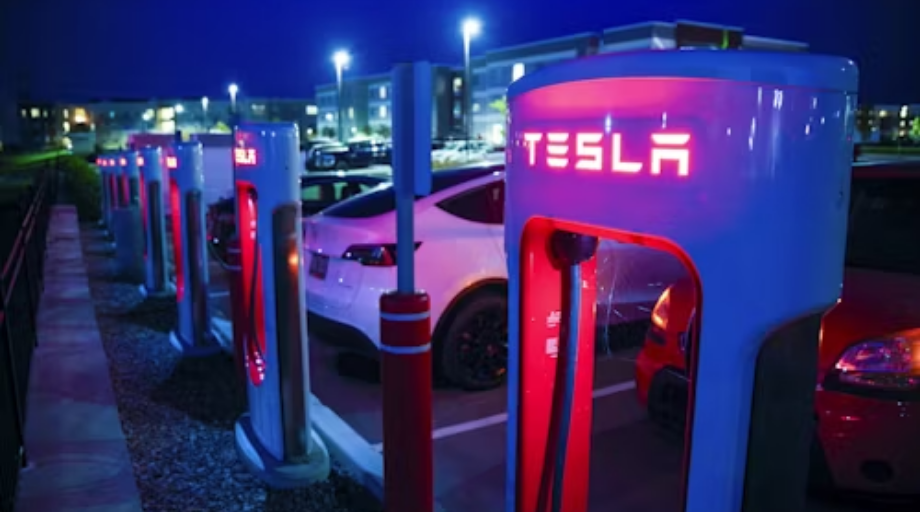
Tesla’s Sustainability Commitments
A.1 Renewable Energy in Production and Operations: Tesla’s commitment to renewable energy manifests not only in its products but also in its operations. The company envisions a closed-loop ecosystem where the energy used to manufacture vehicles and batteries is sourced from renewables, thereby amplifying the environmental benefits of EV adoption. Gigafactory Nevada (Gigafactory 1) was conceived with the goal of running entirely on renewable energy, primarily solar. Although the transition has been gradual, Tesla continues to invest in solar installations at the facility. Similarly, Gigafactory Shanghai incorporates renewable sources but faces challenges due to China’s coal-heavy grid. Gigafactory Berlin, meanwhile, was planned with one of the largest rooftop solar installations in Europe, alongside commitments to water recycling and biodiversity preservation.
Tesla also leverages its energy products internally. Powerwalls and Megapacks are used to stabilize energy usage at facilities, showcasing how Tesla closes the loop between its product lines and its operations. This approach positions Tesla not only as a consumer of renewable energy but as a self-sustaining ecosystem builder.However, the ambition of 100% renewable-powered manufacturing remains aspirational in some sites. Critics argue that Tesla’s reliance on regional grids undermines its claims, particularly in markets where coal remains dominant. Nevertheless, the direction of travel—towards renewable integration—is clear and strategically aligned with its mission.
A.2 Gigafactories as Engines of Scale and Sustainability: Tesla’s Gigafactories are both practical and symbolic of its sustainability commitments. These massive facilities represent a fusion of scale, cost efficiency, and environmental ambition.
- Scale for Cost Reduction: Central to Tesla’s growth is the ability to reduce battery costs per kilowatt-hour (kWh). Gigafactories allow economies of scale in battery production, making EVs more affordable and accelerating adoption.
- Integration with Renewables: Tesla emphasizes that Gigafactories are designed for renewable energy integration. For example, Gigafactory Texas incorporates on-site solar fields and advanced energy efficiency systems.
- Sustainability as Design Principle: Beyond energy, Gigafactories integrate water recycling, waste minimization, and efficient logistics. For instance, Gigafactory Berlin incorporates closed-loop water systems to reduce ecological impact.
From a strategic perspective, Gigafactories are physical embodiments of Tesla’s sustainability narrative. They symbolize ambition not just to make EVs but to revolutionize how industrial production itself can be sustainable.Yet, Gigafactories are also sites of tension. Protests around Gigafactory Berlin highlighted concerns about deforestation and water use. Local activists argued that Tesla’s sustainability claims conflicted with the ecological cost of large-scale industrialization. This reveals the paradox of scaling sustainable technologies: growth requires resource-intensive investment, raising questions about the sustainability of sustainability.
A.3 Sustainable Supply Chain Management: Perhaps the most challenging aspect of Tesla’s sustainability commitments lies in its supply chain. EVs depend heavily on minerals such as lithium, cobalt, and nickel, whose extraction raises environmental and ethical concerns.
Lithium Mining: Lithium extraction, particularly in South America’s Lithium Triangle (Argentina, Bolivia, Chile), consumes vast amounts of water in arid regions, creating conflicts with local communities. Tesla has sought to mitigate this by securing direct supply contracts and investing in alternative extraction technologies.
Cobalt Sourcing: Cobalt, often mined in the Democratic Republic of Congo, is associated with child labor and unsafe working conditions. Tesla has pledged to reduce cobalt use in its batteries (e.g., with its nickel-rich chemistries) and has invested in more transparent sourcing practices, including blockchain-based traceability.
Nickel and Other Materials: With rising global demand for nickel, Tesla has also faced scrutiny over its environmental impacts. In response, Musk publicly called on suppliers to pursue “environmentally sensitive nickel mining,” highlighting Tesla’s role in shaping industry norms.
Recycling Initiatives: To address end-of-life concerns, Tesla collaborates with Redwood Materials, aiming for closed-loop recycling of lithium, cobalt, and nickel. Although still in early stages, this initiative reflects Tesla’s recognition that long-term sustainability depends on reducing dependence on virgin resource extraction.
Tesla’s supply chain commitments illustrate both ambition and vulnerability. While the company leads in sustainability rhetoric, critics argue that transparency remains limited and that Tesla, like other automakers, struggles with the inherent contradictions of resource-intensive industries.
B. Vertical Integration in Battery Technology
Tesla’s approach to battery technology lies at the very core of its sustainable growth strategy. Unlike traditional automakers that outsource most of their battery production to external suppliers, Tesla has deliberately pursued vertical integration, developing in-house capabilities in battery design, manufacturing, and recycling. This decision is not merely operational; it reflects a fundamental strategic philosophy that positions batteries as the heart of Tesla’s competitive advantage.Vertical integration allows Tesla to simultaneously reduce costs, improve technological performance, and secure control over critical supply chains. At the same time, it creates significant risks and challenges, including capital intensity, operational complexity, and exposure to supply volatility. To understand Tesla’s approach, this section examines (1) battery innovation as Tesla’s strategic core, (2) recycling and circular economy efforts, and (3) the competitive advantages of vertical integration.
B.1 Battery Innovation as Strategic Core
Why Batteries Matter: In the EV industry, batteries represent both the largest cost component and the most significant determinant of performance. Range, charging speed, safety, and durability all hinge on battery chemistry and design. For Tesla, gaining leadership in battery technology is synonymous with sustaining leadership in the EV market.
Gigafactories and Battery Production: Tesla’s Gigafactories are not only car assembly plants but also battery production hubs. Gigafactory Nevada (in partnership with Panasonic) was the first large-scale facility to mass-produce lithium-ion cells specifically for EVs. Gigafactory Shanghai and Berlin similarly integrate cell manufacturing into their operations. This strategy ensures Tesla is not merely dependent on external suppliers like LG Chem or CATL but develops proprietary processes that align with its needs.
The 4680 Battery Cell: A hallmark of Tesla’s innovation is the development of the 4680 cylindrical cell, announced at Tesla’s 2020 “Battery Day.” Compared to previous 2170 cells, the 4680 cell offers:
- Higher energy density, increasing range without requiring larger battery packs.
- Reduced cost per kWh, critical for making EVs more affordable.
- Simplified manufacturing, with fewer components and less complex assembly.
- Structural integration, enabling battery packs to serve as part of the vehicle chassis, reducing weight and improving efficiency.
Software and Battery Management Systems (BMS): Beyond chemistry, Tesla integrates advanced software into its Battery Management Systems. These systems monitor charging, discharging, and temperature control, optimizing performance and extending battery life. Over-the-air (OTA) updates also allow Tesla to improve battery efficiency post-purchase—a capability unavailable to most rivals.In effect, Tesla combines hardware innovation with software control, creating an integrated battery system that enhances customer experience and sustainability.
B.2 Recycling and Circular Economy Efforts
While battery innovation improves performance and cost, sustainability requires addressing the end-of-life challenge. EV batteries involve intensive resource extraction, raising concerns about long-term environmental impact. Tesla’s vertical integration strategy therefore extends into recycling and circular economy initiatives.
Redwood Materials Partnership: Tesla collaborates with Redwood Materials, a recycling startup founded by Tesla co-founder JB Straubel. Redwood focuses on recovering valuable metals such as lithium, cobalt, and nickel from used batteries and production scrap. By reintegrating these materials into new cells, Tesla reduces dependency on virgin mining and mitigates environmental harm.
Closed-Loop Vision: Tesla’s stated goal is to achieve a closed-loop battery ecosystem, where old cells are disassembled, materials are recovered, and new batteries are built using those resources. While large-scale implementation remains aspirational, pilot projects show promising recovery rates of over 90% for critical metals.
Second-Life Applications: Beyond recycling, Tesla explores “second-life” uses for partially degraded batteries. Batteries no longer suitable for vehicles can still serve in stationary energy storage (e.g., Powerwall or Megapack), extending their lifespan and delaying disposal.
Despite these initiatives, critics argue that Tesla has not yet scaled recycling to match its production growth. Environmental groups caution that the company must accelerate closed-loop practices to avoid simply replacing oil dependence with mineral dependence. Nonetheless, Tesla’s commitment to vertical integration places it ahead of many competitors still reliant on third-party recycling solutions.
B.3 Competitive Advantages of Integration
- Cost Leadership through Economies of Scale: By controlling production, Tesla reduces reliance on suppliers and captures economies of scale. This aligns with the company’s broader goal of driving down costs per kWh, making EVs accessible to mass markets. The 4680 cell, combined with Gigafactory scale, promises to cut costs by over 50%, a transformative shift in EV economics.
- Technology Differentiation: Vertical integration allows Tesla to differentiate on technology. Whereas competitors often use similar supplier-provided cells, Tesla designs unique chemistries and formats tailored to its vehicles. This differentiation reinforces Tesla’s image as an innovation leader.
- Supply Chain Security: In an industry facing mineral shortages and geopolitical risks, Tesla’s direct involvement in sourcing and recycling provides resilience. For example, by securing lithium contracts directly with miners in Australia and Nevada, Tesla reduces exposure to market volatility.
- Sustainability Alignment: Tesla’s integration of recycling and second-life applications strengthens its sustainability narrative. By closing the loop, Tesla aligns with stakeholder expectations and regulatory trends favoring circular economies.
- Strategic Flexibility: Vertical integration grants Tesla flexibility to innovate independently of suppliers. For instance, Tesla can pursue nickel-rich chemistries to reduce cobalt dependence, adapting to market pressures faster than rivals constrained by supplier relationships.
B.4 Risks and Challenges of Vertical Integration
While vertical integration provides advantages, it also carries risks:
- Capital Intensity: Gigafactories require billions in upfront investment. This creates financial strain and heightens exposure to market downturns.
- Operational Complexity: Managing battery R&D, manufacturing, recycling, and vehicle integration stretches organizational capacity. Failures in one area can cascade across the system.
- Technological Uncertainty: Battery technology evolves rapidly. If Tesla bets on the wrong chemistry or format, it risks being outpaced by competitors or new entrants.
- Scaling Recycling: Despite Redwood Materials’ progress, scaling closed-loop recycling globally remains a monumental task. Until achieved, Tesla remains exposed to resource extraction critiques.
Tesla’s vertical integration exemplifies the resource-based view (RBV) of competitive advantage. By internalizing battery production and recycling, Tesla develops resources that are valuable, rare, inimitable, and non-substitutable (VRIN). Few competitors possess equivalent capabilities, granting Tesla a defensible strategic position.
From a sustainability perspective, vertical integration aligns with the triple bottom line (TBL) framework:
- Environmental: Reduced lifecycle emissions and recycling initiatives.
- Economic: Cost leadership through scale and efficiency.
- Social: Mixed performance, given ongoing concerns about labor conditions in supply chains.
Finally, Tesla’s approach reflects a form of dynamic capability (Teece, 1997). The company’s ability to continuously innovate in batteries—through chemistry, design, and recycling—demonstrates agility in a rapidly evolving market.Vertical integration in battery technology is both the engine of Tesla’s growth and the backbone of its sustainability strategy. By controlling battery innovation, production, and recycling, Tesla secures cost advantages, technological differentiation, and supply chain resilience. These strengths reinforce Tesla’s leadership in the EV industry and align with its broader mission of sustainability.
Yet, integration also creates risks: capital demands, operational complexity, and sustainability gaps in scaling recycling. The challenge for Tesla lies in balancing ambition with execution, ensuring that its closed-loop vision becomes reality rather than rhetoric.Tesla’s success in this domain will determine not only its competitiveness but also the credibility of its claim to be the global leader in sustainable mobility.
Global Expansion Strategies
Tesla’s mission to accelerate the world’s transition to sustainable energy cannot be confined to a single region. To reshape the global automotive industry, Tesla must engage with diverse markets across multiple continents, adapting its strategies to local political, economic, and cultural contexts. Its global expansion has been defined by both bold moves and hard lessons, as seen in its entry into China, Germany, and its ongoing courtship with India. Each case highlights Tesla’s dual commitment to scale and sustainability, while also revealing the tensions between global ambition and local realities.
Expansion into China Market
China is not only the world’s largest auto market but also its largest EV market. For Tesla, expansion into China was unavoidable if it wished to maintain global leadership.
Gigafactory Shanghai: Tesla’s 2019 launch of Gigafactory Shanghai (Gigafactory 3) was a watershed moment. Unlike foreign automakers who were required to form joint ventures with local companies, Tesla negotiated a first-of-its-kind deal allowing full ownership of its facility. This exemption from China’s strict auto rules highlighted Beijing’s eagerness to fast-track EV adoption and symbolized Tesla’s strategic importance in China’s industrial policy.Within just one year, Gigafactory Shanghai achieved a production capacity of 250,000 vehicles annually. By 2022, it became Tesla’s most productive plant worldwide, producing over 710,000 Model 3s and Model Ys, surpassing U.S. output. The speed of ramp-up stunned competitors: while many legacy automakers struggled to establish Chinese EV operations, Tesla was exporting Shanghai-made cars to Europe, Southeast Asia, and Australia.
In the early months of 2020, amid the COVID-19 pandemic, Tesla restarted operations at Gigafactory Shanghai ahead of many other manufacturers, supported by local authorities. This enabled Tesla to maintain deliveries while competitors stumbled, reinforcing the value of Tesla’s local partnerships. The resilience demonstrated during this crisis cemented Shanghai’s role as Tesla’s global hub.
However, Tesla’s rapid ascent in China has not been without friction. In 2021, a customer protest at the Shanghai Auto Show—over alleged brake failures—went viral on Chinese social media, sparking a wave of scrutiny by state media. Regulators summoned Tesla executives and pressured the company to improve quality and responsiveness.Tesla has also faced data security restrictions: Chinese authorities prohibited Tesla vehicles from entering military bases and sensitive government facilities over concerns that in-car cameras could capture sensitive data. In response, Tesla localized data storage in China, setting a precedent for balancing global product design with local regulatory requirements.
Despite these challenges, China remains central to Tesla’s expansion. Gigafactory Shanghai has become a strategic production hub not only for domestic sales but also for global exports, highlighting Tesla’s adaptability in leveraging China’s scale and manufacturing expertise.
Expansion into Germany
If China offered Tesla scale, Germany offered legitimacy. By establishing Gigafactory Berlin-Brandenburg (Gigafactory 4), Tesla made a bold statement: it was ready to compete on the home turf of Volkswagen, BMW, and Mercedes-Benz.
Gigafactory Berlin: Announced in 2019 and inaugurated in March 2022, Gigafactory Berlin was envisioned as Tesla’s European flagship, producing up to 500,000 vehicles annually and eventually manufacturing its new 4680 battery cells. The facility was pitched as a model of green industrialization, with plans for one of Europe’s largest rooftop solar installations and closed-loop water systems.
Tesla’s ambitious timeline ran into Europe’s regulatory culture. German environmental groups filed lawsuits over deforestation and water usage, delaying approvals for months. For example, local activists in Brandenburg protested the clearing of pine forests and argued that Tesla’s factory would strain regional water supplies. These disputes highlighted a paradox: Tesla, a company celebrated for sustainability, was embroiled in local ecological controversies.
Despite these hurdles, Tesla proceeded with construction at “Elon speed”, often building in anticipation of approvals. While risky, this approach allowed Tesla to start limited production even as legal disputes continued—a stark contrast to the cautious strategies of legacy automakers.Germany also presented cultural challenges. Unlike the U.S., where Tesla has resisted unionization, Germany has a strong tradition of labor unions. The powerful IG Metall union began organizing workers at Gigafactory Berlin, demanding higher wages and better working conditions. Tesla initially resisted, but over time it faced increasing pressure to conform to European labor norms. This reflects a broader theme of Tesla’s global expansion: balancing its Silicon Valley culture of hyper-efficiency with local social contracts.
Despite these challenges, Gigafactory Berlin is crucial. It reduces Tesla’s reliance on imports from Shanghai, improves logistics for the European market, and anchors Tesla’s credibility in a region where regulators, consumers, and competitors place high emphasis on sustainability. Symbolically, Tesla’s presence in Germany represents a changing of the guard, forcing Europe’s auto giants to accelerate their own EV transitions.
India Market
While Tesla has established strong footholds in China and Germany, India represents an unfulfilled frontier. With its vast population, growing middle class, and urgent need for sustainable mobility, India seems like an obvious market. Yet, Tesla’s path into India has been contested.
India’s auto industry is the fourth largest in the world, and EV adoption is projected to rise dramatically with government support. The government’s FAME-II scheme (Faster Adoption and Manufacturing of Electric Vehicles) and various state-level incentives underscore India’s EV ambitions. For Tesla, entering India would not only provide access to a massive new market but also reinforce its claim to be a truly global player.In 2021–2022, Tesla lobbied the Indian government to reduce import duties, which can reach up to 100% on fully built imported cars. Elon Musk argued that these tariffs made Teslas unaffordable for Indian consumers. However, the Indian government pushed back, insisting Tesla establish local manufacturing before receiving tariff relief. Negotiations stalled, highlighting a core tension: India’s Make in India policy versus Tesla’s preference for testing markets through imports before committing to local production.
Even if tariffs were resolved, Tesla faces India’s weak EV infrastructure. Charging networks remain sparse, particularly outside major urban centers. Without adequate charging, Tesla risks being perceived as a luxury product for elites rather than a mass-market solution.India’s market is dominated by affordable cars, with average prices far below Tesla’s typical offerings. Unless Tesla localizes production and adapts its models, it risks being out of reach for the majority of consumers. This challenge is compounded by strong domestic players like Tata Motors, which is aggressively expanding in the EV segment at much lower price points.
Despite these barriers, India remains strategically attractive. A phased approach,starting with limited imports, followed by local assembly, and eventually a Gigafactory could allow Tesla to enter the market while building local goodwill. If successful, India could serve not only as a domestic market but also as a hub for exports to South Asia and Africa.
Strategic Lessons from Global Expansion
The Tesla cases in China, Germany, and India reveal important lessons:
- Localization as a Necessity: Tesla’s success in China reflects its willingness to localize production and comply with regulatory demands (e.g., data storage). In contrast, its struggles in India stem partly from reluctance to localize immediately.
- Global Mission, Local Contradictions: Tesla’s sustainability narrative resonates globally, but local controversies—deforestation in Germany, protests in China, tariff disputes in India—illustrate how global missions must be reconciled with local realities.
- Strategic Hubs for Global Supply Chains: Shanghai serves as a production and export hub for Asia and Europe. Berlin anchors Europe. A future Indian facility could strengthen Tesla’s resilience and extend its footprint in emerging markets.
- Competitor Responses: Tesla’s moves have accelerated responses from rivals: BYD in China, Volkswagen in Europe, and Tata in India. Tesla’s first-mover advantage is real but increasingly contested.
Tesla’s global expansion illustrates the complex interplay of ambition, opportunity, and risk. In China, it achieved scale and resilience, though at the cost of regulatory concessions and exposure to political risks. In Germany, it gained symbolic legitimacy and operational presence in Europe, though it confronted environmental protests and labor disputes. In India, Tesla faces both vast opportunity and structural barriers, making entry a slow and uncertain process.Ultimately, Tesla’s global strategy reveals that sustainable growth cannot rely on technology alone. It requires adaptability to diverse contexts, balancing a global sustainability mission with local political, cultural, and economic dynamics. Whether Tesla can continue to harmonize these dimensions will determine its ability to remain the world’s defining EV company.
D. Balancing Profitability with Sustainability
Tesla’s approach to sustainable growth exemplifies a strategic alignment of profitability with environmental responsibility. Unlike traditional automakers, Tesla embeds sustainability directly into its business model, demonstrating that ecological commitment can drive, rather than hinder, financial success.
Integration of Sustainability into Core Operations: Tesla’s EVs, solar products, and energy storage solutions are more than environmentally friendly offerings—they are revenue-generating innovations. For example, the company’s energy storage solutions, such as the Powerwall and Megapack, enable Tesla to expand its market beyond automotive while promoting renewable energy adoption. Sustainability here is not a cost center but a driver of diversification and growth, positioning Tesla as both a car manufacturer and a global energy innovator.
Economies of Scale and Vertical Integration: Tesla’s Gigafactories highlight the synergy between scale, cost efficiency, and sustainability. The Shanghai Gigafactory, for instance, was built with localized supply chains to reduce shipping emissions and costs, allowing Tesla to rapidly scale production for the Chinese market. Vertical integration in battery production has lowered costs per kilowatt-hour, enabling Tesla to offer more affordable vehicles without compromising environmental goals. In addition, renewable energy sources, such as onsite solar installations and energy-efficient manufacturing processes, further reduce operational costs while supporting sustainability commitments.
Innovation-Driven Sustainability: Sustainability drives Tesla’s product innovation, which reinforces profitability. The Model 3 and Model Y, designed for maximum efficiency, have achieved global sales success, offering lower emissions and reduced long-term maintenance costs. Over-the-air software updates optimize vehicle performance, extending battery life and reducing environmental impact. Tesla’s Berlin Gigafactory illustrates another layer of this innovation: despite facing labor disputes over working conditions and wages, the facility has incorporated state-of-the-art recycling and energy-efficient systems, reflecting Tesla’s commitment to sustainability alongside operational challenges.
Strategic Global Market Positioning: Tesla’s sustainability ethos enhances its brand value and regulatory alignment. In India, for example, Tesla navigated high import tariffs and complex local regulations by planning localized production strategies, balancing cost management with market entry objectives. Globally, Tesla benefits from early adoption of eco-friendly technologies, aligning with stricter emissions regulations in Europe, North America, and China, while commanding premium pricing and appealing to environmentally conscious consumers.
Challenges and Trade-offs: Balancing profitability with sustainability is not without hurdles. High initial investments in renewable energy, sustainable materials, and research can strain short-term margins. Raw material volatility, such as lithium and cobalt price fluctuations, adds financial uncertainty. However, Tesla mitigates these risks through long-term investments in supply chain resilience, battery technology innovations, and localized production strategies that reduce dependency on volatile global markets.
Tesla demonstrates that profitability and sustainability can be mutually reinforcing. By embedding eco-conscious practices into manufacturing, product design, and global strategy—and by navigating real-world challenges like labor disputes, production scaling in Shanghai, and tariff negotiations in India—Tesla achieves a balance that delivers both environmental impact and financial performance. This approach exemplifies a modern corporate strategy where innovation, operational efficiency, and sustainability converge to drive long-term growth and value creation.
6. COMPETITIVE DYNAMICS IN GLOBAL EV INDUSTRY
The global electric vehicle (EV) industry has evolved rapidly over the past decade, transforming from a niche market into a central focus of automotive innovation and sustainability. Tesla, as a pioneer in the EV ecosystem, has not only redefined consumer expectations but also reshaped industry competition, forcing traditional automakers and new entrants alike to re-evaluate their strategic approaches.Understanding Tesla’s competitive positioning requires a multidimensional analysis that includes classic industry frameworks, internal resource assessments, and dynamic capability evaluations. This chapter applies Porter’s Five Forces, the Resource-Based View (RBV), VRIO analysis, and dynamic capabilities frameworks to dissect Tesla’s competitive advantage. Furthermore, a comparative study with key competitors—Toyota, Volkswagen, BYD, NIO, Rivian, and Lucid—provides context on Tesla’s strategic choices and industry positioning.

A. Application of Porter’s Five Forces
Michael Porter’s Five Forces framework offers a structured lens to evaluate the competitive pressures shaping Tesla’s strategic landscape. Each force is analyzed in the context of the EV industry.
A.1 Threat of New Entrants
The threat of new entrants in the EV industry is moderate to high, depending on market segments and geographic regions. High capital requirements, complex supply chains, and technological sophistication act as significant barriers. Tesla’s Gigafactories in the U.S., China, and Germany exemplify high entry barriers due to economies of scale, advanced battery manufacturing, and local production efficiencies.However, the rise of startups like Rivian and Lucid Motors demonstrates that technological differentiation and niche market targeting can partially offset capital intensity barriers. For example, Rivian initially focused on premium electric trucks and SUVs with strategic partnerships with Amazon and Ford, highlighting that new entrants can penetrate the market with innovation and strategic alliances. Tesla mitigates this threat by continually expanding its product line, such as the Model 3 and Model Y, offering mid-market affordability while maintaining brand prestige.
A.2 Bargaining Power of Suppliers
Tesla’s supplier relationships are critical to sustaining its innovation-led advantage. Battery materials—lithium, cobalt, nickel—are particularly sensitive to supply chain volatility. Supplier bargaining power is moderate, as Tesla vertically integrates significant portions of its supply chain through in-house battery production at Gigafactories.The Shanghai Gigafactory illustrates Tesla’s ability to reduce supplier dependency by localizing production and establishing partnerships with Chinese battery suppliers such as CATL and LG Chem. This reduces exposure to geopolitical and logistical risks while maintaining cost competitiveness. In contrast, automakers like Volkswagen rely more heavily on external suppliers, increasing supplier leverage.
A.3 Bargaining Power of Buyers
Buyer power is moderate in the global EV market. Consumers increasingly value range, charging infrastructure, and technological features. Tesla’s proprietary Supercharger network and software-enabled autopilot functionality create differentiation that reduces buyer price sensitivity.However, as competitors like BYD and NIO offer affordable EVs with localized features, Tesla faces pressure to maintain value perception across diverse markets. Tesla mitigates buyer power by continuously enhancing software capabilities, over-the-air updates, and seamless integration with renewable energy solutions, reinforcing a lock-in effect.
A.4 Threat of Substitutes
Substitute threats in the EV sector include internal combustion engine (ICE) vehicles, public transportation, and hybrid models. Globally, government regulations promoting zero-emission vehicles and carbon taxation are driving the adoption of EVs, reducing the attractiveness of ICE substitutes.Tesla further minimizes substitute risk by investing in energy ecosystems (e.g., solar panels and energy storage) that complement EV adoption. In China, NIO and BYD pose direct EV substitution threats in the premium and mass-market segments, respectively, highlighting the importance of continuous innovation and market differentiation.
A.5 Industry Rivalry
Industry rivalry in the global EV market is intense and rapidly intensifying. Traditional automakers (Toyota, Volkswagen) are launching EV portfolios to compete with Tesla, while startups like Rivian and Lucid target niche luxury markets.Tesla’s strategy to maintain competitive differentiation involves continuous product innovation, aggressive pricing for mid-market segments, and expansion of its charging infrastructure. The company’s international production footprint, particularly the Berlin Gigafactory, demonstrates its proactive stance in outmaneuvering competitors within key geographic markets.
Tesla’s Core Resources
The RBV framework emphasizes firm-specific resources that are valuable, rare, inimitable, and organizationally embedded, enabling sustainable competitive advantage. Tesla’s key resources include:
Tesla’s brand is synonymous with innovation, sustainability, and performance. Unlike traditional automakers, Tesla positions itself as a technology-driven company rather than a conventional automotive manufacturer. This brand equity allows premium pricing, high customer loyalty, and a global perception of technological leadership, which competitors like Volkswagen and Toyota struggle to replicate fully.
Tesla’s proprietary technologies—battery chemistry, energy management software, Autopilot AI, and vehicle manufacturing innovations—represent core technological resources. These capabilities are supported by continuous R&D investments, patent portfolios, and a vertically integrated supply chain. For instance, Tesla’s work on the 4680 battery cell improves energy density and reduces cost per kWh, reinforcing both sustainability and profitability.
Tesla’s talent pool, particularly in AI, battery technology, and vehicle engineering, is a critical resource. Attracting and retaining top talent enables Tesla to accelerate innovation cycles, respond to regulatory shifts, and maintain technological leadership. Compared to legacy automakers, Tesla’s agile workforce facilitates rapid prototyping and market responsiveness.
Tesla’s patents and proprietary software systems, including Autopilot and Full Self-Driving (FSD) features, are inimitable resources that provide a defensible technological moat. While Tesla announced an open-source approach for patents in 2014 to accelerate EV adoption, its continuous advancement in AI, software, and battery optimization maintains a competitive edge that is difficult for competitors to replicate at scale.
Dynamic Capabilities: Innovation Cycles and Adaptability
Dynamic capabilities enable firms to sense opportunities, seize them, and reconfigure resources to maintain a competitive advantage in rapidly changing environments.
Tesla’s innovation strategy relies on accelerated product development cycles. For example, the transition from Model S to Model X, and subsequently to Model 3 and Model Y, demonstrates an adaptive approach to market demand and technology evolution. By combining rapid prototyping, software iteration, and agile manufacturing, Tesla sustains first-mover advantage in emerging segments like EV SUVs and mid-market sedans.
Tesla exhibits high adaptability to regulatory, geopolitical, and market changes. The Shanghai Gigafactory showcases how Tesla navigated local government incentives, joint venture restrictions, and supply chain localization. Similarly, in India, Tesla is exploring strategic import tariffs and potential localized manufacturing partnerships, reflecting its capacity to dynamically adjust market entry strategies.
Tesla’s continuous learning mechanisms—collecting vehicle data, analyzing customer feedback, and updating software over-the-air—enhance its dynamic capabilities. This capability to learn and iterate faster than competitors allows Tesla to refine product performance, improve battery longevity, and deliver new features without extensive physical recalls or infrastructure overhaul.
D. Comparison with Competitors
Tesla operates in a heterogeneous competitive landscape with both traditional automotive giants and emerging EV startups.
Toyota
- Strengths: Global manufacturing scale, brand recognition, hybrid technology leadership.
- Weaknesses: Slow EV adoption, conservative approach to battery technology, limited charging infrastructure.
- Comparison: Tesla’s innovation-first approach and proprietary tech offer superior differentiation, while Toyota leverages cost efficiency and global reach.
Volkswagen
- Strengths: Aggressive EV rollout strategy (ID series), R&D investments, extensive distribution.
- Weaknesses: Past emissions scandals affecting credibility, slower software development.
- Comparison: Tesla surpasses Volkswagen in battery innovation, Autopilot tech, and charging ecosystem integration.
BYD
- Strengths: Strong presence in China, vertical integration, competitive pricing.
- Weaknesses: Limited global brand recognition, lower EV performance in premium segments.
- Comparison: Tesla leads in global brand prestige and performance EVs, while BYD dominates price-sensitive and regional markets.
NIO
- Strengths: Battery swapping technology, localized Chinese market penetration, premium EV focus.
- Weaknesses: Dependent on Chinese market, limited global reach.
- Comparison: Tesla outperforms NIO in global scalability, Autopilot software, and brand recognition, though NIO leads in innovative battery-as-a-service offerings.
Rivian
- Strengths: Focus on adventure EVs (trucks/SUVs), strong investor backing (Amazon, Ford), niche market positioning.
- Weaknesses: Limited production capacity, early-stage technology refinement.
- Comparison: Tesla has superior scale, production efficiency, and technological maturity, though Rivian appeals to a niche premium segment.
Lucid
- Strengths: Luxury EV focus, long-range battery technology, high-performance features.
- Weaknesses: Small production volume, nascent brand recognition.
- Comparison: Tesla’s broader product portfolio, global infrastructure, and scalable innovation provide a competitive edge, while Lucid targets ultra-luxury performance enthusiasts.
Tesla’s competitive positioning in the global EV industry is reinforced by a combination of resource-based advantages, dynamic capabilities, and strategic innovation. Key implications include:
- Sustained innovation is critical to maintain first-mover advantage, especially against incumbents scaling EV production.
- Vertical integration and supply chain localization reduce cost volatility and enhance global competitiveness.
- Tesla’s ability to continuously update software and integrate energy ecosystems strengthens brand loyalty and barriers to entry.
- Competitor differentiation strategies—Toyota’s hybrid focus, BYD’s pricing, Lucid’s luxury niche—necessitate market-specific approaches for Tesla’s global growth.
Tesla’s competitive dynamics reflect the interplay between technological leadership, brand strength, dynamic capabilities, and strategic innovation. While the global EV industry is marked by intensifying rivalry, emerging entrants, and evolving regulations, Tesla’s unique combination of VRIO-aligned resources, rapid innovation cycles, and market adaptability positions it to sustain long-term competitive advantage. The comparison with Toyota, Volkswagen, BYD, NIO, Rivian, and Lucid highlights Tesla’s ability to dominate both premium and mid-market segments while maintaining an ecosystem-based approach to energy and mobility.By continuously aligning resources, leveraging dynamic capabilities, and anticipating market shifts, Tesla illustrates a model for competitive advantage in the 21st-century automotive industry, where sustainability, technology, and consumer experience intersect.

7. Financial Performance & Market Position
Tesla, Inc. has solidified its position as a leader in the electric vehicle (EV) industry, demonstrating remarkable financial growth and strategic market positioning. This chapter delves into Tesla’s financial performance and market position, analyzing key metrics such as revenue, profitability, market capitalization, research and development (R&D) investments, stock market performance, and market share in both the EV segment and traditional automotive industry.
Revenue and Profitability
Revenue Trends: In 2024, Tesla reported a total revenue of $97.7 billion, marking a 0.95% increase from $96.8 billion in 2023. This modest growth reflects the company’s ability to maintain its revenue base amid a competitive and evolving market landscape. The revenue composition includes automotive sales, energy generation and storage, and services and other revenues, with automotive sales continuing to be the dominant contributor.
Profitability Metrics: Despite the revenue growth, Tesla’s net income declined by 52.2% to $7.2 billion in 2024, resulting in a net profit margin of 9.9%. This significant drop in profitability can be attributed to factors such as increased competition, pricing pressures, and higher operational costs. The decline in profit margins highlights the challenges Tesla faces in balancing growth with profitability, especially as it continues to invest heavily in new technologies and production capacity.
Market Capitalization Trends: Tesla’s market capitalization experienced substantial growth in 2024. At the end of the year, the company’s market cap stood at approximately $1.385 trillion, reflecting a 75.42% increase from the previous year. This surge underscores investor confidence in Tesla’s long-term prospects. The market capitalization growth was driven by factors such as strong vehicle delivery numbers, advancements in autonomous driving technology, and expansion into new markets. However, it’s important to note that market capitalization can be influenced by various factors, including stock market volatility and investor sentiment.
Research and Development Investments: Tesla’s commitment to innovation is evident in its R&D expenditures. In 2024, the company invested $4.54 billion in research and development, marking a 14.39% increase from $3.97 billion in 2023. These investments are directed towards advancing battery technology, autonomous driving capabilities, and energy solutions, which are crucial for maintaining Tesla’s competitive edge in the rapidly evolving EV market. The increased R&D spending reflects Tesla’s strategy to lead in technological innovation and differentiate itself from competitors.
Stock Market Performance: Tesla’s stock performance in 2024 was characterized by significant volatility. The stock reached an all-time high closing price of $479.86 on December 17, 2024. However, the company also faced periods of decline, influenced by factors such as quarterly earnings reports, market trends, and broader economic conditions. Analysts have varied opinions on Tesla’s stock, with some expressing optimism about its future growth prospects, while others caution about potential risks associated with market fluctuations. Despite the volatility, Tesla’s stock price showed an overall upward trend, reflecting positive investor sentiment.
Market Share Analysis
EV Segment: Tesla remains a leader in the global EV market. In 2024, the company sold approximately 1.79 million electric vehicles, accounting for about 10.52% of the global EV market share. While Tesla’s market share has seen a slight decline from previous years, it continues to hold a significant position in the industry. The company’s strong brand recognition, extensive Supercharger network, and continuous innovation contribute to its leadership in the EV segment.
Traditional Automakers: In the broader automotive market, Tesla’s share remains modest. For instance, in the U.S., Tesla holds approximately 4% of the new car sales market. This indicates that while Tesla leads in the EV segment, it still faces challenges in capturing a larger share of the overall automotive market, which is dominated by traditional internal combustion engine vehicles. The company’s focus on electric vehicles and energy solutions positions it uniquely in the market, but expanding its presence in the traditional automotive sector requires strategic initiatives and adaptations.
Tesla’s financial performance in 2024 reflects a company at a crossroads. While it continues to lead in the EV market and demonstrates strong investor confidence, challenges such as declining profitability and increasing competition from both established automakers and new entrants present ongoing hurdles. The company’s continued success will depend on its ability to innovate, manage costs effectively, and expand its market presence beyond the EV segment. Strategic investments in autonomous driving technology, energy solutions, and global market expansion will be crucial for Tesla to maintain its competitive edge and achieve sustainable growth.
The information provided in this chapter is based on publicly available data as of the end of 2024.
8. Future Outlook, Recommendation & Conclusion
Tesla has redefined the automotive industry over the last two decades, pioneering the global shift from internal combustion engines to electric mobility. Its disruptive approach to vehicle design, battery technology, and software integration has positioned Tesla not only as a market leader but also as a standard-bearer for innovation in sustainable transportation.However, the coming decade presents both unprecedented opportunities and significant challenges. The EV market is maturing rapidly, traditional automakers are aggressively entering the EV segment, and regulatory environments are becoming more complex. At the same time, technological advancements—particularly in autonomous driving and artificial intelligence—offer transformative potential. Tesla’s ability to navigate these forces will determine whether it continues to dominate or risks being overtaken by competitors with deeper pockets or more diversified portfolios.
The Future of the Global EV Market and Tesla’s Role
EV Market Growth and Adoption: The global EV market is projected to grow exponentially over the next decade, driven by decarbonization policies, advances in battery technology, and consumer awareness of climate change. Analysts predict that by 2030, electric vehicles could account for 40–50% of new vehicle sales globally, with total EV units exceeding 50 million annually.
Tesla’s role in this market will remain pivotal. Its early investments in battery technology, global manufacturing footprint (including Gigafactories in the U.S., China, and Germany), and proprietary software ecosystem give it a substantial first-mover advantage. Yet, emerging competitors—from traditional automakers such as Toyota and Volkswagen to EV startups like Rivian and Lucid—pose challenges, especially in price-sensitive and regional markets.Tesla’s future success in the EV sector will depend on strategic pricing, localization, and product diversification, ensuring it can maintain brand prestige while appealing to broader demographics.
Market Leadership and Brand Equity: Tesla’s brand represents more than a car; it embodies technological sophistication, environmental responsibility, and aspirational lifestyle. Brand equity remains one of Tesla’s most valuable assets. Maintaining this advantage will require continued innovation, high-quality manufacturing, and exceptional customer experience.
Strategic initiatives, such as expanding the Supercharger network, offering software-based features like Full Self-Driving (FSD), and integrating vehicles with renewable energy solutions, enhance customer loyalty and increase barriers for competitors. Tesla’s leadership in the EV market will increasingly be defined by its ability to deliver an ecosystem experience, rather than merely a product.
Strategic Opportunities for Tesla
Energy Business: Solar and Battery Storage: Tesla’s energy division, which encompasses solar panels, solar roofs, and energy storage solutions like Powerwall and Powerpack, represents a critical growth avenue beyond vehicles. The global energy storage market is expected to reach $50 billion by 2030, driven by rising renewable energy penetration and decarbonization mandates.Tesla’s vertical integration—from battery production to energy storage solutions—positions it uniquely to capture this market. The company’s ongoing improvements in battery efficiency, combined with large-scale energy projects like the Hornsdale Power Reserve in Australia, demonstrate its capability to scale beyond automotive applications.
Opportunities:
- Expansion into utility-scale battery storage.
- Integration of solar products with home and commercial EV charging solutions.
- Strategic partnerships with municipalities and energy providers for renewable adoption.
Challenges:
- Commodity price volatility for lithium, cobalt, and nickel.
- Regulatory hurdles and local policy variations.
- Competition from specialized energy storage companies (e.g., BYD, LG Chem).
Autonomous Driving: Tesla’s Autopilot and Full Self-Driving (FSD) systems continue to advance toward Level 5 autonomy. The autonomous vehicle market is projected to surpass $60 billion by 2030, with applications in passenger transport, logistics, and ride-hailing services.Tesla’s edge lies in its vast data network; every Tesla vehicle collects real-world driving data, which feeds into AI algorithms to improve safety and performance. Successful deployment of FSD at scale could disrupt mobility paradigms, transforming Tesla into a mobility-as-a-service (MaaS) provider.
Strategic Considerations:
- Regulatory approvals remain a critical hurdle in key markets.
- Public trust and safety concerns must be continuously addressed through transparent reporting.
- Ethical and legal frameworks for autonomous vehicles are still evolving.
Artificial Intelligence Integration: Tesla’s investment in AI extends beyond autonomous driving. From production automation at Gigafactories to predictive maintenance and energy optimization, AI underpins operational efficiency and product innovation.
Potential Applications:
- Manufacturing process optimization using predictive AI models.
- Energy consumption and storage optimization for consumers and utilities.
- Personalized vehicle experiences through adaptive software.
By developing proprietary AI chips and neural network architectures, Tesla reduces dependency on third-party suppliers, enhancing its technological moat. Investment in AI also facilitates rapid innovation cycles, which are essential in a market defined by speed, flexibility, and technological superiority.
Recommendations for Tesla
Strengthen Supply Chain Resilience: The semiconductor shortages and global trade tensions of recent years highlight the fragility of global supply chains. Tesla should:
- Diversify suppliers across regions to mitigate geopolitical risk.
- Expand in-house component manufacturing, particularly for semiconductors and batteries.
- Implement digital twin technology to simulate supply chain disruptions and optimize logistics.
A resilient supply chain ensures continuity of production, supports cost control, and reduces dependency on a few critical suppliers.
Ethical Sourcing and Sustainability: Tesla’s mission of sustainability must be reinforced through ethical sourcing of raw materials, including cobalt and lithium. Recommendations include:
- Establishing third-party audits for suppliers.
- Engaging in long-term contracts with ethical mining operations.
- Reporting transparently on sourcing practices to investors and consumers.
Broaden Product Portfolio: While Tesla dominates the premium EV segment, affordable EVs and electric trucks present untapped growth opportunities. Strategies include:
- Launching cost-effective models for emerging markets.
- Expanding the truck and commercial vehicle segment (e.g., Tesla Semi).
- Strategic partnerships or acquisitions to accelerate development in new categories.
Strengthen Corporate Governance: Strong corporate governance ensures sustainable decision-making, investor confidence, and compliance with evolving regulations. Recommendations include:
- Establishing independent oversight committees.
- Enhancing transparency in board decision-making and executive compensation.
- Integrating ESG metrics into corporate strategy and reporting.
Broader Implications for Sustainable Business: Tesla’s practices extend beyond corporate profitability to industry-wide sustainability leadership. The company demonstrates that profitability and environmental responsibility are not mutually exclusive.
Key takeaways for sustainable business:
- Integration of renewable energy: Combining EVs with solar and storage solutions sets an example for holistic sustainable ecosystems.
- Innovation as sustainability driver: Continuous technological innovation accelerates decarbonization while improving business efficiency.
- Ethical and social responsibility: Transparent sourcing and governance practices enhance brand equity and social impact.
Tesla’s model highlights how market leaders can drive industry-wide change, influencing competitors, suppliers, and consumers toward a sustainable future.

9.Conclusion
Tesla, Inc.’s journey from a niche electric vehicle startup to a global technology and energy leader represents one of the most compelling narratives in modern business history. Over the past two decades, Tesla has not merely participated in the automotive industry—it has fundamentally reshaped it, challenging conventional paradigms and catalyzing the global transition toward sustainable mobility. By integrating advanced battery technology, artificial intelligence, autonomous driving systems, and renewable energy solutions, Tesla has established a business model that is simultaneously innovative, scalable, and aligned with broader environmental and societal goals.Financially, Tesla has demonstrated remarkable growth, with revenues exceeding $97 billion in 2024 and a market capitalization surpassing $1.38 trillion. These metrics underscore the company’s capacity to create shareholder value while scaling a disruptive enterprise. Tesla’s investments in research and development—exceeding $4.5 billion annually—reflect a consistent commitment to technological advancement, enabling the firm to maintain a competitive edge in an increasingly crowded global EV market. At the same time, Tesla has faced challenges, including fluctuating profitability, rising operational costs, and intensifying competition from both established automakers and new entrants. These dynamics highlight the necessity for Tesla to adopt strategic measures that balance growth, innovation, and sustainability.
The case study highlights Tesla’s leadership in the EV segment, where it maintains a significant global market share, alongside a growing presence in energy generation and storage markets. Tesla’s solar products and energy storage solutions represent critical avenues for expansion, reflecting the company’s vision of an integrated ecosystem that combines clean energy generation, storage, and consumption with electric mobility. Similarly, Tesla’s pioneering work in autonomous driving and AI integration positions it at the forefront of transformative technological trends, which will shape not only the automotive sector but also the broader mobility and energy landscapes.Strategically, Tesla’s future success depends on several key imperatives. Strengthening supply chain resilience will ensure continuity in production and mitigate risks arising from global semiconductor shortages and geopolitical uncertainties. Investing in ethical sourcing aligns operational practices with Tesla’s sustainability mission and enhances stakeholder trust. Broadening the product portfolio—including the introduction of affordable EV models and electric trucks—will enable Tesla to capture diverse market segments while reinforcing its brand leadership. Furthermore, robust corporate governance will ensure transparent decision-making, ethical conduct, and alignment with environmental, social, and governance (ESG) standards.
Beyond financial and operational considerations, Tesla’s trajectory provides broader lessons for sustainable business practices. The company demonstrates that innovation and profitability can coexist with environmental stewardship, and that corporate vision can drive systemic industry change. Tesla’s integrated approach—linking technology, energy, and mobility—offers a blueprint for other organizations seeking to embed sustainability into their core strategy while remaining competitive in a global marketplace.In conclusion, Tesla stands at the intersection of innovation, sustainability, and strategic foresight. Its capacity to continue leading the EV revolution, expand into renewable energy and autonomous mobility, and maintain technological superiority will determine the company’s ability to sustain long-term growth. Tesla’s journey underscores the critical importance of visionary leadership, continuous innovation, and a steadfast commitment to sustainability. By leveraging its technological prowess, reinforcing governance structures, and remaining adaptable to market dynamics, Tesla is poised to remain a defining force in shaping the future of transportation, energy, and sustainable business practices worldwide.