“Global Expansion of Netflix: Streaming Content, Licensing, and Cultural Relevance”
1 Introduction
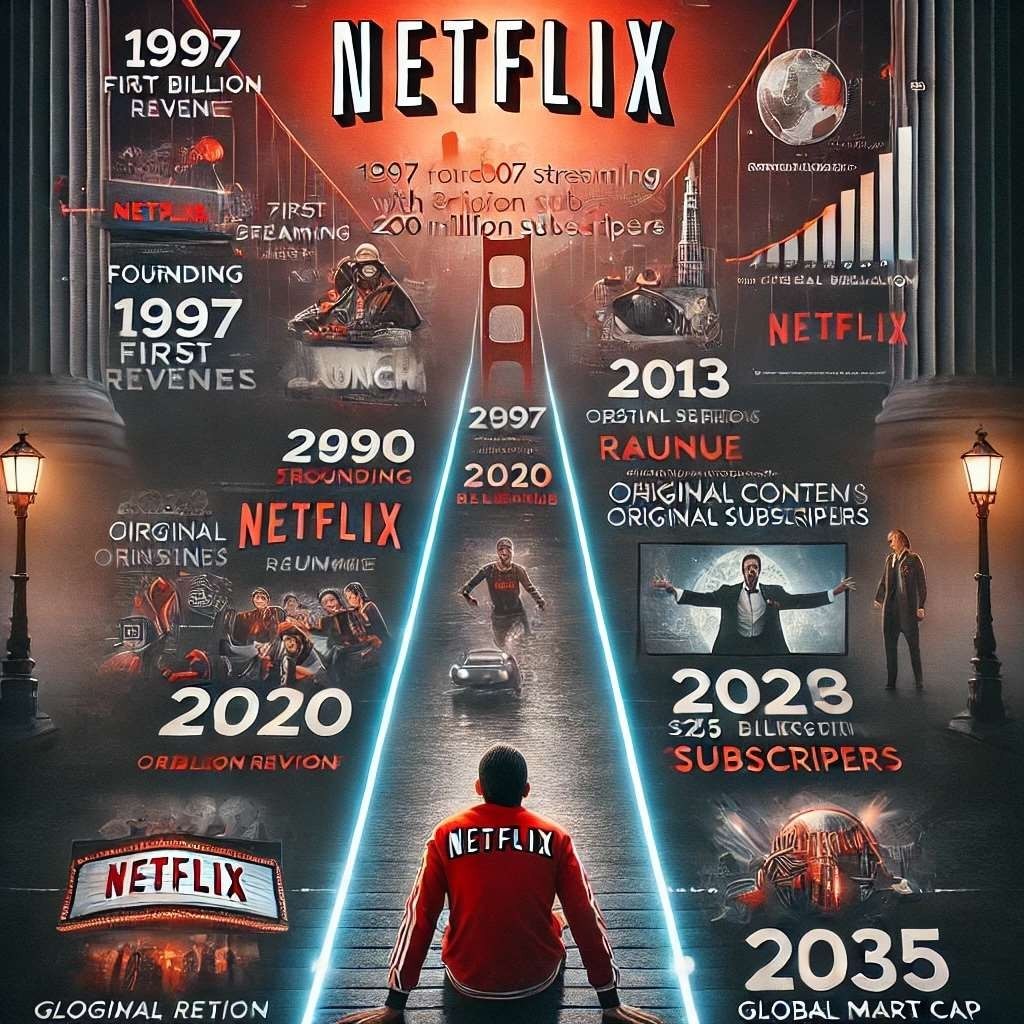
When Netflix was founded in 1997 as a DVD rental-by-mail service, few could have predicted it would become the world’s most influential streaming platform. What began as a modest attempt to outmaneuver Blockbuster evolved into a global entertainment juggernaut with more than 260 million subscribers across 190 countries (as of 2025).Netflix’s journey from Silicon Valley upstart to the dominant force in streaming is not just a story about technology—it is about how digital distribution, innovative licensing, and cultural adaptation reshaped media consumption on a planetary scale.
Netflix was born out of a frustration with late fees. Reed Hastings, its co-founder, famously recounted how he was inspired to create the business after being charged $40 for returning a rented copy of Apollo 13 late.
Alongside Marc Randolph, he envisioned a company that could combine the growing ubiquity of the internet with a more convenient rental model.
In 1998, Netflix launched its website offering a library of DVDs by mail. The service operated on a pay-per- rental basis before introducing a subscription model in 1999. Customers could rent unlimited titles for a flat monthly fee—an approach that laid the groundwork for the all-you-can-watch mentality that streaming would later amplify.
Through the early 2000s, Netflix invested heavily in logistics, developing a nationwide network of distribution centers that enabled most subscribers to receive DVDs within one business day. This focus on operational excellence earned it a loyal customer base while competitors struggled to match its speed and inventory.
But even as DVDs flourished, Reed Hastings had already anticipated the next leap forward: on-demand, internet-based delivery of entertainment.
By 2007, broadband internet was spreading rapidly, and video compression technologies had matured. Netflix introduced Watch Instantly, its first streaming product, initially available only on desktop computers with a small selection of licensed films and TV shows.
The transition was not immediate. For years, streaming operated in parallel with DVD rentals, with the latter providing the cash flow to fuel technology investments and licensing deals. Many content owners—particularly Hollywood studios—viewed streaming as a secondary distribution channel with limited revenue potential.
Netflix’s leadership, however, recognized the long-term implications. Streaming was not merely an add-on; it was the future of media. In 2010, Netflix made its first move outside the United States by launching streaming services in Canada. The expansion marked the start of an ambitious strategy to scale globally.
Today, Netflix stands as a symbol of the digital entertainment revolution. Its strategy offers a masterclass in how technology, licensing innovation, and cultural adaptation can be fused into a model of global relevance.
As competitors race to catch up, Netflix’s story continues to evolve—but its foundational lesson endures: in the streaming era, content is borderless, culture matters, and scale is everything.
2. Strategic Drivers for International Expansion
Netflix’s decision to expand internationally was neither a reactive move nor a mere growth tactic—it was a bold strategic pivot that redefined the company’s identity, operations, and competitive positioning.In many ways, the journey beyond the borders of the United States was the ultimate expression of Netflix’s ambition: to become not just the most popular entertainment platform in America, but the default global destination for streaming content.
2.1 Market Saturation in the United States
In the early 2010s, Netflix’s domestic subscriber base had been growing rapidly. By the end of 2013, the company had crossed 31 million streaming subscribers in the U.S., driven by cord-cutting trends and the convenience of on-demand access.Yet internal data revealed that growth was slowing. Broadband penetration had reached maturity in major metropolitan areas, and the proportion of households willing to pay for a subscription service was approaching a ceiling.The key indicators included:
- Penetration Rate: At the time, more than 40% of broadband-connected S. households already
subscribed to Netflix.
- Churn Stabilization: Monthly churn had declined to low single digits, suggesting most easy-to-acquire
customers were already onboard.
- Incremental Acquisition Cost: The cost of acquiring new subscribers in the S. was rising, as the remaining prospects required higher marketing spend or incentives.
Reed Hastings and his leadership team recognized that relying solely on U.S. growth would create a plateau. This challenge mirrored that of other consumer subscription businesses: eventually, the domestic market becomes too mature to sustain investor expectations for exponential growth.To keep the growth narrative alive—and to continue funding content investments—Netflix needed to expand its addressable market.
International expansion was the most logical solution.
2.2 The First-Mover Advantage in Global Streaming
One of the defining insights behind Netflix’s globalization was the recognition that timing was critical.In most regions outside North America, traditional broadcasters still dominated television consumption. Streaming adoption was in its infancy, and no clear digital leader had emerged.Netflix understood that by entering these markets early, it could:
- Define Consumer Expectations: Becoming the first widely available subscription streaming platform would allow Netflix to shape how consumers perceived the value and experience of streaming.
- Capture Premium Content Rights: In many countries, local studios and distributors had not yet fully recognized the potential of digital rights. Netflix could negotiate favorable licensing terms before
competitors arrived.
- Build Brand Equity: Establishing Netflix as synonymous with streaming entertainment would create a
durable advantage against late entrants.
- Secure Device Integration: Netflix aggressively pursued partnerships with smart TV manufacturers, telecom companies, and gaming consoles to pre-install the app—creating default distribution at
By seizing the first-mover advantage, Netflix hoped to create network effects that would be difficult to dislodge later.For example, in Latin America, Netflix launched ahead of Amazon Prime Video by several years, allowing it to lock in licensing relationships, develop local payment partnerships, and generate brand loyalty.Similarly, in Europe, Netflix entered Nordic markets before most regional broadcasters began to digitize their catalogs. This timing enabled it to become the go-to subscription video platform for consumers seeking American content.The company’s aggressive rollout—culminating in the 2016 launch in 130 countries—was not only a testament to ambition but also a deliberate strategy to pre-empt competition.
2.3 Revenue Diversification and Currency Hedging
Another strategic driver for global expansion was revenue diversification.By 2014, Netflix derived over 80% of its revenue from the U.S. While this concentration was lucrative, it left the company exposed to:
Domestic macroeconomic swings. Regulatory risk.
Intensifying competition.
Management believed that diversifying revenue across continents would stabilize cash flows. In other words: what happens in one country shouldn’t threaten the entire business.Additionally, the leadership saw value in currency diversification:
Revenue streams in euros, pounds, rupees, and reais created natural hedges against fluctuations in the
U.S. dollar.
In the long term, this multi-currency portfolio could smooth volatility in quarterly earnings.
From an investor relations perspective, this diversification story was powerful. Global growth represented not just opportunity, but also risk mitigation.
2.4 The Search for Scale Economies
One of the most decisive strategic drivers behind Netflix’s international expansion was the pursuit of scale economies—a concept that would ultimately become the cornerstone of its competitive advantage.In television, programming costs were typically spread over limited domestic markets. A cable network in the United States might have tens of millions of paying households, and its budgets were constrained by the fixed advertising revenue and subscription fees it could collect. This model produced predictable profits but left relatively little room to place enormous bets on high-budget, high-risk productions.Streaming flipped this paradigm. In theory, the internet allowed a single platform to reach hundreds of millions of subscribers worldwide, unconstrained by broadcast towers or cable carriage agreements. This potential scale created an unprecedented opportunity: Netflix could spread the cost of content production and technology infrastructure across a vast user base, driving down per-user costs while increasing value to subscribers.Reed Hastings often described this dynamic as a “flywheel.” The more subscribers Netflix gained, the more revenue it had to invest in content and product improvements. The more compelling the content and technology became, the more new subscribers it attracted. And the bigger the subscriber base, the more negotiating leverage Netflix had with studios and telecom partners.
2.4.1 Content Production and Licensing
Perhaps the most visible advantage of scale was the ability to amortize content costs over a global audience.Consider a hypothetical $100 million original series. If Netflix were only available in the United States, the cost per subscriber to produce that show would be far higher than if it could distribute the same series to 200 million subscribers worldwide. This is especially critical in streaming, where licensing deals are often fixed-fee rather than usage-based.In other words, every new subscriber in a foreign market diluted the unit cost of content already created. As Netflix executives liked to put it: “Content doesn’t care about borders.”This scale-driven efficiency also applied to licensing third-party content. When Netflix negotiated for the rights to popular library shows—such as Friends or The Office—it could offer studios a single, global distribution deal rather than dozens of smaller country-by-country contracts. This approach simplified negotiations, accelerated time to market, and created an economy of scope that regional competitors struggled to match.By 2018, Netflix had moved aggressively to secure global rights wherever possible, precisely because it understood that its profitability depended on global amortization.
2.4.2 Technology Infrastructure
Beyond content, scale economies were critical in technology. Delivering high-definition streaming video to millions of households requires:
- Sophisticated encoding and transcoding pipelines.
- Distributed content delivery networks (CDNs).
- Advanced recommendation algorithms.
Billing and customer support systems tailored to each market.
Each of these capabilities requires massive fixed investments. Netflix’s Open Connect CDN, for example, was built to cache and deliver video as close to end users as possible, reducing bandwidth costs and improving reliability. Building Open Connect demanded partnerships with ISPs, specialized hardware deployment, and proprietary software development. Once this infrastructure was in place, the incremental cost of serving each new subscriber was relatively low. Whether Netflix had 10 million or 200 million users, the fixed cost base remained similar, meaning each new user improved margins.This dynamic is a hallmark of digital platforms: high fixed costs, low marginal costs, and powerful returns to scale.
2.4.3 Marketing and Brand
Scale economies also appeared in Netflix’s marketing efforts. In the early years, the company spent heavily on advertising in each new market to build awareness and overcome skepticism about paying for online video.But over time, as the subscriber base grew, Netflix benefited from:
- Word of mouth: Early adopters recommended the service to friends and
- Cultural resonance: Original shows like Stranger Things and Money Heist became global phenomena,
effectively advertising themselves.
- Platform integration: Smart TVs, set-top boxes, and mobile devices began pre-installing the Netflix
app as default.
This organic awareness reduced the need for expensive above-the-line campaigns, driving down customer acquisition costs (CAC) over time. Again, the more markets Netflix entered, the more efficient its marketing dollars became—a clear scale advantage over regional streamers without the same brand recognition.
2.4.4 Data and Personalization
Netflix’s scale also produced an unparalleled trove of viewer data, which the company leveraged to improve content recommendations, inform commissioning decisions, and fine-tune marketing messages.With hundreds of millions of viewing hours logged daily, Netflix could identify patterns in consumption that informed:
Which genres performed best in each market.
Optimal release timing.
Localization needs (subtitling, dubbing). Talent partnerships with local creators.
This data advantage became self-reinforcing: the better Netflix became at predicting what users would watch, the more time users spent on the platform, which generated more data, which improved recommendations further.Competing with this level of personalization and insight was (and still is) nearly impossible for smaller regional services with limited scale.
2.4.5 Negotiating Power
Finally, scale economies enhanced Netflix’s bargaining power with suppliers and partners.For example:
Studios wanted to work with Netflix because it could offer global exposure and a single point of distribution.
Device manufacturers wanted to integrate Netflix to make their hardware more appealing.
Telecom operators bundled Netflix subscriptions as a value-added service to drive broadband adoption.
In each case, Netflix’s massive user base made it an indispensable partner, giving it leverage to negotiate favorable terms.
2.5 The Risks of Chasing Scale
While scale economies offered clear benefits, pursuing them also carried risks. Some observers argued that Netflix’s quest for global dominance created unsustainable content spending. As competitors like Disney and Amazon ramped up investments, the cost of securing exclusive rights ballooned.By 2019, Netflix was financing much of its expansion with debt, raising concerns about whether subscriber growth could keep pace with obligations. Additionally, the pressure to scale rapidly sometimes led to strategic missteps, such as launching in markets where payment infrastructure or broadband penetration were not yet mature.Still, management believed that the cost of moving slowly was greater. If Netflix failed to establish a dominant global position before competitors arrived, it could lose the chance to lock in first-mover advantages and create network effects.
In the final analysis, the search for scale economies was not simply one factor among many—it was the strategic imperative that underpinned nearly every decision Netflix made during its international expansion.
2.6 Data-Driven Personalization and Learning Loops
In the era of digital platforms, data has become both a strategic asset and a competitive moat. Nowhere is this more evident than at Netflix. As the company expanded internationally, its data-driven personalization engine evolved into one of the most sophisticated and effective levers of customer engagement in the world.
2.6.1 The Cultural Roots of Personalization
From its earliest days as a DVD rental company, Netflix treated customer data not just as a byproduct of operations but as an asset to be harnessed.In the late 1990s and early 2000s, Netflix pioneered the use of algorithmic recommendations to help customers select DVDs. This approach served a dual purpose:
It improved customer satisfaction by reducing decision fatigue.
It increased retention by exposing users to a broader catalog.
The Netflix Prize, launched in 2006, was a public competition offering $1 million to any team that could improve the accuracy of its recommendation algorithm by 10%. The contest lasted three years and attracted thousands of researchers. Though the winning algorithm was never fully implemented (due to engineering complexity and privacy concerns), the competition cemented a culture of experimentation and data science.
This culture carried forward into the streaming era. By the time Netflix began its international rollout, data- driven personalization was at the core of its identity.
2.6.2 The Architecture of Personalization
At the heart of Netflix’s ability to engage over 250 million subscribers lies a meticulously engineered system: the architecture of personalization.Unlike traditional broadcasters that relied on fixed programming schedules and broad demographic targeting, Netflix built an infrastructure capable of tailoring content recommendations to each individual viewer, dynamically and in real time. This was not simply a cosmetic feature. It was the foundation upon which the entire business model—retention, engagement, and monetization—rested.The architecture emerged organically over more than a decade, evolving from early algorithms designed for DVD rentals to one of the most sophisticated machine learning ecosystems in the consumer internet.
- Content Recommendations: When a subscriber logs into Netflix, the first impression is shaped by a core engine that predicts what they are most likely to These recommendations are far more than a list of popular titles. Behind the scenes, machine learning models weigh dozens of signals:
- Viewing History: Every show or film a user has watched, how long they watched, and whether they completed it.
- Search Behavior: Terms the user has typed into the search
- Ratings and Interactions: Thumbs up or down, saves to “My List,” and other explicit
- Session Context: Time of day, day of the week, and device
- Similarity Clusters: How a user’s behavior compares to other users with similar
These variables feed into collaborative filtering models and deep learning architectures trained to predict the probability that a user will click and watch a particular title. In this sense, recommendations are not simply editorial—they are a probabilistic calculation of future engagement.
- Row Ranking: The visual presentation of Netflix’s homepage—rows of horizontal “carousels”—is itself a product of personalization. Each row represents a category or theme, such as:
- “Continue Watching”
- “Top Picks for You”
- “Because You Watched Breaking Bad”
- “Trending Now”
But crucially, the selection and order of rows is different for every user. For one subscriber, the “Top Picks” might be the first row; for another, “Trending Now” may be prioritized. Even within a row, the position of titles is dynamically ranked to optimize engagement.This structure reflects a core insight: people’s decisions are shaped by what they see first. The row ranking system is effectively a form of behavioral design—guiding viewers toward content most likely to resonate.
- Artwork Personalization: One of the most striking—and lesser-known—elements of Netflix’s personalization is dynamic artwork.Each show or film in the catalog has multiple promotional For example, the same movie might have one thumbnail emphasizing romance, another focusing on action, and another showcasing the lead actor.Netflix’s algorithms choose which image to display to each user based on their inferred preferences. A subscriber who often watches romantic comedies might see a warm, relationship-focused thumbnail for a drama, while another who prefers thrillers sees an action-oriented image for the same title.This seemingly small detail significantly influences click- through rates. According to Netflix, artwork personalization alone can drive double-digit lifts in engagement.
- Search and Discovery: Search is also deeply When a user begins typing a query, auto- complete suggestions reflect not only general popularity but also the individual’s history and regional trends. The ranking of results is shaped by:
- What the user has watched
- Which titles are trending
- The likelihood that a given show will be watched to
This means that even the search function becomes an extension of Netflix’s recommender system, subtly steering discovery.
2.6.3 Data as a Strategic Asset in International Markets
When Netflix launched in new territories, data quickly became a strategic driver of localization. For example:
- In Latin America, Netflix observed that subscribers favored mobile viewing and preferred dubbed content over subtitles. This insight drove investments in dubbing studios and mobile-optimized
- In India, search patterns revealed demand for regional language content like Tamil and Telugu cinema, prompting licensing deals with local producers.
- In Europe, data showed that Nordic users were highly receptive to crime dramas, which influenced commissioning of original series like The Valhalla Murders.
This feedback loop worked in both directions:
Data Informs Content: Viewership trends guided which genres and formats to prioritize.
Content Generates Data: Every new release contributed more information about user preferences.
The result was a self-reinforcing cycle of learning that improved Netflix’s cultural relevance and retention in each country.
2.6.4 Learning Loops: The Engine of Continuous Improvement
The term “learning loops” refers to the virtuous cycle in which user interactions fuel algorithmic improvements, which in turn increase engagement and generate more data.
At Netflix, this loop operates at a massive scale:
- Each day, hundreds of millions of viewing events are
- A/B tests are constantly running—Netflix is known to have thousands of simultaneous experiments
across different user cohorts.
- Algorithms are updated frequently, sometimes weekly, incorporating new
For example:
- When testing a new recommendation model, Netflix deploys it to a small segment of users to measure engagement impact.
- If the model increases viewing time or reduces churn, it is gradually rolled out more
- If it underperforms, it is refined or
These learning loops give Netflix a dynamic advantage: the platform is constantly evolving, adapting to shifts in taste faster than competitors reliant on editorial curation alone.
2.6.5 Personalization and Subscriber Retention
For subscription businesses like Netflix, subscriber retention is the single most important driver of long-term profitability. Acquiring customers can be expensive—especially in mature markets where nearly everyone who is willing to subscribe already has an account. The cost of customer acquisition (CAC) rises as marketing must reach increasingly reluctant or price-sensitive consumers. In contrast, retaining existing subscribers delivers high-margin recurring revenue with minimal incremental cost.From the earliest days of streaming, Netflix understood this equation. As Reed Hastings and his leadership team often emphasized to investors, the foundation of the company’s economics is not how many people sign up in a given quarter, but how long they stay and how frequently they engage. This insight led to a laser focus on personalization as the most reliable lever of retention.
The Engagement–Retention Connection: Empirical evidence within Netflix—and across the streaming industry—shows a clear pattern: subscribers who frequently use the service are significantly less likely to churn. In other words, engagement is the precursor to loyalty.The dynamic works as follows:
Discovery: Personalized recommendations expose users to content they would not otherwise find. This increases the perceived value of the catalog.
Habit Formation: Frequent, satisfying experiences reinforce a habit loop. Subscribers begin to think of Netflix as the default source of entertainment.
Switching Costs: As viewing histories and preferences accumulate, the experience becomes unique to each user. Leaving the platform means giving up this personalization.
Netflix’s personalization architecture—recommendation algorithms, dynamic artwork, curated emails—was designed precisely to foster this cycle. The more a user watched, the better the recommendations became, creating a self-reinforcing loop of engagement and retention.
Quantifying the Impact of Personalization: While Netflix does not disclose granular figures, its public filings and shareholder letters have repeatedly highlighted the importance of personalization in reducing churn.In a 2017 interview, Carlos Gomez-Uribe, Netflix’s then-VP of Product Innovation, estimated that more than 75% of the content watched on Netflix originated from some form of recommendation rather than explicit search. This proportion has likely increased as the platform’s machine learning models have become more sophisticated.Additional internal analyses revealed that subscribers who engaged with recommended content within their first 30 days were:
- More than 50% less likely to cancel within the first six
- Significantly more likely to become multi-device users (viewing on mobile, TV, and tablet).
These figures underscore a critical strategic insight: the lifetime value of a subscriber is directly correlated to how quickly and effectively personalization delivers relevant content.
Personalization Across the Lifecycle: Netflix tailors personalization strategies to different stages of the subscriber journey:
1 .Onboarding:
- When a new subscriber creates an account, the system asks them to select genres or titles they
- Initial recommendations are shaped by these signals to jumpstart
- The platform prioritizes content with broad appeal and high completion rates to build trust in
2. Growth:
- As the subscriber watches more, the algorithms refine
- Personalized rows and thumbnails surface content that matches emerging
- Email and push notifications suggest new releases similar to previously watched
3 .Retention:
- For long-tenured subscribers, the system surfaces deeper catalog content to prevent
- Inactive users receive targeted reminders highlighting trending or exclusive
- Re-engagement campaigns leverage the user’s viewing history to reignite
4 .Win-Back:
- If a subscriber cancels, Netflix retains data to offer personalized incentives
- Win-back emails often feature popular new releases in the genres the user previously
This life-cycle approach ensures personalization isn’t static—it evolves with the subscriber’s behavior and preferences.
Personalization and Perceived Value
One of Netflix’s most powerful advantages is the perception of inexhaustible variety. While any individual market’s licensed catalog is finite, personalization creates the illusion that there is always something new and relevant to watch.
This perception drives retention in two ways:
Reduces Subscription Fatigue:
Users are less likely to feel they have “watched everything,” a common reason for canceling.
Reinforces Value:
When each session surfaces content that feels individually tailored, the subscription feels worth the monthly fee—even as prices increase.
In a competitive landscape crowded with alternatives, this psychological value is a durable moat.
Personalization in Global Markets
As Netflix expanded internationally, personalization became even more critical to retention. Unlike in the U.S., where Netflix enjoyed first-mover advantage, many global markets had strong local competitors and different cultural expectations.
For example:
- In India, subscribers often shared accounts among family members speaking different Personalization had to balance recommendations across diverse preferences.
- In Brazil, users preferred dubbed content, and algorithms had to prioritize language
- In Japan, anime and local dramas were far more important than S. series.
By leveraging localized data and fine-tuning algorithms, Netflix was able to:
- Reduce churn in price-sensitive emerging
- Create a sense of cultural
- Grow share even when competitors offered similar
This local adaptation demonstrated that personalization is not just about taste—it’s about culture.
Continuous Experimentation and Retention Optimization
Netflix’s personalization systems do not remain static after deployment. Instead, they are constantly refined through A/B testing:
- Different recommendation models are compared for their impact on session starts, watch time, and subscription renewals.
- Variations in artwork, row rankings, and notification frequency are tested across
- Even subtle changes in phrasing (“Top Picks for You” “Because You Watched”) are measured for impact.
This relentless experimentation culture ensures that personalization remains an active driver of retention rather than a one-time innovation.
Ethical Considerations: Balancing Engagement and Responsibility
While personalization delivers undeniable business benefits, it also raises ethical questions:
- Algorithmic Overreach: By optimizing purely for engagement, the system can nudge users toward addictive behavior.
- Filter Bubbles: Highly tailored recommendations can narrow exposure to diverse
- Data Privacy: Collecting and analyzing such granular behavioral data invites scrutiny from regulators and advocates.
Netflix has responded by offering more transparency, giving users control over viewing histories and recommendations. Yet the balance between business objectives and user well-being remains an ongoing debate.
2.6.6 Competitive Differentiation Through Data
In the crowded arena of global streaming, content libraries, pricing strategies, and brand marketing can be imitated over time. What has proven far harder to replicate is Netflix’s data-driven capability to know what each subscriber wants, when they want it, and how to keep them engaged over months and years.While competitors have invested heavily in expanding catalogs and building slick user interfaces, Netflix’s true competitive edge lies in the unprecedented scale and sophistication of its data ecosystem. This capability has become the company’s most powerful differentiator—a resource that is not only difficult for rivals to match but also improves organically as the subscriber base grows.
The Strategic Role of Data
From its inception, Netflix understood that data was not merely an operational byproduct but an intellectual asset. In the DVD era, data helped predict which titles to stock and how many copies to order. In streaming, the stakes and the scale grew exponentially.
By 2020, Netflix had amassed:
- Billions of hours of monthly viewing data across over 190
- Detailed behavioral records tracking what content was searched, sampled, completed, abandoned, rewatched, or rated.
- Insights into device usage patterns (e.g., when users preferred watching on a phone versus a smart TV).
- Cultural and regional trends reflecting local preferences, language consumption, and genre
This volume of data created an informational asymmetry: Netflix knew more about consumer entertainment behavior than any other company on Earth. This knowledge did not just inform internal decisions—it actively shaped how Netflix positioned itself against competitors.
Competitive Advantages Powered by Data
Netflix’s data capabilities conferred several durable advantages that rivals struggled to counter:
1 .Hyper-Personalized Experience
Competitors like Disney+ and Amazon Prime offered robust content libraries, but their personalization lagged behind. While most platforms relied on basic “popular” or “recommended” categories, Netflix’s engine could:
- Surface niche content aligned with a user’s micro-
- Dynamically reorder the entire homepage to highlight what was most
- Select thumbnails likely to maximize clicks for a specific
- Predict when a user was likely to churn and proactively recommend engaging
This hyper-personalized interface made Netflix feel intuitively responsive—almost as if it were designed specifically for each individual.In user testing, subscribers often described this experience as the reason they remained loyal: “It feels like Netflix knows me.”
2 .Faster, Smarter Content Decisions
Data did not merely improve user-facing recommendations; it also powered editorial and commissioning decisions.Netflix could track:
- How specific content performed across
- Completion rates and episode drop-off
- Whether a new show increased subscriber acquisition or reduced
Armed with these insights, Netflix could decide:
- Whether to renew or cancel a
- What genres to prioritize in future
- Where to localize content
For example, data revealing strong engagement with Spanish-language thrillers directly influenced the greenlighting of Money Heist, which went on to become an international sensation. This data-to-production pipeline became a virtuous cycle: success reinforced data quality, which further informed better bets.Traditional studios and newer streaming entrants lacked this depth and speed of feedback. Their decisions often relied on intuition, historical performance, or incomplete metrics. Netflix’s data advantage translated into fewer failed shows and more precisely targeted investments.
3 .Optimized Marketing Efficiency
Data also enabled Netflix to achieve superior marketing ROI. Unlike competitors who spent heavily on broad- reach campaigns, Netflix could leverage behavioral segmentation to target subscribers:
- At optimal moments (e.g., when churn risk spiked).
- With the right message (e.g., highlighting a new season of a favorite show).
- On the most effective channels (e.g., email, push notifications, in-app banners).
This precision marketing reduced customer acquisition and retention costs. As a result, Netflix could scale more efficiently than rivals whose marketing spend yielded diminishing returns.
4 .Cultural and Regional Relevance
In international markets, Netflix’s data capabilities became an essential lever for cultural adaptation. Consider these examples:
- In India, viewing patterns revealed strong demand for regional language Netflix responded by expanding Hindi, Tamil, and Telugu libraries.
- In Japan, anime consumption data influenced the company’s decision to invest heavily in exclusive
- In Brazil, metadata about genre affinities guided commissioning of telenovela-style
This localized intelligence allowed Netflix to move faster and more precisely than international rivals that applied generic Western strategies to foreign audiences.
5 .Dynamic Pricing and Product Innovation
Although less visible to consumers, Netflix used data to inform pricing strategy and product development.
- Consumption patterns and churn models influenced the introduction of the mobile-only plan in India, priced significantly lower to capture price-sensitive users.
- Engagement analytics helped forecast revenue implications of introducing an ad-supported tier—a move designed to sustain growth as subscriber saturation approached in mature markets.
Competitors were often slower to adapt pricing and product bundles because they lacked the same granular understanding of user behavior.

3. Phased Global Rollout
The story of Netflix’s rise to become the preeminent global streaming platform is not merely one of technological innovation or compelling content. It is also a testament to the power of carefully sequenced international expansion, executed with discipline and adaptability.Unlike some digital companies that attempt to enter every market simultaneously, Netflix pursued a phased strategy. Each wave of rollout was shaped by lessons learned in prior markets, evolving technology, and the strategic need to balance growth with operational readiness.
3.1 The First Step: Canada (2010)
Netflix’s first foray outside the United States came in 2010, when it launched streaming services in Canada.The choice of Canada was deliberate.Canada provided a relatively low-risk proving ground for the streaming model abroad.At launch, Netflix Canada offered a library of around 7,000 titles, fewer than in the
U.S. The company quickly discovered that:
- Licensing rights were more fragmented than anticipated; many S. studios had pre-existing deals with Canadian broadcasters.
- Data caps imposed by Canadian ISPs limited consumers’ ability to binge-watch, prompting Netflix to introduce bandwidth control settings.
Despite these obstacles, subscriber growth was robust. Within a year, Netflix had surpassed 1 million Canadian subscribers, validating the premise that streaming could work beyond American borders. This early success boosted investor confidence in the feasibility of global expansion.More importantly, it provided Netflix with crucial operational lessons:
- The importance of local content licensing negotiations.
- The need to adapt the user interface and billing to regional constraints.
- The challenge of managing bandwidth perceptions in markets with data limits.
3.2 Latin America and the Caribbean (2011)
Buoyed by momentum in Canada, Netflix set its sights on a more ambitious region: Latin America and the Caribbean.In September 2011, the company launched services across 43 countries simultaneously—an unprecedented move that underscored Netflix’s appetite for scale. This expansion proved significantly more complex:
Language Diversity: The region encompassed Spanish, Portuguese, French, Dutch, and English-speaking markets. Netflix had to localize interfaces, subtitles, and marketing in multiple languages.
Payment Infrastructure: Many consumers did not have credit cards or were wary of online transactions. To address this, Netflix partnered with local payment processors and eventually introduced prepaid subscription cards.
Broadband Access: Average internet speeds varied dramatically between countries, from relatively robust infrastructure in Brazil and Argentina to much slower connections elsewhere.
Cultural Preferences: Telenovelas and regional genres were far more popular than many U.S. titles. This required Netflix to begin licensing local content and educating audiences on the on-demand model.
Initial subscriber acquisition was slower than in Canada. Yet, over time, Netflix refined its approach—adapting marketing, expanding payment options, and adding more Latin American shows. By 2014, the region had become one of Netflix’s fastest-growing international segments.
This phase demonstrated that simultaneous multi-country launches were possible but required operational agility and sustained investment.
3.3 Europe (2012–2014)
After proving its model in the Americas, Netflix targeted Europe, home to some of the world’s most lucrative media markets.The rollout was sequenced in waves:
United Kingdom and Ireland (2012): Netflix began with English-speaking markets to reduce localization complexity. The company faced strong competition from established players like Sky and the BBC iPlayer. Nevertheless, a combination of aggressive pricing and exclusive content deals enabled steady growth.
Nordics (2012): Later that year, Netflix expanded to Sweden, Norway, Denmark, and Finland. These countries had high broadband penetration and a population receptive to English-language content. The Nordics quickly became a bright spot for international adoption.
Netherlands (2013): Netflix continued its expansion by launching in the Netherlands, a test bed for broader Western European growth.
Key takeaways from this phase included:
The necessity of local partnerships, such as integrating Netflix on set-top boxes. The importance of tailoring content libraries to regional tastes.
Early exposure to regulatory challenges, including EU content quotas.
By 2014, Netflix had proven it could succeed in highly competitive, developed markets outside the U.S.
3.4 Australia, New Zealand, and Japan (2015)
The next major wave brought Netflix to Asia-Pacific. In 2015, Netflix launched in:
Australia and New Zealand: Despite strong competition from Foxtel and Stan, Netflix quickly became the dominant streaming service thanks to brand awareness and early market entry.
Japan: Entering Japan was strategically significant. This was the first major Asian market with both high broadband penetration and a large, affluent audience. Localization efforts included:
- Extensive Japanese subtitles and
- Partnerships with SoftBank and other telecom
- Investment in Japanese content, including
Launching in Japan revealed how critical cultural adaptation would be for deeper Asian expansion. Japanese audiences valued high-quality local programming and had distinct viewing habits compared to Western subscribers.
3.5 The 2016 Global Launch
Netflix’s most audacious move came in January 2016, when CEO Reed Hastings announced at CES that the company had launched in 130 additional countries overnight. This transformed Netflix from a Western- centric service into a truly global platform available almost everywhere except:
- China (due to regulatory barriers).
- North Korea, Syria, Crimea (restricted by S. sanctions).
This sweeping rollout brought Netflix to markets as diverse as India, Russia, Nigeria, and Vietnam. While the global launch garnered headlines, it also presented formidable challenges:
Content Licensing: Rights had to be negotiated market by market, leading to uneven libraries across countries.
Payments: In many emerging economies, credit card penetration was low, requiring partnerships with telecom operators for carrier billing.
Bandwidth: In some countries, broadband speeds were insufficient for HD streaming, necessitating compression optimizations.
Regulatory Risks: Censorship and compliance requirements varied widely. Despite these hurdles, Netflix’s aggressive strategy was rooted in two beliefs:
- First-mover advantage would be
- Subscriber scale would generate the cash flow to solve operational problems over
By 2017, Netflix had millions of subscribers in India and significant traction across Southeast Asia, Africa, and Eastern Europe.
3.6 China: The Market That Got Away
Notably, China remained the largest untapped opportunity. Unlike other territories, Netflix faced near- impenetrable regulatory restrictions:
- Foreign content platforms were banned or heavily
- Licensing approvals were
- Local competitors like iQIYI and Tencent Video
Netflix explored partnerships with domestic players (e.g., licensing some shows to iQIYI) but never launched a full streaming service. The company ultimately concluded that the costs and risks outweighed the potential rewards—highlighting that even Netflix’s ambition had limits.

4. Licensing and Regulatory Strategy
As Netflix evolved from a DVD rental pioneer into the world’s leading streaming platform, one of the most formidable challenges it faced was not simply technical innovation or customer acquisition. Instead, the hardest battles were often waged in the conference rooms of Hollywood studios, the offices of European regulators, and the ministries of culture across Asia and Latin America.
Licensing and regulatory strategy would prove to be the linchpin of Netflix’s global expansion—a realm in which success depended on a blend of negotiation, foresight, risk tolerance, and cultural fluency.
4.1 The Fragmented Nature of Content Rights
When Reed Hastings and Ted Sarandos set out to build a truly global streaming platform, they quickly discovered that content licensing was not designed for the internet era.Television and film rights were sold in territorial silos:
- S. broadcasters and cable networks negotiated domestic rights.
- European distributors bought regional or country-specific
- Asian markets were frequently carved up into discrete territories—Japan, Korea, Southeast
Even within a single country, rights were sliced across platforms and time windows:
- Theatrical
- Pay-TV or premium
- Free-to-air
- DVD and Blu-Ray
- Subscription video on demand (SVOD).
- Advertising-supported video on demand (AVOD).
This multi-layered model worked well for decades in the analog and early digital eras, when content distribution channels were clear and geographically bounded. However, it was fundamentally at odds with Netflix’s vision of an on-demand, borderless library available anywhere, anytime, on any device.
Example: The Office
A good example of this complexity is The Office (U.S.), the beloved NBC comedy:
- In the S., Netflix had acquired streaming rights that helped fuel subscriber growth in the 2010s.
- However, in many European countries, rights belonged to other broadcasters or
- When NBCUniversal announced the launch of Peacock, it reclaimed S. rights, forcing Netflix to negotiate piecemeal extensions or prepare for removal.
This fragmentation meant that Netflix could rarely guarantee a consistent catalog across all markets, especially in its early years abroad.
4.2 The Push for Global Rights
As Netflix moved from a U.S.-centric business to a truly international platform, the company faced a persistent and complex challenge: content licensing fragmentation.Film and television rights were negotiated country by country—or even by territory within a country—reflecting a distribution model that predated the internet by decades. In that paradigm, studios would sell exclusive regional licenses to maximize revenue from broadcasters and cable operators, often over multi-year windows. What made sense in the era of physical media and terrestrial TV, however, created enormous operational headaches for a digital platform that aspired to offer subscribers a unified, borderless experience.
The Fragmented Reality of Content Rights
When Netflix began streaming in 2007, its initial catalog was shaped by traditional U.S. licensing deals. The rights landscape was tangled:
- A single movie might have:
- Pay TV rights held by
- Broadcast rights held by a major
- DVD rights managed by a
- International streaming rights sold separately in each
- TV shows were often even more complex, with syndication agreements in dozens of languages and time windows that stretched years.
This fragmentation became a strategic bottleneck as Netflix expanded abroad. For example, in the early European launches (UK, Ireland, Nordics), subscribers frequently discovered that a series available in the U.S. catalog was simply missing. This inconsistency frustrated customers, undermined the brand promise of universal access, and complicated marketing efforts.Internally, Netflix engineers and content teams referred to this phenomenon as “Swiss cheese catalogs”—markets riddled with gaps that were visible to anyone comparing the offering across borders.
Why Global Rights Mattered
Several forces made the pursuit of global rights not just desirable but essential:
Unified User Experience: Consumers increasingly expected the same content wherever they traveled. As cross-border mobility and VPN usage grew, so did customer dissatisfaction with fragmented libraries.
Marketing Efficiency: Global rights allowed Netflix to promote titles consistently in advertising campaigns, social media, and user recommendations without disclaimers about regional availability.
Operational Simplicity: Negotiating a single global license reduced the legal and administrative burden of managing hundreds of separate contracts with overlapping terms.
Data Aggregation: Global rights enabled Netflix to collect unified viewership data, which was critical for making renewal and investment decisions.
Defensive Moat: Locking in global exclusivity denied competitors—especially emerging local streamers— access to premium content that could help them scale.
Ted Sarandos frequently argued that in the long run, content without global rights was less valuable to Netflix, because it diluted the platform’s consistency and complicated user trust.
The Negotiation Challenge
Convincing Hollywood studios to sell global rights was not easy. Studios had spent decades maximizing profits by slicing distribution into narrow, exclusive windows. Many executives were wary that giving Netflix global rights would undermine traditional broadcasters and licensing partners in lucrative markets.Studios often raised concerns:
- Cannibalization: Would Netflix’s reach erode demand for linear TV and DVD sales?
- Market Pricing: Could Netflix’s global bids match the cumulative revenue from dozens of regional licenses?
- Control: Would Netflix’s release strategy respect embargoes or cultural sensitivities in each country?
To overcome this resistance, Netflix deployed several negotiation tactics:
Premium Pricing: Netflix was willing to pay a significant premium to secure global rights upfront—effectively compensating studios for the perceived risk of disrupting traditional channels.
Data Sharing: Netflix shared anonymized viewership data to demonstrate the incremental value its platform generated for content partners.
Brand Partnerships: Netflix positioned itself as a prestige distributor, promising producers that their shows would reach a worldwide audience and benefit from sophisticated marketing.
Over time, these arguments gained traction—especially among independent studios and producers eager for global exposure.
House of Cards and the Birth of Global Originals
Perhaps the most famous example of this strategy was House of Cards. When Netflix commissioned the series, it secured global rights from day one, allowing the company to release it simultaneously in every market where the platform operated.This was revolutionary. Traditionally, TV series premiered in the U.S. and rolled out country by country, often months or years later. House of Cards demonstrated that a global launch could generate cultural buzz and critical acclaim that transcended borders.The success of House of Cards established a precedent: Netflix Originals would be commissioned with worldwide rights baked into the contracts. This approach not only solved fragmentation but laid the foundation for the massive expansion of the Originals strategy.
4.3 The Rise of Original Content as a Licensing Strategy
As licensing negotiations grew more fraught—and as studios began launching their own streaming competitors—Netflix accelerated its investment in original programming.Originals were not just about creative differentiation. They were also a defensive play against the erosion of third-party content deals:
Exclusive Control: Owning Originals outright meant Netflix didn’t have to negotiate renewals or face sudden content withdrawals.
Global Consistency: Originals could be released simultaneously worldwide, creating shared cultural moments.
Cost Predictability: Producing content in-house provided more predictable economics over the life of a title compared to escalating licensing fees.
Consider House of Cards, Netflix’s first flagship Original. While it was a creative gamble, it also demonstrated that the company could build prestige content without relying on Hollywood middlemen. This model later expanded with Narcos, The Crown, and Stranger Things—all of which became global hits with universal rights.
By 2018, Netflix was investing over $8 billion per year in content, much of it original. This pivot was as much about strategic leverage in licensing as it was about storytelling.
4.4 The Regulatory Landscape: Europe as a Case Study
If licensing was a labyrinth, regulatory compliance was an even bigger challenge—especially in Europe.
The European Union had long viewed American tech companies with skepticism, concerned about cultural imperialism, tax avoidance, and market dominance. As Netflix grew across the continent, EU policymakers pushed for rules to protect local film and television industries.The most impactful regulation was the Audiovisual Media Services Directive (AVMSD), which requires:
- At least 30% of catalog content to be European works.
- Prominent visibility of European titles in user
- Financial contributions to local production funds in certain
This meant that Netflix could not simply export a U.S.-centric library to Europe. It had to:
- Acquire more European content
- Commission original productions in France, Germany, Spain, and
- Adjust algorithms to promote regional titles
For example:
- In France, Netflix invested in local drama series like Marseille and Lupin.
- In Spain, it produced Money Heist, which became a global
These moves were not merely about regulatory compliance—they became competitive advantages as Netflix learned how to build culturally resonant content ecosystems in each territory.

5. Local Content Production: Winning Cultural Relevance
In the landscape of global digital media, few lessons are more powerful than this: content is king, but culture is queen.For Netflix, expanding into over 190 countries was not simply about scaling a streaming platform—it was about becoming a part of each culture’s storytelling tradition. While early international efforts leaned on exporting U.S.-based content, it soon became clear that long-term success would depend on embracing local content production.What followed was one of the most ambitious experiments in media globalization: a Silicon Valley tech company learning to speak in dozens of cultural “languages” through authentic, original content.When Netflix first entered international markets (starting with Canada in 2010 and Latin America in 2011), it primarily delivered U.S. shows and films. While this worked to attract early adopters, it soon became evident that global expansion based purely on Hollywood content had limits.
In Brazil, for instance, telenovelas and Portuguese-language dramas dominated TV ratings. In India, Bollywood and regional-language films controlled screen time. In South Korea, K-dramas were cultural phenomena.To resonate with these audiences, Netflix needed more than subtitles—it needed stories born in the cultures it sought to serve. This led to a major pivot:
“We don’t want to just license content. We want to become the biggest commissioner of local content in the world.”
- Ted Sarandos, Co-CEO, Netflix The new strategy was twofold:
- Invest in local talent and production hubs, enabling in-country development of
- Globalize successful local stories, amplifying them through Netflix’s global
5.1 India – Content production
India, with over 500 million internet users, offered massive opportunity. Yet it also posed unique challenges— multiple languages, strong local competitors (Hotstar, JioCinema), and extreme price sensitivity.
- Sacred Games: The Breakout Moment
In 2018, Netflix launched Sacred Games, its first Indian original series—a gritty, noir crime thriller based in Mumbai.
- The show starred local talent (Saif Ali Khan, Nawazuddin Siddiqui).
- Directed by Anurag Kashyap and Vikramaditya Motwane, respected indie
- Dubbed and subtitled in over 20
- Promoted globally as “Netflix’s first Indian ”
Impact:
- Sacred Games reached audiences in Latin America, the Middle East, and
- It redefined Indian content for global viewers—not as song-and-dance clichés, but as sophisticated, dark
- It opened the door for more Indian-language originals, including Delhi Crime, Leila, and Jamtara.
- Challenges
Despite its creative success, Netflix struggled to capture market share in India compared to Disney+ Hotstar or Amazon Prime. Reasons included:
- High price point relative to income
- Slower content output than
- Limited appeal in regional languages beyond Hindi and
To adjust, Netflix introduced:
- A mobile-only plan at ₹199/month (~$2.50)
- Partnerships with telecom providers
- Dubbed content in Tamil, Telugu, and Bengali
5.2 Spain – Content Production
Spain provided the setting for one of Netflix’s most spectacular local-to-global successes: La Casa de Papel (Money Heist).Originally broadcast on Spanish TV, the show gained only modest attention. After Netflix acquired international streaming rights, it re-edited the series, redubbed it, and gave it global exposure.
Results:
- Money Heist became Netflix’s most-watched non-English-language series.
- Inspired fashion trends (red jumpsuits, Salvador Dalí masks).
- Sparked Spanish-language pop culture fandom from Argentina to India to
Netflix invested further in Spain:
- Opened a production hub in Madrid in
- Launched titles like Elite, Valeria, and Cable Girls.
- Created jobs for hundreds of writers, cinematographers, and
Spain proved that local stories, when executed authentically, could transcend borders.
5.3 South Korea – The K-Content
Netflix’s investment in South Korean content marked one of its most successful localization strategies. Korea has long been a cultural exporter—K-pop, K-drama, and K-beauty dominate Asian markets.Netflix saw the potential early and committed over $1 billion USD between 2018 and 2022 to Korean productions.
- Squid Game – A Global Cultural Event
- Launched in 2021, Squid Game became the most-watched Netflix show ever, reaching over 142 million households in the first month.
- Created by Hwang Dong-hyuk, a relatively unknown
- Inspired global memes, Halloween costumes, political commentary, and think
- Strategic Levers in Korea
- Opened a dedicated production facility in Paju, Korea.
- Partnered with local studios and
- Greenlit a wide slate of K-dramas, horror, and sci-fi
Korean content is now not just popular—it’s prestige TV across the world.
5.4 Economics of Local Content: A Strategic Investment
While local production is expensive, Netflix views it as a long-term investment with strategic benefits:
- Subscriber Acquisition and Retention
- Local content drives new user sign-ups, especially in competitive
- Helps reduce churn by keeping subscribers engaged with fresh, culturally relevant
- Cost Efficiency Over Time
- Once infrastructure is built and talent pipelines are mature, local content becomes cheaper per subscriber than licensing U.S. blockbusters.
- Success stories (e.g., Squid Game) offer disproportionate ROI through global
- Regulatory Alignment
- Producing local content helps Netflix meet quotas in Europe, South America, and
- It builds goodwill with governments concerned about cultural
5.5 Content Localization Strategy: Beyond Subtitles
Initially, subtitles were the most cost-effective way for Netflix to bring foreign-language content to global markets. However, internal viewing analytics revealed a problem:
- Subtitled-only content consistently had lower completion rates in certain regions—especially where audiences were less accustomed to reading text while watching TV.
- Non-English-speaking subscribers wanted content that felt familiar and accessible, not something clearly imported.
This insight led Netflix to invest heavily in comprehensive localization that prioritized viewer immersion over mere comprehension.
5.5.1. Transcreation: Rewriting for Cultural Relevance
Netflix’s approach to transcreation goes far beyond literal translation. For example:
- Marketing Slogans:
o In Spain, the tagline for Stranger Things was adapted to “El otro lado de la nostalgia” (“The other side of nostalgia”) to evoke memories of 1980s Spanish pop culture.
- In Japan, taglines reference beloved local sci-fi classics to create
- Show Synopses and Metadata:
- Descriptions are adapted to resonate with regional For instance, in Latin America, the synopsis for Narcos emphasizes historical context and cultural impact rather than just crime drama.
5.5.2 Dubbing as Differentiation: “Local Voices, Global Stories”
Netflix has revolutionized dubbing by treating it as a strategic differentiator rather than a commodity. Its investments in this area are among the highest in the streaming industry.
KEY ELEMENTS OF NETFLIX’S DUBBING STRATEGY:
High-Profile Voice Talent: Netflix contracts well-known local voice actors, sometimes from film and television, to dub premium shows. In Germany, La Casa de Papel (Money Heist) features a cast of acclaimed German voice actors whose performances contributed to the show’s cult status.
Emotional Fidelity: Netflix dubs are not simply about matching lip movements—they prioritize preserving tone, mood, and humor. For example, the dubbing of Stranger Things in French used distinct teenage slang to feel contemporary.
Localized Studio Networks: Netflix built a global dubbing infrastructure with over 30 partner studios to ensure consistent quality across 34+ languages.
Parallel Launches: To avoid the perception that non-English-speaking markets were an afterthought, Netflix ensures dubbed versions launch simultaneously with the original.
5.5.3 Cultural Sensitivity and Regulatory Alignment
Operating in 190+ countries means navigating vastly different cultural expectations and legal frameworks. Netflix’s Globalization Team is tasked with ensuring compliance and cultural appropriateness.
Examples of Cultural Adaptation:
- Content Edits:
In India, scenes from some stand-up comedy specials were edited or removed to comply with blasphemy laws and political sensitivities.
- Alternate Artwork:
In the Middle East, Netflix sometimes swaps promotional images with less provocative alternatives.
- Localized Ratings:
Netflix adapts parental guidance labels to each country’s standards—what qualifies as PG-13 in the US could be 16+ in Germany.
Netflix views cultural sensitivity not just as risk mitigation but as brand stewardship, ensuring that the platform is seen as a culturally respectful participant, not an intrusive exporter.
5.5.4 Platform and Discovery Localization
Netflix also localizes how content is presented and discovered, refining the interface to feel familiar to local audiences.
User Experience Examples:
- Localized Menus and Categories:
Menus and search are adapted to the regional language and include cultural categories such as “Bollywood Dramas,” “Korean Variety Shows,” or “Nordic Noir.”
- Voice Search:
Voice recognition engines are trained on regional accents and dialects to improve accuracy. In Brazil, Netflix tuned voice search for Portuguese phonetics.
- Dynamic Thumbnails:
Netflix uses A/B testing to display different cover art in each country—sometimes showing local celebrities or familiar cultural themes to boost click-through rates.
5.6 From Subtitles to Strategy
Netflix’s approach to content localization tells a compelling story of how a company can transform a seemingly technical requirement into a powerful strategic lever. In the earliest days of its international expansion, Netflix, like many of its peers, believed that adding subtitles was sufficient to bridge linguistic gaps and open the doors to new markets. Subtitles, after all, were inexpensive, relatively quick to produce, and met the bare minimum standard of comprehension. But what Netflix soon discovered was that comprehension alone does not create connection—and connection, ultimately, is the lifeblood of long-term subscriber engagement.It became clear that viewers in different parts of the world were not merely passive recipients of content, grateful for any window into Hollywood or international storytelling. They were discerning audiences with deep cultural identities and established entertainment traditions. To these audiences, foreign shows layered with simple text translations often felt distant—interesting curiosities, perhaps, but never quite their own. Completion rates suffered. Word of mouth remained tepid. In many regions, churn quietly eroded the early gains of expansion.
Faced with this reality, Netflix began to rethink what localization could mean if it were elevated from a cost center to a strategic differentiator. The company embraced a philosophy that would eventually come to define its global identity: that content must not only travel—it must transform itself to feel native everywhere it arrives.This insight triggered a series of ambitious initiatives. Subtitles evolved into transcreation, with entire marketing campaigns and metadata rewritten to speak the cultural language of each region. Dubbing, once relegated to an afterthought, was reborn as an art form, with investments in professional voice actors, local studio networks, and careful direction to preserve the emotional fabric of each story. Regulatory sensitivity matured into proactive cultural stewardship, ensuring that content was not just legally compliant but also
respectful and resonant.Meanwhile, the platform itself was redesigned to anticipate local behaviors: from search tools that understood regional dialects to recommendation algorithms that highlighted domestic favorites alongside international hits. And perhaps most importantly, Netflix made the bold decision to fund and produce local originals, giving communities their own stories to see, celebrate, and share.What emerged was a comprehensive localization ecosystem—a strategy so robust that it turned Netflix from a foreign content importer into a global storyteller, able to weave itself into the daily lives of millions across languages and cultures.
This transformation has not only expanded Netflix’s subscriber base but has also redefined what it means to be a media company in the 21st century. The lesson is clear: in an era where entertainment is no longer constrained by borders, success depends on meeting audiences not halfway but all the way—speaking their language, reflecting their culture, and earning their trust.In this sense, Netflix’s journey from subtitles to strategy is more than a case of operational excellence; it is a masterclass in cultural empathy at scale. It proves that when companies commit to deeply understanding and honoring the identities of their customers, they don’t just grow—they become a part of the culture itself.
6. Competitive Positioning and Market Adaptation
By the time Netflix embarked on its aggressive global expansion in 2016, the streaming landscape had already begun to transform into a highly contested arena. Gone were the days when Netflix could simply leverage first- mover advantage and scale economies in the United States to secure dominance overseas. Instead, the company faced a diverse constellation of competitors: traditional broadcasters launching catch-up services, regional telecom providers bundling streaming into mobile plans, local content players with established cultural footprints, and global rivals like Amazon Prime Video, Disney+, and Apple TV+.To succeed, Netflix could not merely replicate its American playbook. It needed to develop a nuanced strategy of competitive positioning and market adaptation—one that acknowledged both the universal appeal of its technological platform and the highly local nature of entertainment consumption.
6.1 Technology Platform to Content
When Netflix first entered international markets, its core differentiator lay in the simplicity and reliability of its streaming technology. In regions where broadband infrastructure was improving rapidly, the prospect of an ad-free, on-demand library accessible across devices was compelling enough to secure early adoption.Competitors began to close the technology gap, streaming functionality alone no longer guaranteed loyalty. Local services such as Hotstar (India), iQIYI (China), Viaplay (Nordics), and Stan (Australia) developed robust apps with comparable reliability and device coverage. Global rivals invested heavily in UI and personalization. Even incumbent telecom companies introduced free or low-cost streaming as part of bundled offerings.
Faced with the erosion of its technical edge, Netflix pivoted its competitive differentiation to focus on content leadership, built on three pillars:
- Volume and variety—an expansive library spanning genres, languages, and
- Exclusive Originals—global tentpoles that generated cultural conversation (e.g., Stranger Things, The Crown).
- Local Productions—original programming in regional languages that made Netflix feel indigenous rather than imported.
This repositioning was underpinned by a philosophy that technology was a baseline requirement, but
compelling storytelling would be the enduring differentiator.
6.2 Licensing as a Strategic Lever
While Netflix invested in Originals, the company also recognized that acquiring high-quality licensed content remained essential for attracting and retaining subscribers—particularly in new markets where brand recognition was low.Netflix’s approach to licensing was dynamic and opportunistic. Rather than applying a uniform strategy across regions, the company tailored its licensing priorities to the specific characteristics of each market:
- In mature Western European territories, Netflix targeted premium U.S. studio content to lure early adopters familiar with Hollywood franchises. For example, licensing deals with Warner Bros., Sony Pictures, and NBCUniversal ensured that new subscribers could access popular shows like The Big Bang Theory or Breaking Bad alongside Netflix Originals.
- In markets with strong local media ecosystems, Netflix prioritized local library In Japan, this included anime catalogues from Toei Animation and TBS television dramas. In India, Netflix pursued rights to Bollywood blockbusters and regional cinema in Tamil, Telugu, and Malayalam languages.
- In emerging markets with fragmented distribution rights, Netflix used licensing to quickly build volume. For example, in Southeast Asia, the company stitched together pan-regional content agreements with smaller production companies to compensate for the absence of a dominant licensing aggregator.
This region-specific licensing strategy served three purposes:
- Content Density—ensuring the platform felt substantial on day
- Brand Familiarity—using recognizable shows and films to build
- Subscriber Retention—reducing churn by offering evergreen favorites alongside
As competitors like Disney and WarnerMedia launched their own streaming services and began clawing back content, Netflix faced an existential challenge: the long-term viability of licensing as a pillar of differentiation. This prompted the company to accelerate its investment in proprietary content ownership, reducing reliance on third-party licensors and establishing Netflix Originals as the primary growth engine.
6.3 Local Production and Cultural Relevance
While licensing and Originals bolstered Netflix’s brand as a destination for quality entertainment, the company understood that cultural relevance was the final, critical ingredient in sustaining competitive positioning.
Cultural relevance is not simply a matter of adding local subtitles or dubbing. It involves creating content that reflects the lived experience, humor, social dynamics, and aspirations of regional audiences. Recognizing this, Netflix began to operationalize a localized content production strategy built on four elements:
- Regional Content Hubs
Netflix established content hubs in key production centers—Los Angeles, London, Mumbai, Seoul, and Mexico City—to develop and greenlight local programming. These hubs gave creative autonomy to local executives empowered to commission shows that reflected domestic tastes.
For example:
- In India, the Mumbai hub commissioned Sacred Games, a gritty thriller based on Vikram Chandra’s novel, which became the country’s first Netflix Original.
- In Korea, the Seoul hub produced Kingdom, blending historical drama with zombie horror—two genres with strong domestic appeal.
- In Spain, the Madrid hub nurtured La Casa de Papel (Money Heist), which transcended its local origins to become a global phenomenon.
- Talent Development Initiatives
Netflix invested in programs to train and develop local showrunners, screenwriters, and directors. In Africa, the company launched a $1 million creative equity scholarship fund to build capacity in Nigeria, Kenya, and South Africa. In Latin America, Netflix held scriptwriting labs to cultivate original voices.
- Cultural Consultation and Sensitivity
Before greenlighting projects, Netflix conducted cultural audits to ensure content would resonate positively and avoid unintended offense. For example, the production of Delhi Crime involved consulting with survivors of the 2012 Delhi gang rape to portray events sensitively.
- Marketing Localization
Once content was produced, Netflix designed marketing campaigns grounded in regional cultural cues. In Japan, The Naked Director was promoted using nostalgic references to 1980s pop culture. In Brazil, 3% was launched with street art campaigns in São Paulo’s favelas.
By 2021, Netflix had released more than 500 original titles outside the United States, solidifying its image as a platform that tells “stories of the world, for the world.”
6.4 Pricing and Accessibility as Competitive Adaptation
- Tiered Pricing: Netflix moved away from a uniform subscription model to tiered pricing adapted to local purchasing power:
- In India, Netflix launched a $2.50/month mobile-only plan—the lowest in its global portfolio—to compete with Hotstar and YouTube.
- In Southeast Asia and parts of Africa, Netflix experimented with weekly pricing to match cash-flow patterns among pre-paid mobile users.
- In mature Western markets, premium plans bundled 4K content and multiple
This pricing flexibility neutralized cost barriers and widened the addressable market.
- Telco Partnerships
To drive adoption in mobile-first economies, Netflix forged distribution partnerships with telecom operators:
- In Indonesia, Netflix partnered with Telkomsel to offer prepaid bundles that included Netflix
- In Europe, Vodafone, Orange, and Deutsche Telekom integrated Netflix billing into existing accounts, reducing friction for sign-up.
- In Latin America, Netflix piggybacked on Claro and Telefónica billing
Such integrations not only accelerated subscriber growth but also mitigated churn by embedding Netflix into essential services.
5.5 Navigating Regulatory Landscapes
Netflix’s expansion also required navigating complex regulatory environments—a competitive reality with strategic implications:
- Local Content Quotas: The EU’s Audiovisual Media Services Directive mandated that at least 30% of catalogues be European content. Netflix responded by ramping up European production to exceed the
- Censorship: In Saudi Arabia and Vietnam, Netflix faced takedown requests for politically sensitive content. The company complied in certain cases but also engaged in dialogue with regulators to protect creative expression.
- Data Localization: India proposed rules requiring foreign digital platforms to store data Netflix established local data infrastructure to remain compliant.
The company’s willingness to adapt operational practices while protecting creative freedom helped preserve its license to operate.
6.6 Positioning in Global Markets
The story of Netflix’s global rise is, at its heart, a study in how a company can transform the pressures of competition into a catalyst for reinvention. From the moment it set its sights beyond the United States, Netflix understood that it was stepping into markets that were not waiting passively for an American disruptor to arrive. These were regions where entrenched broadcasters commanded decades of loyalty, where regional platforms were quickly modernizing, and where cultural expectations around entertainment ran deep and diverse.In the face of these realities, Netflix could have chosen the simplest path—scaling up its proven U.S. model and hoping that brand power and technological polish would be enough to convert subscribers everywhere. But what ultimately distinguished Netflix from many other global contenders was its recognition that competitive advantage is never static. Instead, it must be actively cultivated through a willingness to adapt and a readiness to challenge one’s own assumptions.
One of the most important lessons to emerge from this journey is that competitive positioning is not just about scale or speed—it is about relevance. For Netflix, relevance was built on three foundations. First, an unwavering focus on content leadership: the belief that a streaming platform earns its place in people’s lives not through the volume of titles alone, but by offering stories that feel both fresh and familiar. Second, a deep investment in cultural proximity, which meant moving beyond simply translating content to making it resonate—emotionally, socially, and linguistically—in every market. And third, a commitment to personalization, ensuring that each subscriber’s experience felt individually meaningful amid the vastness of the global library.
Equally instructive is the way Netflix treated pricing, partnerships, and regulation not as peripheral concerns but as central pillars of its strategy. In regions where household budgets were limited or credit cards were rare, Netflix responded with tiered subscriptions and mobile plans that lowered the barrier to entry. In countries with complicated distribution ecosystems, it embraced telco partnerships to build trust and convenience. And in markets with strict regulatory environments, Netflix learned to balance respect for local norms with advocacy for creative freedom.Perhaps the most striking feature of Netflix’s expansion is how the company reframed the idea of competition itself. Rather than seeing local players only as threats to be outmaneuvered, Netflix sometimes chose to collaborate or license content in ways that benefited regional industries. This capacity to blend global ambition with local cooperation helped it avoid the perception of cultural imperialism that has stymied many Western brands attempting to export their models wholesale.
In the end, Netflix’s story underscores that the real challenge of international growth is not simply crossing borders, but crossing boundaries of expectation and culture. Success demands humility: the willingness to learn what customers value, to admit what doesn’t translate, and to build solutions that respect the texture of each market. It also demands courage: to invest ahead of proven demand, to bet on local creators, and to experiment with pricing and packaging long before rivals are forced to respond.As the streaming wars continue to intensify and more companies pursue global ambitions, Netflix’s example stands as a vivid reminder that in the digital economy, competitive positioning is a dynamic, evolving practice. It is a process that never truly ends—a cycle of observing, adapting, and refining in response to new technologies, new competitors, and new cultural currents.
Ultimately, the company’s most enduring insight is deceptively simple: winning in global markets means never assuming that what worked yesterday will work tomorrow. It means treating each market not as a battlefield to conquer but as a community to serve—one where the greatest competitive advantage comes not from being first or biggest, but from being most relevant.
7. Technology Infrastructure for Global Scale
While Netflix’s global success is often attributed to its content strategy, marketing prowess, and cultural adaptation, none of those achievements would have been possible without an equally robust technological foundation. Beneath the glossy user interface and polished recommendation engine lies an extraordinary feat of engineering: a distributed, scalable, resilient platform purpose-built to deliver rich video experiences to hundreds of millions of users across more than 190 countries. Netflix’s technology infrastructure is not simply a tale of scaling servers and building data centers. It is a case study in how to combine cloud-native architectures, custom content delivery networks, sophisticated data pipelines, and adaptive streaming protocols to achieve consistency and reliability on a planetary scale. Netflix’s technology stack has become the silent differentiator that sustains its brand promise: “Watch anywhere, anytime, on any device.”
7.1 The Transition to the Cloud:
Netflix’s journey to global scale began with one of the most consequential decisions in its history: the migration of its entire IT operations to the cloud.
From Data Centers to AWS
Before 2008, Netflix operated its own data centers. As subscriber growth accelerated, the company faced repeated service outages due to capacity bottlenecks and hardware failures. A major database corruption incident in August 2008 forced leadership to reconsider the viability of maintaining its own infrastructure.In 2010, Netflix began a multi-year project to move its entire workload to Amazon Web Services (AWS). At the time, this was a bold and unconventional choice. Cloud computing was still in its infancy, and no other company of Netflix’s scale had attempted such a migration.Over the next seven years, Netflix painstakingly rebuilt nearly every component of its platform to be cloud-native, including:
- Encoding pipelines: processing video files into multiple resolutions and
- Metadata services: storing information about titles, subtitles, and
- Recommendations: real-time personalization powered by machine
- User interfaces: APIs serving content to web, mobile, smart TVs, and
By 2016, Netflix had fully exited its data centers, becoming the first major entertainment company to run 100% of its streaming infrastructure in the cloud.This shift gave Netflix unprecedented elasticity: the ability to spin up thousands of servers in minutes to handle spikes in demand, whether caused by viral shows or regional expansions.
7.2 A Custom Content Delivery Network
While AWS powers Netflix’s backend services, the delivery of video to end-users relies on a separate innovation: Open Connect, Netflix’s proprietary content delivery network (CDN).
- Why Build a Custom CDN?
In the early 2010s, Netflix relied heavily on third-party CDNs like Akamai and Level 3 to distribute video. However, as streaming volume surged, this model became unsustainable for three reasons:
- Cost: Third-party CDN fees scaled linearly with bandwidth
- Performance: Netflix had limited control over the last-mile
- Optimization: Off-the-shelf CDNs could not tailor caching and delivery to Netflix’s unique
To solve this, Netflix made the strategic decision to build Open Connect, a CDN optimized specifically for streaming video.
- How Open Connect Works
Open Connect operates through a global network of specialized caching appliances called Open Connect Appliances (OCAs). These servers store popular content as close as possible to viewers.
- Embedded Deployment: Netflix installs OCAs inside the networks of ISPs (Internet Service Providers). By peering directly with ISPs, Netflix reduces congestion and improves quality.
- Smart Caching: The system proactively pre-positions content in anticipation of demand surges (e.g., the launch of a new season of Stranger Things).
- Adaptive Routing: Traffic is dynamically routed to the nearest cache with available
- Analytics: Real-time telemetry helps Netflix monitor streaming quality and optimize
7.3 Adaptive Bitrate Streaming
The promise that Netflix makes to its subscribers—“Watch anywhere, anytime, on any device”—is far more technically complex than it appears on the surface. Underneath the simple act of tapping play is an intricate orchestration of encoding, compression, networking, and intelligent delivery that makes high-quality streaming possible whether the user is watching on a gigabit fiber line in Tokyo or a congested 3G network in rural India.At the heart of this capability lies a core technology that is arguably one of the most transformative innovations in digital video distribution: Adaptive Bitrate Streaming (ABR).Adaptive bitrate streaming is what allows Netflix to seamlessly deliver the highest possible video quality for any given moment— automatically adjusting playback to match the customer’s real-time connection speed, device capabilities, and network conditions without any interruption or user intervention.
- The Challenge: Variable Networks and Devices
In traditional broadcast or cable television, video quality is determined by the limits of the transmission medium: a single, fixed signal is broadcast to everyone. But the internet is a radically different environment:
- Variable Bandwidth: A user’s connection can fluctuate second by second as network congestion rises or falls.
- Heterogeneous Devices: Some customers watch on 4K smart TVs, others on budget smartphones with limited resolution and decoding power.
- Diverse Networks: Fixed broadband, Wi-Fi, 3G, 4G, 5G, and satellite each have different characteristics—latency, jitter, packet loss.
A fixed-quality stream cannot accommodate these variations. If a stream is too high-bitrate, playback will stutter or buffer endlessly. If it is too low-bitrate, the picture quality will look poor even on high-speed connections.
- How Adaptive Bitrate Streaming Works: At a high level, adaptive streaming involves three steps:
- Multi-bitrate Encoding
- Segmented Video Packaging
- Client-side Adaptation
Multi-bitrate Encoding: When Netflix ingests a new title—say, a film or episode—it does not store it as a single video file. Instead, the content is encoded into dozens of different bitrate and resolution variants, ranging from ultra-low-bitrate mobile encodings to 4K HDR master versions.
For example, a single movie might be encoded into:
- 240p resolution at 150 kbps
- 360p resolution at 300 kbps
- 480p resolution at 600 kbps
- 720p resolution at 2 Mbps
- 1080p resolution at 0 Mbps
- 4K resolution at 15 Mbps
Each variant balances compression and fidelity for a specific use case. Encoding is performed using advanced codecs such as H.264/AVC, HEVC (H.265), or, increasingly, AV1 for better compression efficiency.
Segmented Video Packaging: Once the different encodings are created, they are chopped into small, time- indexed segments, typically 2–4 seconds long.Instead of a monolithic file, playback becomes a sequence of tiny video chunks:
- Segment 1: 0–4 sec
- Segment 2: 4–8 sec
- Segment 3: 8–12 sec
…and so on.
This segmentation allows the player to mix and match quality levels between segments. For instance, if the user starts watching on a strong connection and then moves to a weaker Wi-Fi hotspot, the Netflix app can seamlessly request the next segment at a lower bitrate—preventing buffering.The packaging also includes manifest files (MPD or M3U8 playlists) that describe all available bitrate variants and their segments, so the client app knows what it can request.
Client-Side Adaptation: The intelligence of adaptive bitrate streaming happens on the client side—in the Netflix app or web player. The player measures the current available bandwidth and device performance.
- It downloads the manifest file to see what qualities are
- It requests the first few segments at a conservative bitrate to avoid startup
- As playback progresses, the player continuously monitors throughput, buffer size, and download speed.
- If bandwidth improves, the player upgrades to higher-quality If bandwidth drops, it downgrades.
This process is invisible to the user. Transitions between bitrates happen at segment boundaries, with no interruption or rebuffering.
Global Data Infrastructure and Personalization
In the modern digital economy, data is not simply a byproduct of user interaction—it is the currency that powers intelligent experiences. For Netflix, a company that operates in more than 190 countries and serves over 250 million subscribers, this philosophy is not just strategic, but essential. The platform’s ability to understand, anticipate, and adapt to viewer preferences in real time lies at the core of its competitive advantage. At the heart of this capability is a global data infrastructure and personalization engine that is as sophisticated as any in the technology industry.Netflix’s personalization is not a simple “recommended for you” engine—it is a deeply embedded system that touches nearly every aspect of the user journey, from the thumbnails shown on the home screen to the order of titles in content rows, to when and how autoplay is triggered. This degree of personalization would be impossible without an architecture capable of ingesting, storing, processing, and learning from billions of interactions every single day.
The Importance of Data in Global Content Strategy
Global expansion exposes any media company to extreme content diversity. What works in Mexico may flop in Poland. A romantic drama might be a hit in India but struggle in the UK. Cultural tastes, social norms, pacing preferences, and even thumbnail design aesthetics vary by country and region.Netflix realized early that content success cannot be driven by intuition or gut instinct alone. Instead, it must be driven by granular, real-time, and culturally nuanced insights extracted from data.
- What title was watched?
- When and on what device?
- How long was it played?
- Was it paused or stopped early?
- Was the next episode auto-played?
- Was it searched for or discovered via browsing?
Every one of these data points contributes to an ever-expanding understanding of viewer behavior—on both a global and hyper-local level.
The Architecture: Building for Scale and Flexibility
Netflix’s global data infrastructure is built on a distributed, cloud-native foundation that balances scale, latency, and flexibility. The system is designed to:
- Capture billions of events per day
- Process and analyze data in real-time
- Feed data into machine learning models continuously
- Deliver personalization decisions back to user interfaces in milliseconds
The process starts with event logging. Every user interaction—whether it’s a play, pause, search, scroll, or hover—is logged by the client application and sent back to Netflix’s cloud backend. Netflix uses Apache Kafka as its core message bus for real-time event ingestion. Kafka’s distributed architecture allows it to scale horizontally to handle millions of messages per second.The ingestion layer is responsible for:
- Time-stamping each
- Routing events to the appropriate
- De-duplicating and validating log
This raw data is then made available for downstream processing, typically within seconds of generation.
Data Lake and Storage: Once collected, all data flows into Netflix’s data lake, hosted on Amazon S3 (Simple Storage Service). This centralized repository holds petabytes of structured and unstructured data. Key categories include:
- Playback data
- Content metadata
- Search and recommendation logs
- Device and network diagnostics
- Subtitle and audio language preferences
The data lake is designed to support a wide range of analytical workloads—from batch analytics to ad hoc exploration to training machine learning models.
Processing and Querying: To analyze and transform the data, Netflix uses a combination of Apache Spark, Presto, and custom-built tools. These platforms allow teams across engineering, content, and marketing to run complex queries that surface:
- Regional viewing trends
- Performance bottlenecks
- Popularity curves for new content
- Abandonment points within episodes
This intelligence feeds not only product decisions but also content acquisition and licensing strategy. For example, if Korean thrillers are trending in Brazil, Netflix may consider licensing more of that genre for that market—or even commissioning a Brazilian-Korean co-production.
Machine Learning and Personalization Algorithms
With this infrastructure in place, Netflix runs an arsenal of machine learning models to personalize the experience for each individual user. These models use a mix of:
- Collaborative filtering: Based on what similar users
- Content-based filtering: Based on metadata (e.g., genre, cast, pacing).
- Contextual modeling: Based on time of day, device, location, and
Each user’s homepage is a unique, algorithmically curated interface. No two subscribers have the same experience, even within the same household.
Ranking Rows and Titles:The Netflix homepage consists of horizontal rows like:
- Because You Watched…
- Trending Now
- Top Picks for You
- Continue Watching
Each row is ranked differently per user, and even the titles within the rows are personalized. If two users search for “action movies,” one might see Extraction, while another sees Red Notice or The Night Comes for Us—based on their viewing history and preferences.
Language and Localization Preferences: As part of global expansion, Netflix also uses machine learning to tailor:
- Subtitle and dubbing language: Users are offered localized audio tracks based on their region and past
- Search and metadata localization: Genre labels and search results are localized in 60+ languages, ensuring relevance and cultural resonance.
Real-Time Decisions and Feedback Loops: Personalization at Netflix is not static. The system is continuously learning from user behavior.
- If a user pauses several horror movies midway, future recommendations may decrease horror
- If another user binge-watches Korean dramas every weekend, the model prioritizes similar content for Friday suggestions.
These closed-loop feedback systems make the service smarter over time and allow it to adapt to changing user preferences, life stages, and viewing habits.
A/B Testing and Experimentation Culture: A major strength of Netflix’s personalization is its robust experimentation framework. Nearly every change—from algorithm tweaks to UI layout—is tested via controlled A/B experiments.
Regional and Cultural Sensitivity: As Netflix grew globally, it realized that personalization could not rely on one-size-fits-all logic. Viewer preferences are deeply influenced by cultural factors, language, norms, and local storytelling traditions. Netflix addressed this by:
- Training separate regional models where
- Using local teams to fine-tune metadata and genre
- Highlighting regionally relevant content—such as showcasing Money Heist more prominently in Latin America or pushing Sacred Games in India.
This cultural intelligence ensures that personalization is not only algorithmic—but also authentic and empathetic.
Privacy, Trust, and Ethical Use of Data: Netflix’s personalization is built on trust. While the company collects extensive data, it is committed to:
- Not selling user data to third
- Minimizing personally identifiable information (PII) in
- Allowing users to manage watch history and
This ethical stance is especially important in the global context, where data sovereignty laws (such as GDPR in Europe or India’s PDP Bill) require stringent compliance.Netflix’s architecture ensures that data localization, encryption, and privacy controls are respected across regions.
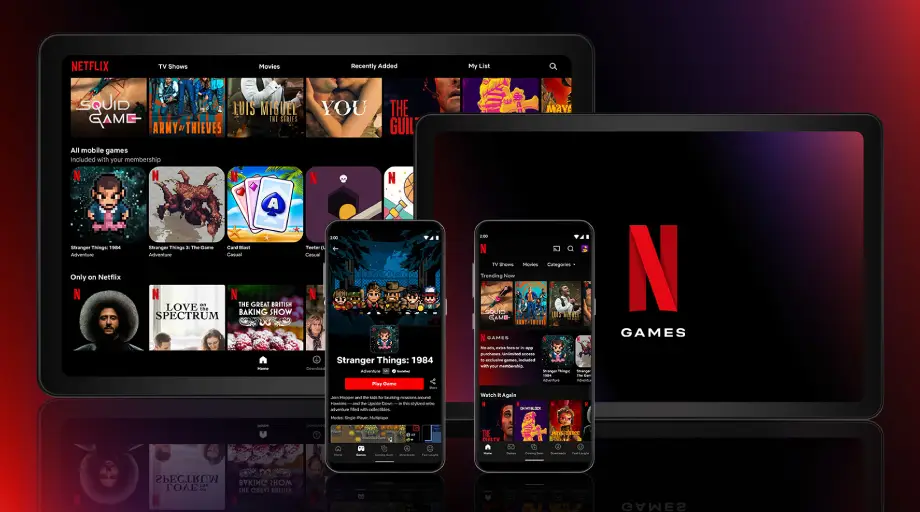
8. Financial Outcomes and Growth
While much of the conversation around Netflix’s global expansion focuses on content creativity, technological innovation, and cultural resonance, the ultimate yardstick by which any multinational strategy is judged is financial performance. From its origins as a DVD rental service to its current standing as the world’s largest subscription video-on-demand (SVOD) platform, Netflix has undergone one of the most remarkable growth trajectories in corporate history.
8.1 Revenue by Geography
In the early years, almost all revenue was U.S.-centric. As of 2024, the breakdown is markedly different:
- S. & Canada (UCAN): ~34%
- Europe, Middle East, Africa (EMEA): ~33%
- Latin America (LATAM): ~14%
- Asia-Pacific (APAC): ~19%
From 2007 to 2010, streaming revenue was modest, overshadowed by the DVD rental segment. But by 2011, streaming had overtaken DVDs, and revenue growth entered an exponential phase:
- 2010: ~$2.16 billion in revenue (DVD-heavy).
- 2012: ~$3.6 billion, driven by
- 2016: ~$8.8 billion, as international markets took
- 2020: ~$25 billion, powered by global expansion and COVID-19 lockdown
- 2024: >$38 billion (estimated), with more than 60% of revenue coming from outside the United
8.2 Subscriber Growth:
2010: ~20 million
2015: ~70 million
2018: ~140 million
2021: ~214 million
2024: ~260 million
Year | Revenue | Operating Margin |
2015 | ~$6.7B | ~4.5% |
2018 | ~$15.8B | ~10% |
2020 | ~$25B | ~18% |
2022 | ~$32B | ~19–20% |
2024 | ~$38–39B | ~21–23% |
8.3 Shareholder Returns and Market Capitalization
Netflix first went public on May 23, 2002, listing on the NASDAQ under the ticker symbol NFLX at an initial price of $15 per share (split-adjusted basis).Netflix was still a niche player experimenting with the DVD-by- mail business model, generating less than $150 million in annual revenue. The company faced formidable skepticism from analysts and incumbent video rental chains like Blockbuster, which dismissed Netflix as a fringe novelty vulnerable to price wars and brick-and-mortar scale advantages.In 2007, Netflix launched its online streaming service, initially as a supplement to DVDs. Many observers still viewed streaming as an unproven experiment with uncertain economics.
Recurring engagement: Streaming usage quickly eclipsed DVD rentals.
Lower marginal cost: Digital distribution removed logistics bottlenecks.
Content leverage: As subscriber numbers grew, Netflix could negotiate more favorable licensing deals. Between 2010 and 2015, Netflix stock experienced massive appreciation, buoyed by:
- S. streaming subscriber growth.
- International market entries (Canada, Latin America, Europe).
- Early original content investments (House of Cards, Orange Is the New Black).
The company’s market capitalization rose from about $2 billion in 2010 to over $40 billion by 2015, reflecting investors’ confidence that streaming would eclipse traditional cable and broadcast models.
To maintain affordability and liquidity, Netflix executed a 7-for-1 stock split in July 2015.
- Before the split: ~$700 per
- After the split: ~$100 per
This made the stock more accessible to retail investors, contributing to broader participation and incremental demand.The long-term performance of Netflix’s stock has been nothing short of extraordinary. Consider these milestones:
- IPO investors (2002): A $10,000 investment would be worth more than $3 million by 2024, assuming dividends were reinvested (though Netflix has historically reinvested earnings rather than paying dividends).
- 2010 investors: Even those who bought in as streaming began gained over 20x appreciation by the early 2020s.
- 2015 investors: Despite volatility, shares increased ~6–7x over the following 8
Very few public companies have delivered such sustained wealth creation.
Netflix reinvested cash into content and technology. However, by 2022–2023, as free cash flow turned consistently positive, management signaled readiness to return capital to shareholders
As of 2024:
Market capitalization hovers between $250–260 billion, fluctuating with quarterly results and macro sentiment.
Netflix remains among the top 25 most valuable publicly traded companies globally.
The company’s valuation rivals or exceeds legacy media conglomerates (Warner Bros. Discovery, Paramount) and challenges big tech players in entertainment share.
9.Lessons for Global Business Strategy
Netflix’s transformation from a DVD-by-mail service in California to the world’s most ubiquitous entertainment platform is more than a tale of disruption; it is a masterclass in how to reimagine global business in the digital age. As the company expanded its footprint across 190 countries and territories, it pioneered a playbook that combined speed, cultural curiosity, technological mastery, and disciplined risk-taking.
When Netflix first began streaming in 2007, few could have predicted that it would one day produce Korean zombie thrillers, Spanish heist dramas, and German sci-fi mysteries watched by audiences from Buenos Aires to Bangalore. Fewer still anticipated that a technology company could become the most important global commissioner of scripted content. But at every stage, Netflix defied conventional wisdom by moving faster and thinking bigger than its rivals.
One of the clearest lessons from this journey is the power of early and decisive action. Rather than waiting for perfect bandwidth or guaranteed consumer demand, Netflix seized first-mover advantage in streaming while competitors were still defending legacy businesses. The company expanded internationally in 2010, years before many rivals, and by 2016, it pulled off an audacious move that industry insiders referred to as “the global switch-on”—launching in over 130 countries almost overnight. This boldness created a head start that proved nearly impossible for others to erase. In an age when network effects compound quickly, Netflix showed that moving early to secure category leadership is often the single most important strategic choice a company can make.
Yet, for all its speed, Netflix never fell into the trap of assuming that the world would embrace American tastes wholesale. As its streaming library grew, it became clear that simply exporting Hollywood content was not
enough to win hearts and minds across cultures. Instead, Netflix approached local markets with a combination of humility and ambition. It built teams in each region who understood the rhythms of local storytelling, the nuances of humor, the taboos, and the aspirations that shaped popular culture. By investing in shows like Sacred Games in India, La Casa de Papel in Spain, and Kingdom in Korea, Netflix proved that local stories could be both commercially viable and globally resonant.
This philosophy of “think locally, act globally” wasn’t limited to content alone. Netflix also understood that technology infrastructure itself would be a decisive factor in winning over audiences, especially in regions where internet connectivity was patchy. While many streaming services relied on generic third-party CDNs, Netflix made the unusual decision to build Open Connect, its own proprietary content delivery network. This investment in custom infrastructure was expensive and time-consuming, but it allowed Netflix to control video quality, reduce buffering, and lower bandwidth costs—factors that made the service feel reliably premium almost everywhere. It was a lesson in how owning the pipes as well as the content can create defensible advantages that competitors find hard to replicate.
Parallel to this infrastructural edge, Netflix invested heavily in what became its secret superpower: data-driven personalization. From the beginning, the company recognized that the abundance of choice on its platform could easily overwhelm subscribers. The solution lay in harnessing granular viewing data and machine learning to anticipate individual tastes. Every interaction—what you clicked, how long you watched, when you paused— became a signal that improved recommendations. This obsessive focus on personalization transformed Netflix into a service that seemed to know each user’s mood better than they knew it themselves. In the process, it reduced churn and increased the lifetime value of every subscriber.
As Netflix expanded into diverse economies, it quickly discovered that pricing strategies that worked in North America did not always translate elsewhere. In places like India and Indonesia, low per capita income and high mobile usage made standard subscription plans inaccessible to millions. Rather than holding fast to its existing pricing model, Netflix experimented with mobile-only plans and prepaid options, signaling a willingness to adapt. This flexibility in pricing—combined with localized payment solutions—enabled the company to unlock demand that would have otherwise remained dormant.
At the same time, Netflix balanced this localized execution with a consistent global brand identity. The red “N,” the minimalist interface, and the promise of instant, ad-free viewing became recognizable symbols of the Netflix experience. Even as it embraced regional content and pricing models, Netflix retained an aura of premium aspiration—something that allowed it to maintain pricing power over time. The delicate balance between brand consistency and cultural diversity was one of the company’s quiet achievements.
Of course, this success was never guaranteed. As new entrants like Disney+, Amazon Prime Video, and Apple TV+ poured billions into streaming, Netflix was forced to defend its position. Instead of retreating, it chose to expand its value proposition further—experimenting with gaming, exploring live content, and introducing an ad-supported tier to capture new segments. This adaptability underscored one of the most important lessons of
the Netflix story: even the most successful disruptors must remain perpetual learners. In global markets, no advantage is permanent unless it is continuously renewed.
Behind all these strategic moves was a remarkably disciplined approach to capital allocation. For years, Netflix operated with negative free cash flow, borrowing billions to fund its content ambitions. Critics called this model unsustainable. But Netflix communicated clearly that once a critical mass of subscribers was achieved, the economics would inflect—and they did. By 2023, the company began generating positive free cash flow and reducing debt, validating years of aggressive investment. For businesses pursuing scale, this proved that patient capital and clear communication can sustain investor confidence even through prolonged periods of reinvestment.
Perhaps most profoundly, Netflix’s journey revealed the power of cultural openness as a strategic imperative. From Los Angeles headquarters to regional offices in Seoul, Mumbai, and Madrid, Netflix built an organization that embraced cultural differences instead of flattening them. This ethos didn’t just shape the content library; it became the heartbeat of the company’s global relevance. Netflix showed the world that in the digital era, great stories can cross borders, transcend languages, and become shared experiences for humanity.
Taken together, these lessons offer a blueprint for any organization aspiring to become a global leader in the 21st century. Move early and boldly. Respect local cultures. Build proprietary infrastructure. Leverage data intelligently. Adapt pricing to local realities. Nurture a strong, consistent brand. Keep evolving as competition rises. Allocate capital with discipline. And above all, cultivate curiosity about the world beyond your own borders.
Netflix’s success is not merely a testament to technology or timing. It is a testament to what happens when a company combines visionary ambition with operational excellence and cultural empathy. In doing so, it didn’t just change how we watch television—it showed what a truly global business can look like.