
Balancing Innovation and Ethical Responsibility: Facebook (Meta) Corporate Governance in the Age of Misinformation
1 Introduction
At the dawn of the twenty-first century, few could have predicted that a single social networking platform— launched by college students in a Harvard dormitory—would transform how billions of people communicate, organize, and form opinions. Facebook, which began in 2004 as a modest directory for college students, has become an unparalleled force in global information flows, political discourse, commerce, and culture.From its earliest days, Facebook’s founders framed the company as an agent of positive connection. Its original mission statement was deceptively simple: “To give people the power to share and make the world more open and connected.” That vision resonated with users worldwide. Within four years, the platform had surpassed 100 million active users. By 2012s, when Facebook launched its IPO, it had more than 900 million. As of 2025, Meta Platforms Inc.—the parent company Facebook became in 2021—claims over 3 billion monthly active users across Facebook, Instagram, Messenger, and WhatsApp.Facebook’s rise coincided with the proliferation of smartphones, broadband internet, and an advertising economy increasingly hungry for precise targeting. The company’s business model was as innovative as it was controversial: users could access services for free in exchange for personal data, which Facebook would leverage to deliver increasingly sophisticated advertising. This model proved enormously lucrative, propelling Meta to annual revenues exceeding $135 billion by 2022.
Yet this success also created profound ethical and governance dilemmas. As Facebook expanded, it accumulated power that outstripped its governance mechanisms and accountability structures. Over time, the platform became both a technological marvel and a cautionary tale—a company whose very success exposed the fragility of corporate governance in the platform age.
1.1Engagement Dilemma
At the core of Facebook’s business lay a powerful dilemma: what was good for engagement was not always good for society.The algorithms that maximized time on site often prioritized emotionally charged content— outrage, sensationalism, and misinformation. By design, Facebook’s engagement-focused metrics became deeply entangled with users’ psychological impulses. The longer people scrolled, the more ads they saw—and the more revenue Facebook earned.This dynamic created incentives that were difficult to reconcile with ethical responsibility. Even as executives acknowledged harmful consequences—such as the spread of disinformation or the amplification of hate speech—the platform struggled to change course without undermining its economic engine.
This Dilemma, which would become a defining theme of Facebook’s corporate governance challenges, came into full view during several pivotal crises:
- 2016 S. Election: Russian actors used Facebook to wage an unprecedented disinformation campaign, reaching millions of Americans with divisive propaganda.
- Cambridge Analytica: A political consultancy harvested data on 87 million users without consent, fueling a scandal that shattered public trust.
- Myanmar Crisis: Facebook was implicated in the spread of hate speech against the Rohingya minority, contributing to real-world violence.
- COVID-19 Misinformation: The platform struggled to contain false information about vaccines and public health measures.
Each incident raised the same question: Could a corporation whose success depended on engagement metrics be trusted to police itself?
1.2 Corporate Governance Under Scrutiny
In the world of modern capitalism, few companies embody the tension between founder control and corporate accountability as starkly as Facebook. From its IPO in 2012 to its rebranding as Meta Platforms Inc. in 2021, the company operated under a model of governance that granted extraordinary authority to one man: Mark Zuckerberg. Supporters argued this structure preserved the company’s innovative spirit and long-term focus. Critics warned that it created an environment where accountability was secondary to the ambitions and worldview of a single leader.This tension came to define Facebook’s—and later Meta’s—public image, shaping everything from how the company responded to crises to how it prioritized product development. In the decade following its IPO, Facebook’s governance structures were repeatedly tested by controversies that demanded transparency, ethical leadership, and a willingness to accept external scrutiny. What emerged was a case study in the risks and rewards of founder-dominant governance in an era when technology platforms wield unprecedented influence over society.
Facebook’s board structure and governance practices were not typical of most publicly traded companies. From its IPO onward, the company operated under a dual-class share structure:
- Class A shares, owned by public investors, carried one vote
- Class B shares, controlled primarily by Mark Zuckerberg, carried ten votes
This arrangement gave Zuckerberg an effective majority of voting power, allowing him to control strategic decisions, appoint directors, and veto proposals—even as public shareholders carried the economic risk.While such structures are common among Silicon Valley founders—who argue they preserve long-term vision—the governance risks became evident during moments of crisis. Critics contended that Zuckerberg wielded unchecked power, and that the board functioned more as an advisory body than a mechanism of accountability.Governance ratings agencies, including Institutional Shareholder Services (ISS) and Glass Lewis, frequently flagged Facebook’s board independence as inadequate. Activist investors periodically proposed reforms, including the elimination of the dual-class structure and the appointment of an independent chair.
These measures were consistently defeated.
1.3 Ethical Responsibility in a Platform Economy
In the last two decades, Facebook—now Meta—has become the most vivid example of how digital platforms can transform social life, redefine commerce, and disrupt traditional institutions. But along with its economic and technological success, the company has faced a question that no previous corporation has had to answer at the same scale:
What ethical responsibility does a private company have when it functions as a public square?
The story of Facebook’s rise and controversies is not simply about market power or innovation. It is also about the unintended consequences of a business model optimized for engagement at global scale, and the ethical obligations that arise when a platform mediates information, relationships, and beliefs for billions of people.The boundaries between public infrastructure and private enterprise were clearer. Governments regulated airwaves, utilities, and public forums. Media organizations operated under professional norms, accountability structures, and editorial guidelines, balancing freedom of speech with civic responsibility.By contrast, Facebook emerged in a regulatory vacuum. Its founders did not set out to build a civic institution. They were creating a product that would allow college students to share photos, poke friends, and find social validation. Yet as the platform grew,
it became a default information pipeline—one that could amplify voices, spread ideas, and mobilize communities. In effect, Facebook became a quasi-public infrastructure without the safeguards or responsibilities traditionally attached to such a role.This transformation was unprecedented. In less than a decade, Facebook’s algorithms determined what news millions of people read, what causes they supported, and what beliefs they held about the world. No private company in history had ever wielded such cultural influence with so little oversight.
1.4 The Meta Rebrand: A New Chapter or a New Distraction?
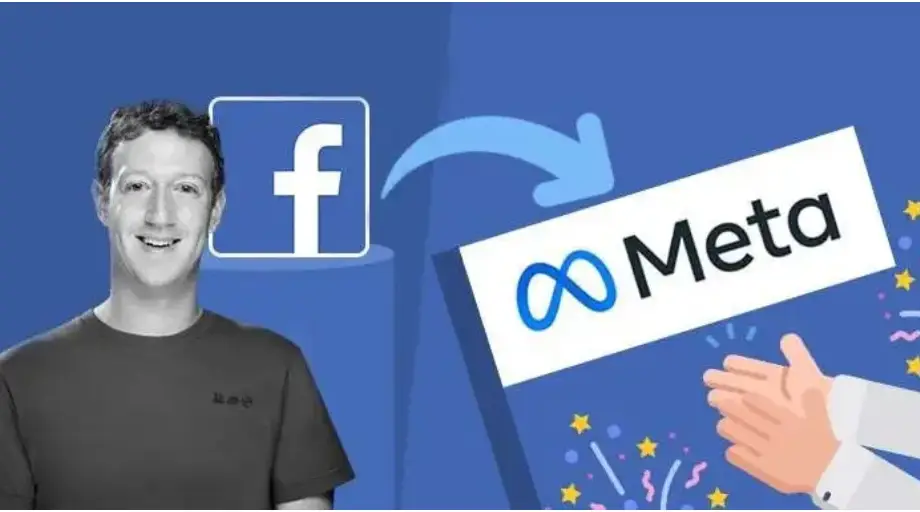
In October 2021, Facebook announced that it would rebrand as Meta Platforms Inc. The stated purpose was to signal the company’s pivot to building the “metaverse”—a future of immersive digital experiences.
This strategic move had dual motivations:
- To reposition Facebook as a forward-looking innovator beyond social
- To partially distance the brand from years of
Yet many observers saw the rebrand as an attempt to distract from unresolved governance and ethics issues. Regulators in the U.S., EU, and other jurisdictions continued to scrutinize the company’s practices. Internally, whistleblowers such as Frances Haugen exposed documents suggesting that leadership had repeatedly prioritized growth over user safety.As Meta invested tens of billions into metaverse initiatives, questions persisted: Could the company credibly manage a new platform while struggling to govern its existing ones? Did the governance structures that failed to prevent past crises offer any reassurance about the future?
1.5 Why Corporate Governance and Ethics Matter
In the context of Facebook’s evolution into Meta, the significance of corporate governance and ethics cannot be overstated. Unlike traditional businesses, platform companies such as Facebook occupy an unprecedented position of influence over public discourse, cultural norms, and even democratic institutions. Their systems determine which voices are amplified, which ideas spread, and which communities coalesce—often invisibly and algorithmically. This scale and opacity magnify the consequences of every governance decision. When leadership choices prioritize engagement metrics and shareholder value above broader social impacts, the effects ripple across societies, undermining trust in institutions, exacerbating polarization, and threatening public health. Corporate governance, in this environment, is not merely a compliance exercise or a procedural formality; it is the architecture through which ethical responsibility is either embedded in decision-making or neglected. Effective governance frameworks can serve as guardrails that align the pursuit of innovation with a duty of care to users, communities, and democracies. Conversely, inadequate oversight, weak accountability mechanisms, and overconcentration of power—as seen in Facebook’s dual-class share structure and culture of deference—can entrench patterns of behavior that allow systemic harm to persist unchecked. As technology companies increasingly function as public utilities in everything but name, the ethical dimension of corporate governance becomes an existential consideration, not only for the companies themselves but for the societies that depend on them. This is why understanding Facebook’s governance failures—and the ethical compromises that accompanied them—offers lessons that reach far beyond Silicon Valley. It illuminates the pressing need to reimagine how private enterprise can be held accountable when it assumes responsibilities once reserved for the public sphere.

2. Corporate Governance Structures
2.1 Overview of Facebook’s Governance
Facebook’s approach to corporate governance emerged from a singular vision: that a founder-led company could scale faster, innovate more boldly, and stay truer to its mission than a firm beholden to traditional shareholder constraints. This idea—that concentrating power in the hands of a founder was a feature rather than a flaw—became the foundation of Facebook’s governance philosophy.The logic of this model was not unique to Facebook. Over the past two decades, Silicon Valley has embraced a broader cultural narrative celebrating the charismatic founder as both visionary and steward. Mark Zuckerberg embodied this archetype. His technical acuity and unrelenting ambition built a product that captured the attention of hundreds of millions of people before he turned thirty. Investors, media analysts, and employees often credited his singular focus and long-term thinking as critical to Facebook’s meteoric rise.Yet Facebook also exemplifies how this governance philosophy, while potent in scaling technology, introduces structural vulnerabilities when the scope of a company’s influence extends into the civic and social fabric of the world.From its earliest days, Facebook’s governance was engineered to reflect Zuckerberg’s centrality to the company’s mission. He was not merely a CEO but a cultural touchstone and a unifying symbol for the organization’s identity.
This approach was evident in multiple facets:
- Decision-Making: Zuckerberg personally shaped almost every major strategic pivot, from the News Feed’s launch to the acquisition of Instagram, WhatsApp, and Oculus.
- Hiring and Culture: Early employees described a culture where deference to Zuckerberg’s vision was both expected and celebrated.
- Public Narrative: Investor communications routinely emphasized his unique role, warning that any loss of his leadership could be materially detrimental to the company.
Facebook’s IPO prospectus in 2012 set the tone by stating:
“Mark has been instrumental in defining our mission and strategic direction, and we expect that he will continue to play a key role in managing and operating Facebook for the foreseeable future.”
This statement was not merely legal boilerplate. It encapsulated a governance rooted in the belief that innovation was inherently personal—that only a founder could navigate the trade-offs between growth, product development, and long-term ambition.
2.1.1 The Case for Founder Control
Zuckerberg and his advisers argued that founder-centric governance protected the company from the short- termism endemic to public markets. In their view, quarterly earnings pressures and activist shareholder demands often forced companies into incremental strategies. To achieve Facebook’s mission—to connect everyone in the world—the leadership believed they needed the autonomy to take risks, make unpopular investments, and weather public criticism.This became a recurring theme whenever Facebook faced scrutiny. When controversies erupted—whether over privacy practices, misinformation, or content moderation—Zuckerberg frequently insisted that the company’s long-term commitment to openness and connection outweighed any single crisis.
Supporters of this governance model often cited examples from other founder-led firms, such as Alphabet and Amazon, arguing that preserving founder influence had driven innovation and shareholder returns. Indeed, during Zuckerberg’s tenure, Facebook achieved explosive growth:
- Growing from 100 million users in 2008 to over 3 billion by 2025.
- Generating annual revenues exceeding $130 billion.
- Becoming one of the most valuable companies in
To many investors, these outcomes appeared to validate the premise that founder control was not only sustainable but essential to the company’s success.
2.1.2 Early Signs of Tension
Long before Facebook became a lightning rod for public criticism, there were indications that its governance model might struggle to keep pace with its growing societal impact.
For example:
- In 2010, the introduction of the News Feed and algorithmic ranking sparked internal debate over whether the platform should privilege engagement over informational integrity.
- In 2012, when Facebook went public, privacy advocates warned that the company’s scale demanded stronger governance safeguards than its dual-class structure allowed.
- In 2014, following the acquisition of WhatsApp, co-founder Jan Koum reportedly clashed with Facebook leadership over encryption policies and monetization—tensions that foreshadowed later debates about data use and user trust.
Despite these warning signs, Facebook’s governance idea remained largely unchanged. The underlying assumption was that Zuckerberg’s leadership and the company’s mission were sufficient to navigate any challenge.
2.1.3 The Inherent Risks of Concentrated Power
Academic literature on corporate governance has long documented the risks of concentrated founder control:
- Lack of Board Independence: Directors may defer to the founder’s preferences rather than exercise rigorous oversight.
- Weak Accountability Mechanisms: Dual-class structures insulate management from shareholder activism and pressure to reform.
- Cultural Homogeneity: Overreliance on a founder’s worldview can discourage dissenting perspectives and slow organizational learning.
In Facebook’s case, all three risks were present. Zuckerberg’s combined roles as CEO and board chair, coupled with his super-voting shares, created a governance structure where no external stakeholder could compel meaningful change without his assent.While this arrangement allowed for strategic consistency and long-term investments, it also meant that when governance failures occurred—such as during the Cambridge Analytica crisis or the spread of political misinformation—responsibility was diffuse, but authority remained singular.
2.1.4 Governance at Scale:
By the mid-2010s, it was clear that Facebook’s impact was no longer confined to social networking. The platform shaped elections, public health messaging, and the distribution of news around the globe. Yet the governance structures remained optimized for a consumer technology company rather than a de facto public utility.
This mismatch between scale and accountability created what one governance expert described as “the legitimacy gap.” In other words, Facebook was exercising power traditionally reserved for democratic institutions—determining what speech was permissible, which actors were credible, and which communities could organize—without corresponding checks and balances.
The company’s leadership often described these issues as “hard problems,” emphasizing their complexity. While true, this framing sometimes obscured the degree to which Facebook’s governance philosophy—founded on unilateral control—limited its capacity to respond effectively.
2.1.5 Repeated Calls for Reform
As Facebook (now Meta) grew into a global platform with profound social and political influence, it also drew intense scrutiny from institutional investors, regulators, civil society, and academic commentators. While the company continued to dominate financially and technologically, these stakeholders began raising serious concerns about whether its governance model—particularly the concentration of decision-making authority in Mark Zuckerberg—was sustainable, ethical, or fit for purpose.The concerns were not speculative. They were rooted in a series of governance failures, public scandals, and reputational crises that consistently highlighted how Facebook’s leadership structure lacked meaningful internal accountability.
Repeatedly, external stakeholders called for governance reforms—only to be met with resistance, deflection, or procedural defeat.
Shareholder Proposals: Symbolic But Powerless
From 2016 onward, large institutional investors—such as Trillium Asset Management, NorthStar Asset Management, and Arjuna Capital—began submitting shareholder proposals calling for reforms to enhance Facebook’s board accountability and ethical oversight. These proposals typically focused on three key demands:
- Separation of CEO and Board Chair Roles: Shareholders argued that Zuckerberg’s dual role created a conflict of interest. & A truly independent board chair, they believed, would provide more rigorous oversight and ensure broader stakeholder interests were represented.
- Sunset Provision for Dual-Class Shares: Proposals asked that Zuckerberg’s super-voting shares be phased out over time, giving common shareholders a more proportionate say in governance.
- Creation of a Risk Oversight or Ethics Committee: Suggested committees would focus on emerging societal risks like misinformation, algorithmic bias, and data misuse—issues traditional audit or compensation committees were ill-equipped to handle.
Despite the volume and consistency of these proposals, none passed. The reason was simple: Mark Zuckerberg controlled over 55% of voting power due to Facebook’s dual-class share structure. Regardless of how large shareholders voted, Zuckerberg had the final word. At Facebook’s 2019 Annual General Meeting (AGM), for example, a record number of proposals were submitted demanding structural reform. One of the most prominent proposals called for an independent board chair. It was endorsed by a coalition of public
pension funds, including the New York City Comptroller’s Office, which manages retirement funds for over 700,000 workers. In public statements, they argued:
“No one should have unfettered control, especially when the company’s social and political impact is so vast and deeply consequential.” The proposal was voted down—by Zuckerberg himself.
ISS and Glass Lewis Governance Ratings
Third-party corporate governance watchdogs, such as Institutional Shareholder Services (ISS) and Glass Lewis, repeatedly flagged Facebook’s governance structure as high-risk. ISS, for instance, gave Facebook a Governance QualityScore of 10 (the worst possible rating) in categories such as board structure, shareholder rights, and compensation practices.These assessments were used by responsible investment firms and ESG (Environmental, Social, Governance) analysts to evaluate Facebook’s long-term risk profile. The consistent red flags sent a message to the investor community: while the company was financially high-performing, it carried serious governance vulnerabilities that could translate into reputational damage, legal liability, and operational disruption.Still, Facebook’s stock continued to perform well—at least until major controversies (like Cambridge Analytica or antitrust lawsuits) briefly affected public perception. As a result, some investors rationalized governance concerns as secondary to financial returns, weakening the push for reforms.
Civil Society and Academic Calls
Beyond shareholders, scholars, ethics boards, and non-profit institutions urged Facebook to consider structural reforms as part of its social responsibility. A 2020 white paper by the Harvard Kennedy School’s Belfer Center recommended that technology platforms, including Facebook, implement:
Mandatory transparency reporting on content moderation and algorithmic design.
Stakeholder advisory councils including civil society, minority groups, and journalists.
Internal ethics committees that report directly to the board, not to business units.
Organizations like the Center for Humane Technology, led by former Google design ethicist Tristan Harris, argued that Facebook’s governance structure was ill-equipped to confront its own externalities. They highlighted that product teams optimized for growth were rarely held ethically accountable for societal harm, and that only board-level reforms could realign those incentives.Still, Zuckerberg and Facebook’s leadership remained publicly confident in their internal processes and emphasized voluntary reforms—such as the creation of the Oversight Board—over structural change.
Regulatory Pressure and Indirect Influence
While Facebook’s internal voting structure insulated it from shareholder pressure, external regulators began to increase their scrutiny, applying indirect pressure on the governance model:
The Federal Trade Commission (FTC) imposed a $5 billion fine in 2019 for repeated privacy violations, demanding new compliance frameworks and board-level certifications.
The EU’s GDPR (General Data Protection Regulation) and Digital Services Act introduced obligations for transparency, algorithmic accountability, and ethics-by-design.
Legislators in the U.S. and U.K. began holding Facebook executives—including Zuckerberg himself— accountable through public hearings.
These interventions, while not directly altering internal governance, created reputational and legal incentives for the board to consider stronger oversight mechanisms. Even so, formal reforms—such as enhanced board independence or sunset clauses for dual-class shares—were never implemented.
Employee and Whistleblower Demands
Internally, calls for reform also grew. Following the revelations by whistleblower Frances Haugen in 2021, which included tens of thousands of internal documents (dubbed “The Facebook Papers”), many employees publicly and privately voiced support for greater governance accountability.Haugen’s disclosures made a clear ethical case: Facebook’s leadership repeatedly made decisions that put engagement and growth ahead of user safety, even when internal research showed measurable harm.
In her testimony to the U.S. Senate, she emphasized:
“Facebook’s leadership knows how to make the platform safer, but won’t make the necessary changes because they have put their profits before people.”
Her testimony led to renewed interest in governance reforms, including proposals from Congress to mandate board-level responsibility for algorithmic decisions—akin to Sarbanes-Oxley compliance for financial disclosures.
- The Meta Pivot: Continuity or Change?
On October 28, 2021, Mark Zuckerberg announced that Facebook, Inc. would rebrand itself as Meta Platforms, Inc., ushering in what he described as a new era of digital connectivity: one centered on the metaverse. According to Zuckerberg, Meta’s new mission was to help “bring the metaverse to life” and fundamentally reshape how people interact across virtual spaces, digital commerce, entertainment, and work. The announcement was momentous not only because it signaled a dramatic shift in product vision and corporate identity, but also because it invited deeper questions about whether the company’s pivot represented a genuine strategic transformation—or a rebranding effort meant to deflect from mounting governance and ethical scrutiny.In the wake of growing criticism around misinformation, privacy violations, youth mental health, algorithmic bias, and political influence, the Meta pivot raised a crucial dilemma: was this a break from the past or a continuity of culture, leadership, and governance?
- The Strategic Narrative – Repositioning Amid Crisis: From a business perspective, the Meta pivot was positioned as both visionary and inevitable. Facebook’s leadership described the metaverse as the “next frontier,” much like mobile computing had succeeded desktop computing a decade earlier. According to Zuckerberg, the company wanted to lead this next wave of technological transformation by developing immersive environments using virtual reality (VR), augmented reality (AR), 3D avatars, and social gaming.
The timing of the rebrand was telling. The announcement came just weeks after the release of the Facebook Papers, a massive whistleblower leak by former product manager Frances Haugen that exposed internal research showing the company’s harmful impacts across the globe—from destabilizing elections to harming adolescent well-being.Critics argued that the metaverse initiative, with its heavy investment in future-forward ideas, was a calculated distraction from the company’s unresolved ethical issues. As The Guardian reported, “Meta is not a clean break from Facebook’s past—it’s an expansion of its control over our future.”
- Governance Structures Remain Largely Unchanged: Despite the sweeping scope of the company’s new vision, Meta’s governance model remained structurally identical to that of Facebook:
Mark Zuckerberg retained majority voting control, owning a supermajority of Class B shares.
He remained Chairman of the Board and Chief Executive Officer, concentrating both symbolic and operational power.
The board composition, executive reporting structures, and shareholder rights did not significantly evolve.
In effect, the same leadership architecture that presided over Facebook’s most serious ethical failures was now tasked with shaping the future of the metaverse—a far more immersive, complex, and unregulated space.For many observers, this continuity of control raised red flags. If the company had failed to demonstrate accountability in managing two-dimensional content feeds, could it be trusted to govern an immersive virtual world with higher stakes for identity, privacy, and manipulation?
C. Meta’s Long-Term Bets and Capital Allocation
The pivot to Meta was not merely cosmetic. By 2023, the company had invested over $36 billion in Reality Labs, its metaverse-focused research and development division. These investments included:
Development of Oculus VR hardware
Horizon Worlds (a social VR platform) AR interface development
Holographic projection, AI avatars, and spatial computing
Zuckerberg was transparent about the long-term nature of this bet. In earnings calls and shareholder meetings, he acknowledged that the metaverse might take 5 to 10 years to reach commercial viability.
This high-stakes, capital-intensive pivot raised governance questions:
Were there adequate oversight mechanisms to evaluate progress and course correct?
Was the board capable of challenging Zuckerberg’s assumptions, or were they merely stewards of his vision?
Were investors given a real say in how billions in free cash flow were allocated to speculative projects?
These questions remained unanswered—reinforcing the sense that the Meta pivot reflected continuity in decision-making concentration more than a cultural or governance transformation.
D. Ethical Implications of the Metaverse
The ethical challenges that Facebook faced in managing content on a flat, screen-based interface were already formidable. The metaverse promised to amplify those challenges in new and unpredictable ways:
Data privacy: Meta would have access to biometric information, eye-tracking data, and spatial movement.
Content moderation: In immersive environments, harmful speech could take the form of actions, gestures, or virtual violence.
Youth safety: VR platforms lacked regulatory safeguards, exposing children to harassment or psychological manipulation.
Economic dependency: Meta’s vision included virtual real estate, labor markets, and digital currencies—domains that blend corporate control with quasi-governmental functions.
Yet, despite these expanded ethical frontiers, Meta had not implemented substantial reforms to its internal governance. It did not establish a standing ethics board, independent oversight mechanisms for metaverse development, or systemic impact reviews.
Instead, the company relied on the same self-regulatory model that had drawn sharp criticism for Facebook: internal policy teams, externally contracted moderators, and a reactive approach to public scandals.
- The Oversight Board’s Limited Reach: The creation of the Facebook Oversight Board in 2019 had been touted as a model for ethical self-governance. But as Meta expanded into new domains, the Oversight Board’s jurisdiction remained narrow:
It could review specific content decisions, but not product design or algorithmic choices. It had no formal say in metaverse governance, despite the enormous ethical implications.
This limitation underscored a deeper problem: Meta’s ethical oversight structures were retrofitted to existing products, not built into the architecture of future innovations.
For critics, this was a clear signal that Meta was repeating the same governance mistakes, applying yesterday’s accountability tools to tomorrow’s technologies.
- Shareholder Response and Market Confidence: Investors responded cautiously to the Meta pivot. While some appreciated the long-term vision, others expressed concern about the scale of capital being allocated to unproven In 2022–2023, Meta’s share price fluctuated sharply, with market capitalization falling below $500 billion at one point—down from over $1 trillion in 2021. Critics cited:
Poor communication around metaverse benchmarks Lack of tangible user growth in Horizon Worlds Reputational overhang from Facebook’s legacy scandals
Despite this, Zuckerberg remained defiant. At a 2023 shareholder meeting, he stated: “We’re in this for the long haul. The metaverse is too important to be left to chance.”
Given Zuckerberg’s voting control, dissenting shareholders had no power to influence capital allocation or governance structures. This again reinforced the theme of continuity: visionary ambition paired with centralized authority and minimal external accountability.
- Continuity of Culture, Not Just Control: Beyond formal structures, the Meta pivot also represented a cultural continuity with Facebook’s The emphasis on speed, experimentation, and disruption remained intact. The company continued to promote an internal narrative of boldness, resilience, and world-changing ambition.what did not significantly change was:
The deprioritization of risk assessment in early product design. The absence of built-in ethical audits for emerging technologies.
The conflation of user growth with user well-being.
Zuckerberg’s control meant that even with a new name and strategic direction, the values, incentives, and governance culture of Facebook remained deeply embedded in Meta’s DNA.
2.2 Board of Directors Composition
Any examination of Facebook’s governance must begin with the boardroom—where, in theory, oversight, accountability, and strategic stewardship converge. Over the course of its evolution into Meta, the company maintained a board of directors that was both accomplished and, in some respects, emblematic of the contradictions inherent in founder-led governance.On paper, Facebook’s board was a microcosm of Silicon Valley’s elite: seasoned executives, venture capitalists, and prominent public figures with deep experience in technology, media, and finance. Yet despite their credentials, the board’s capacity to check executive power was structurally constrained. In practice, the board functioned less as a counterweight to Mark Zuckerberg and more as a circle of advisers whose authority derived from—and was ultimately subordinate to—his singular control.This dynamic is essential to understanding how the board evolved, how it operated, and why it struggled to prevent or mitigate the company’s most significant ethical crises.
2.2.1 The Founding Era: The Tight-Knit Inner Circle
When Facebook was still a private company, the board was small and deeply intertwined with the company’s earliest investors and mentors.
- Peter Thiel: Co-founder of PayPal and an early investor whose backing gave Facebook credibility among venture capitalists.
- Jim Breyer: Managing partner at Accel Partners, the firm that led Facebook’s Series A funding
- Marc Andreessen: Co-founder of Netscape and Andreessen Horowitz, a prominent advocate for Zuckerberg’s vision.
These directors played a critical role in shepherding the company through its formative years. They provided guidance on scaling infrastructure, navigating competitive threats, and managing rapid user growth. But they also reinforced a culture that centered Zuckerberg’s instincts above all else.Indeed, Zuckerberg’s consolidation of control was no secret. The early board recognized his primacy and endorsed the dual-class share structure as an explicit mechanism to protect his influence. In effect, the board’s composition and philosophy were designed to enshrine founder-led decision-making as the company’s core operating principle.
2.2.2 Board Composition at IPO: A Blueprint for Control
Facebook’s 2012 IPO marked a turning point in its public accountability—but not in its internal governance. At the time of going public, the board consisted of:
- Mark Zuckerberg (Chairman and CEO)
- Sheryl Sandberg (COO)
- Erskine Bowles (Former White House Chief of Staff)
- Reed Hastings (CEO of Netflix)
- Marc Andreessen
- Donald Graham (CEO of The Washington Post)
- Peter Thiel
- James Breyer
This lineup reflected a blend of operational executives, independent directors, and venture capital representatives. On the surface, it appeared well-balanced. In practice, several characteristics limited its independence:
- Board members owed their seats in large part to Zuckerberg’s
- His majority voting power guaranteed their
- Longstanding personal relationships shaped interactions and
Reed Hastings, for example, was widely respected as an independent voice. But even he acknowledged the challenge of counterbalancing Zuckerberg’s influence. Over time, observers noted that directors frequently deferred to Zuckerberg’s judgment, especially on product strategy and growth priorities.
2.2.3 The Evolution of Board Membership (2012–2022)
As Facebook transitioned into Meta, the composition of the board evolved. Some long-serving directors, such as Donald Graham and Erskine Bowles, stepped down. New directors joined, including leaders with backgrounds in finance, technology, and public service:
- Peggy Alford: EVP at PayPal, bringing payments and fintech
- Tracey Travis: CFO of Estée Lauder, adding financial and operational
- Tony Xu: CEO of DoorDash, representing the next generation of tech
- Nancy Killefer: Former senior partner at McKinsey &
- Robert Kimmitt: Former U.S. Deputy Secretary of the Treasury.
By 2022, the board had expanded to include more gender and professional diversity. However, the central dynamic remained unchanged:
Zuckerberg retained ultimate voting control. He held both the CEO and Chairman roles.
No director could be appointed or removed without his consent.
This arrangement placed structural limits on the board’s power to act independently, particularly when controversies demanded robust scrutiny of leadership decisions.
2.2.4 The Role of Sheryl Sandberg
Perhaps no figure besides Zuckerberg himself shaped Facebook’s governance more than Sheryl Sandberg. As Chief Operating Officer, she was not only the architect of Facebook’s advertising juggernaut but also the company’s public emissary during crises.Sandberg was widely respected for operational discipline and political acumen. She played a pivotal role in recruiting board members, guiding investor relations, and managing regulatory engagements. Yet her dual role as both senior executive and board member created an inherent tension:
- As COO, she was accountable for delivering results and defending management
- As a director, she was expected to exercise oversight over the same
This duality sometimes limited her capacity to challenge Zuckerberg. While insiders described occasional disagreements, there is little evidence that Sandberg’s board presence materially constrained Zuckerberg’s strategic priorities.Her departure in 2022—after 14 years—was framed as an inflection point, but it did not substantively alter the company’s governance structure.
2.2.5 Independence and Tenure: A Mixed Record
While Meta’s board included respected leaders, questions persisted about their independence. Governance analysts measure independence not only by employment status but by tenure, relationships, and the practical willingness to dissent.
Key concerns included:
- Long Tenure: Several directors served for more than a decade, potentially compromising
- Personal Relationships: Early investors and allies maintained close ties to
- Limited Turnover: Despite evolving challenges, board refreshment was
Indeed, proxy advisory firms such as ISS frequently flagged the board’s independence as inadequate. In its 2021 Governance QualityScore, ISS gave Meta a high-risk rating, citing “a lack of effective checks on management.”
2.2.6 Committees and Their Roles
In theory, board committees represent one of the most important mechanisms through which directors exercise detailed oversight. They allow a board to delegate complex issues—such as financial compliance, compensation, and risk management—to smaller groups of directors with the time, expertise, and focus to conduct more thorough reviews.At Facebook—later Meta—the existence and operation of these committees were especially significant. As the company’s influence grew, the breadth of issues that required scrutiny expanded dramatically, ranging from financial reporting and data privacy to content moderation and geopolitical risk. While the board established multiple committees to address these challenges, the effectiveness of their work was often circumscribed by the same structural limitations that shaped the board as a whole: Mark Zuckerberg’s consolidated control and the culture of deference to management priorities.
The Audit & Risk Oversight Committee
Mandate and Functions: The Audit & Risk Oversight Committee is arguably the most critical board committee in any publicly traded corporation. Its core responsibilities typically include:
- Reviewing and approving financial statements and
- Overseeing the company’s compliance with applicable laws and
- Monitoring internal controls and audit
- Engaging with external auditors to ensure the integrity of financial
- Evaluating enterprise-level risks, including cybersecurity, fraud, and legal
At Meta, this committee carried additional significance because the company operated in over 100 countries, faced numerous regulatory jurisdictions, and generated revenues exceeding $100 billion.
Membership and Composition: The Audit Committee was composed of independent directors with extensive experience in finance and corporate governance. Over time, members included:
- Susan Desmond-Hellmann, former CEO of the Bill & Melinda Gates
- Nancy Killefer, former senior partner at McKinsey &
- Peggy Alford, EVP of Global Sales at PayPal, who brought expertise in payments and digital
Effectiveness and Criticism: While the committee maintained oversight of financial reporting, observers questioned whether it had sufficient visibility into emerging risks unique to platform companies, including:
- Systemic algorithmic
- Political disinformation
- Large-scale data privacy
For example, in the wake of the Cambridge Analytica scandal, regulators and journalists criticized the Audit Committee for not identifying or escalating concerns over how third-party developers accessed and monetized personal data.
The Compensation & Governance Committee
Mandate and Functions: The Compensation & Governance Committee has two primary areas of responsibility:
- Compensation: Determining executive pay structures, incentive plans, equity grants, and performance
- Governance: Reviewing board performance, evaluating director nominations, and advising on governance best practices.
At Meta, the committee faced a distinctive challenge: balancing competitive compensation for senior executives with public criticism over excessive pay in the face of repeated controversies.
Executive Compensation Dynamics: Mark Zuckerberg famously took a nominal $1 annual salary, a symbolic gesture aligning with other tech founders like Steve Jobs and Larry Page. However, this figure obscured significant expenses borne by the company on his behalf, including over $23 million in annual security costs, making him one of the most expensive CEOs to protect in corporate America.Other executives, including Sheryl Sandberg, received substantial compensation packages tied to performance and equity awards. The committee was responsible for setting these terms and disclosing them to shareholders in annual proxy statements.
Governance Responsibilities: In addition to pay, the committee reviewed governance policies, including:
- Board refreshment and succession
- Director independence
- Evaluation of shareholder
Criticism and Constraints: Proxy advisory firms such as ISS and Glass Lewis often flagged the committee’s governance function as insufficiently independent. Because Zuckerberg controlled the voting majority, no compensation or governance recommendations could be implemented without his assent. Critics argued that this dynamic diluted the committee’s leverage to effect structural reforms, including proposals to separate the roles of CEO and Board Chair.
The Nominating & Corporate Governance Committee
Mandate and Functions: This committee played a vital role in:
- Recommending candidates for election to the
- Assessing board composition, including diversity and skill
- Overseeing corporate governance guidelines and committee
Given Facebook’s rapidly evolving business, the committee was responsible for identifying directors with expertise in areas like privacy law, cybersecurity, and global policy.
Board Diversity and Refreshment: Under growing pressure from investors and civil society, the committee gradually improved the board’s diversity. By 2022:
- Women held four of nine board
- Directors came from sectors beyond technology, including consumer goods, consulting, and
- The board included leaders with more public policy
Effectiveness and Cultural Influence: While the committee succeeded in diversifying representation, it remained constrained by Zuckerberg’s control over nominations and approvals. As a result, its recommendations were advisory rather than determinative. Some critics described the nominating process as “founder-centric window dressing,” pointing out that new directors were still ultimately accountable to Zuckerberg’s preferences.
The Privacy Committee
Origins and Purpose: The Privacy Committee was a more recent addition to Meta’s governance structure, established after the 2019 settlement with the Federal Trade Commission (FTC). As part of that settlement— which included a historic $5 billion fine—Facebook agreed to create a dedicated board-level committee focused solely on privacy practices.
Mandate: Its duties included:
- Overseeing implementation of the FTC consent
- Reviewing internal privacy audits and compliance
- Evaluating the impact of product launches on user data
- Reporting regularly to the full
Challenges
While the creation of the Privacy Committee was an important step, it faced persistent questions about whether it possessed true independence and authority. For example:
- The committee’s reviews relied on information supplied by management teams under pressure to sustain
- Critics argued that privacy considerations remained subordinate to engagement
- The committee’s deliberations were largely confidential, limiting
The FTC itself later issued statements expressing concern that Meta’s privacy governance reforms were inadequate to address systemic data risks.
Committee Dynamics and Cross-Committee Coordination: At large companies, board committees are expected to collaborate, especially on issues that straddle their mandates. For Meta, topics like algorithmic design, content moderation, and political advertising required coordinated oversight. However, observers noted persistent siloing of information, where committees operated in parallel rather than integrating perspectives.
Rarely, however, did committees undertake holistic reviews of how business models, product incentives, and regulatory exposures interrelated.This fragmentation often resulted in reactive rather than proactive
governance, as crises like Cambridge Analytica demonstrated. Despite multiple committees nominally responsible for risk oversight, no single body synthesized early warning signs into actionable reforms.
Committee Charters and Accountability: Each committee operated under formal charters—legal documents outlining their responsibilities and authorities. These charters were disclosed in annual proxy statements. However, governance experts argued that charters alone were insufficient without the power to challenge management decisions.
A telling example:
- In shareholder proposals calling for an independent risk oversight committee with binding authority to review product design, Meta’s board consistently recommended votes against, citing existing committee structures as adequate.
- These proposals were defeated due to Zuckerberg’s majority voting
This outcome underscored a central critique: while Meta had the appearance of modern committee governance, the ultimate authority rested with a single executive.
2.3 The Dual-Class Share Structure
Among all of Facebook’s governance features, none has been more influential—or more controversial—than its dual-class share structure. Conceived as a shield to protect founder control and long-term vision, this model ultimately became the most powerful mechanism shaping the company’s strategic direction, limiting shareholder influence, and constraining the board’s capacity to provide genuine accountability.Understanding how this system works, why it was adopted, and what consequences it has produced is essential to any comprehensive examination of Facebook’s governance.
2.3.1 What Is a Dual-Class Share Structure?
A dual-class share structure is a special way of dividing company ownership and voting power. Instead of giving every shareholder the same rights, the company creates two (or sometimes more) kinds of stock, each with different levels of influence over decision-making.Here’s how it typically works:
- Class A shares are sold to regular investors on the stock Each Class A share comes with one vote.
- Class B shares, on the other hand, are usually reserved for the founders, early executives, or Each Class B share often carries ten votes or more.
This means that the people holding Class B shares have many times more voting power per share than the public shareholders. A dual-class system allows a founder to keep tight control of the company, even as they sell off large portions of their economic ownership to raise money. For example, if a founder owns 15% of all shares, but they are Class B shares, they might still control over 50% of the total votes. This gives them the final say in:
- Who sits on the board of directors
- Whether to approve mergers or acquisitions
- How the company responds to shareholder proposals
- Long-term strategic plans
This system has become common in technology companies because founders often believe they need protection from what they see as the short-term focus of Wall Street investors. They argue that if they were forced to please shareholders every quarter, they would not be able to take big risks or stick to their mission over the long run.Critics point out that dual-class structures can weaken accountability. Since founders can never be outvoted, it is much harder for other shareholders or even the board of directors to force changes if something goes wrong. As a result, decisions—good or bad—ultimately rest in the hands of just a few powerful individuals.
Facebook adopted this exact system when it went public. From the very beginning, Mark Zuckerberg and a small group of insiders held Class B shares with ten votes per share, while everyone else held Class A shares with only one vote per share. This arrangement gave Zuckerberg almost complete control over the company’s direction, no matter how much public money was invested.
2.3.2 Facebook’s Implementation
When Facebook prepared to go public in 2012, the company and its advisors faced a defining question: How could they raise billions of dollars from public investors without surrendering control of the business Mark Zuckerberg had built? Their answer was to create a dual-class share structure specifically designed to preserve Zuckerberg’s authority, no matter how large Facebook became or how many shares were sold on the open market. This decision was not made in a vacuum—it reflected a broader trend in Silicon Valley that elevated the founder’s role to near-mythic status.
Here’s how the system was implemented in detail:
Class A Shares: These were the ordinary shares offered to the public when Facebook listed on Nasdaq.
- Each Class A share carried one vote per
- Institutional investors—mutual funds, pension funds, and individuals—bought these shares to participate in Facebook’s growth.
- While these investors collectively owned the vast majority of the company’s economic value, they held only a minority of the votes.
In most traditional companies, all shares are Class A shares, so ownership and voting power are directly proportional. But at Facebook, this was deliberately not the case.
Class B Shares: Class B shares were a special category reserved for insiders—founders, early employees, and pre-IPO investors who were loyal to Zuckerberg’s vision.
- Each Class B share carried ten votes per share, giving it ten times the influence of a Class A
- The Class B shares were not traded on the open market; they could only be transferred under strict conditions, typically to other insiders or to Zuckerberg himself.
- This meant that even as Facebook sold billions in shares to the public, Zuckerberg’s control would remain undiluted.
At the time of the IPO:
Zuckerberg personally held about 28% of the company’s total shares.
Because nearly all of these shares were Class B, he controlled approximately 57% of the voting power.
This 57% control effectively meant that no shareholder proposal, board nomination, or strategic change could succeed without his approval.
A Formal Entrenchment of Control
While Facebook’s dual-class system was framed as a protective measure—preserving long-term strategic focus—it also became a legal mechanism to entrench Zuckerberg’s dominance in perpetuity.The company’s IPO filings were explicit about this. In Facebook’s S-1 registration statement, it stated:
“Mr. Zuckerberg will control a majority of our outstanding voting stock and therefore will be able to control all matters submitted to our stockholders for approval.”
This was not simply a theoretical right. In practice, it gave Zuckerberg the ability to:
- Decide who sat on Facebook’s board of
- Approve or block any acquisition, merger, or
- Override shareholder resolutions on governance reforms, such as appointing an independent board chair or changing voting structures.
- Dictate strategic priorities, from investments in artificial intelligence to the pivot to the
Even if all other shareholders voted unanimously for a different path, Zuckerberg’s voting power would prevail.
Governance Philosophy Embodied in Structure: The design of this share system reflected a philosophy that Zuckerberg articulated many times: Facebook was not just another tech company—it was a mission-driven enterprise.Zuckerberg and his advisers argued that if control were diluted, Facebook might become beholden to short-term investors demanding quarterly profits at the expense of innovation or social impact. They believed this could prevent the company from making long-term bets—like acquiring Instagram, investing in virtual reality, or pursuing ambitious plans to connect the developing world.
In a letter included in Facebook’s IPO prospectus, Zuckerberg wrote:“We don’t build services to make money; we make money to build better services.”
This statement captured the essence of why the dual-class system existed. The belief was that only with strong founder control could Facebook pursue what Zuckerberg saw as its higher purpose, unimpeded by the fluctuations of the stock market or activist shareholder campaigns.
Comparative Context: Facebook and Its Peers: Facebook was not alone in adopting this structure. Other Silicon Valley giants had similar systems:
- Google (Alphabet) went public with a dual-class system that gave founders Larry Page and Sergey Brin special voting rights.
- Snapchat took this approach even further, issuing shares with zero voting rights to public
- LinkedIn and Square both used structures that concentrated voting power among
What made Facebook’s implementation notable was its scale and permanence:
- It was one of the largest IPOs in history, raising $16 billion.
- It went public while making no concession to shareholder
- It established a governance precedent that would influence other tech IPOs for
Enduring Power After IPO: After Facebook went public, many observers assumed that over time—through share dilution, sales by early investors, or internal governance evolution—Zuckerberg’s control would naturally wane. But the company made careful provisions to prevent this.
- Transfer Restrictions: Class B shares could not be sold If an insider sold them, they automatically converted to Class A shares with lower voting power.
- Protective Provisions: In the event of death or incapacity, Zuckerberg’s shares could be voted by a designated trustee, ensuring continued alignment with his vision.
- Voting Agreements: Early investors agreed to vote their shares consistently with Zuckerberg on key
As a result, even as Facebook grew into Meta and issued more equity compensation to employees,
Zuckerberg’s effective control remained steady.
Facebook’s dual-class share system was not a temporary expedient. It was a deliberate, foundational decision designed to institutionalize the founder’s authority indefinitely.While this model arguably allowed the company to make bold moves and maintain strategic focus, it also ensured that governance remained fundamentally unbalanced—shielding leadership from the checks and balances that typically define public companies.
This design remains the most distinctive—and controversial—feature of Meta’s governance to this day.
2.4 Internal Controls and Management Hierarchy
Any comprehensive understanding of Meta’s governance must look beyond formal voting structures and board committees to the internal controls and day-to-day management hierarchy that shape how decisions are made, policies are enforced, and crises are navigated.While the company has always emphasized the sophistication of its systems and processes, the reality is that Facebook—and later Meta—developed an organizational culture where power was highly centralized, cross-functional checks were often reactive, and the boundaries between operational priorities and ethical responsibilities were blurred.
2.4.1 The Centrality of the CEO
At the heart of Facebook’s internal controls was the unusually concentrated authority of Mark Zuckerberg himself.
Unlike many tech companies that gradually transitioned to more decentralized leadership as they matured, Facebook retained a structure in which the CEO not only set the overall strategy but also drove product development priorities, resource allocation, and major cultural norms.
This model was shaped by two factors:
- Zuckerberg’s founder status and dual-class voting power, which allowed him to make decisions insulated from shareholder or board opposition.
- The company’s belief that rapid product iteration required streamlined, founder-driven leadership rather than bureaucratic deliberation.
Former employees often described Facebook as a place where, ultimately, “everything rolled up to Mark.” Even in 2025, despite the immense scale of Meta’s operations, this dynamic remained largely intact.
2.4.2 The Role of the Chief Operating Officer
From 2008 until her departure in 2022, Sheryl Sandberg was Zuckerberg’s most important counterpart. As Chief Operating Officer, she oversaw:
- Sales and advertising operations
- Policy and communications
- Business development
- Human resources
Sandberg’s arrival brought much-needed operational discipline and maturity to the company. She professionalized revenue generation, building what would become the most powerful targeted advertising business in history. She also managed key regulatory relationships during Facebook’s early controversies.Yet this centralization of commercial and policy functions under a single executive created trade-offs:
- The advertising priorities sometimes conflicted with user privacy.
- Policy decisions, such as content moderation, were shaped by commercial
After Sandberg left, her role was restructured and distributed among several senior leaders, but no single executive held the same unifying influence, reinforcing Zuckerberg’s centrality.
2.4.3 Management Hierarchy and Reporting Lines
Meta’s organizational chart has always been large and complex. As of 2025, it includes tens of thousands of employees across business units such as:
- Facebook (the social platform)
- Reality Labs (metaverse and VR initiatives)
- Messenger
- Workplace (enterprise collaboration)
These divisions report up through functional leaders in:
- Product
- Engineering
- Legal and Policy
- Finance
- Operations
- Marketing
At the highest level, the executive leadership team (often referred to internally as the “M-Team”) consists of:
- Chief Product Officer
- Chief Technology Officer
- Chief Financial Officer
- Chief Legal Officer/General Counsel
- Chief Privacy Officer
- Heads of the major platforms (e.g., Instagram and WhatsApp)
This team meets regularly to align business objectives and review critical metrics.Zuckerberg retains the final say on major decisions, especially product roadmaps, capital allocation, and organizational priorities.
2.4.4 Risk Management Functions
One of the most persistent criticisms of Facebook’s internal controls has been the reactive nature of its risk management functions.The company does maintain dedicated teams for:
Trust and Safety – overseeing content moderation policies, coordinating with fact-checkers, and responding to platform abuse.
Data Privacy – implementing compliance with regulations such as GDPR and the FTC consent decree.
Security – protecting against hacking, account breaches, and nation-state interference.
Internal Audit – reviewing operational controls and compliance adherence.Despite their existence, these teams have historically operated with limited authority to challenge or override product teams when conflicts arose between growth and safety.For example:
- Internal documents from the Facebook Papers revealed that when the Civic Integrity team flagged misinformation risks, their recommendations were often deprioritized to avoid dampening
- Privacy engineers warned about excessive data collection, but commercial considerations took
While the company has made incremental improvements—especially post-2020—critics argue that the core incentive structures still favor growth over risk minimization.
1.4.5 Legal, Policy, and Communications
The Legal and Policy organization has grown into a massive global operation, encompassing:
- Regulatory affairs in every major market
- Government relations and lobbying
- Internal investigations
- Crisis communications
During the Cambridge Analytica scandal and the antitrust investigations, the Legal and Policy teams were the main interface between the company and regulators.Former executives have described a culture where legal compliance was often treated as a box-checking exercise, rather than a genuine commitment to transparent governance.In 2021 and 2022, Meta reorganized its policy functions to give them more autonomy, but even then, policy teams remained subordinate to product leadership in the management hierarchy.
2.4.6 The Privacy Program Post-FTC Settlement
The 2019 settlement with the FTC imposed sweeping requirements on Facebook’s privacy program, including:
- Establishing a Privacy Committee at the board level
- Appointing compliance officers personally accountable to regulators
- Conducting quarterly privacy reviews
- Documenting privacy impact assessments for all new products
This was an unprecedented level of regulatory oversight, and in the years that followed, Meta invested heavily in compliance infrastructure.
Independent assessments have questioned the cultural transformation:
- A 2022 whistleblower complaint alleged that data systems remained too fragmented to fully
- The Irish Data Protection Commission fined Meta for GDPR breaches as recently as
- Privacy advocates continue to argue that the management hierarchy has not fully empowered privacy professionals to veto risky practices.
2.4.7 The Metaverse Organization
One of the most consequential shifts in Meta’s management hierarchy was the elevation of Reality Labs, the division responsible for metaverse products.As of 2025:
- Reality Labs employs over 20,000
- The division reports directly to Zuckerberg, bypassing many traditional management
- It commands enormous capital investment—over $40 billion in cumulative
This structure effectively creates a parallel power center within Meta. Insiders describe it as a “company within a company,” but ultimately, strategic decisions still funnel through Zuckerberg himself.While the metaverse initiative has been framed as transformative, it has also faced internal and external scrutiny for:
- Burning cash without clear revenue justification
- Privacy risks from biometric data
- A lack of clarity about content moderation in immersive environments
Once again, the hierarchy reflects a familiar pattern: concentrated control, limited dissent, and a high tolerance for risk in pursuit of strategic ambition.
2.4.8 Crisis Management Processes
Meta has formal processes for managing reputational crises. These include:
- Cross-functional “War Rooms” that bring together policy, comms, legal, and product
- Rapid escalation procedures to senior
- Pre-approved playbooks for content takedowns and public
Yet critics argue that these processes are still reactive rather than proactive. Over and over, the company has faced the same critique: issues only receive sustained attention after they have become public controversies.Examples include:
- The delayed response to COVID-19
- Failure to act swiftly on coordinated harassment
- Repeated internal studies that were ignored until leaked to the
2.4.9 The Persistence of Founder-Centric Culture
Perhaps the most striking feature of Meta’s internal controls, even as of 2025, is how little the cultural dynamic has changed:
- Product teams are given enormous latitude to experiment and ship
- Incentives remain strongly tied to engagement and
- Risk management, privacy, and ethics functions exist but are structurally weaker than the product
In interviews, current and former employees frequently point out that Mark Zuckerberg still plays the decisive role in prioritizing which risks to accept and which to mitigate.
While Meta has expanded its compliance programs and improved documentation, the underlying philosophy—
move fast, take big bets, trust founder instincts—remains remarkably consistent.
2.5 Governance Policies and Charters
Governance policies and charters serve as the formal scaffolding of any corporation’s accountability. They set out the rules, principles, and expectations for how the board and management should operate, how conflicts are managed, and how responsibilities are delegated.At Meta, these policies have evolved incrementally in response to regulatory settlements, public scandals, and the company’s growing role as a global infrastructure platform. Yet a recurring theme emerges: while the language of these policies often reflects best practices, the practical enforcement and cultural integration of these rules have been uneven.
2.5.1 The Corporate Governance Guidelines
Like most public companies, Meta maintains formal Corporate Governance Guidelines, first adopted around the time of Facebook’s IPO in 2012. These guidelines are intended to codify the board’s operating procedures and expectations.Among other provisions, they cover:
- Director Responsibilities:
Directors are expected to exercise independent judgment, oversee management, and represent the interests of all shareholders.
- Board Composition:
Guidelines call for a majority of independent directors and periodic assessment of skills and diversity.
- Board Committees:
The document outlines the purpose and responsibilities of the Audit, Compensation, Nominating, and Privacy Committees.
- Annual Evaluations:
The board is supposed to conduct self-assessments and reviews of committee effectiveness.
While these guidelines check all the boxes of modern governance, observers have often noted that they function primarily as symbolic assurances rather than enforceable guardrails. For example:
- Directors are “expected” to exercise oversight, but with Zuckerberg’s controlling stake, their leverage is inherently limited.
- Annual evaluations occur, but their findings are not routinely disclosed or tied to
2.5.2 Committee Charters
Each board committee at Meta maintains a separate charter, detailing its authority, composition, and reporting obligations.The Audit & Risk Oversight Committee Charter spells out duties such as:
- Overseeing financial
- Monitoring compliance with laws and
- Assessing major risk
The Compensation & Governance Committee Charter specifies responsibilities like:
- Setting executive
- Evaluating director
- Recommending governance
The Privacy Committee Charter, established after the 2019 FTC settlement, obligates the committee to:
- Review quarterly privacy
- Oversee compliance with data protection
- Report findings to the
2.5.3 The Code of Conduct
Meta’s Code of Conduct, updated periodically (most recently in 2024), applies to all employees, officers, and directors. It is designed to articulate the ethical and legal standards that guide day-to-day decisions.
- Compliance with laws and
- Prohibitions on conflicts of
- Expectations for honesty, respect, and
- Guidelines for reporting concerns (whistleblower protections).
Employees are required to complete annual training and attest to understanding the Code. However, multiple high-profile whistleblower disclosures—especially the Facebook Papers—have shown that adherence to the Code is uneven.Former employees have described:
- Reluctance to challenge questionable practices because of fear of
- A culture where “grey areas” were tolerated in pursuit of
- Perceptions that enforcement varied depending on an employee’s
2.5.4 Conflict of Interest Policy
Meta’s Conflict of Interest Policy requires directors and employees to avoid situations where personal interests could conflict with company interests. This includes:
- Financial investments in competitors or
- Personal relationships that affect decision-
- Outside employment or
All potential conflicts must be disclosed and reviewed by the General Counsel or the Audit Committee. Despite this policy, critics have argued that some conflicts are structural rather than incidental. For instance:
- Zuckerberg’s personal priorities (e.g., metaverse ambitions) often directly shape capital allocation without an independent counterweight.
- The dual role of COO and board member (Sheryl Sandberg’s case) created overlapping
These tensions underscore the limits of policy when structural governance power is concentrated.
2.5.5 Risk Management Policies
Meta maintains a suite of risk management documents addressing:
- Data security
- Privacy impact
- Crisis response
- Regulatory compliance
After the FTC settlement, these documents were updated to require:
- Quarterly certifications of compliance by designated
- Detailed documentation of how risks are evaluated in product
- Regular reporting to the Privacy
As of 2025, external regulators and watchdog groups continue to question the depth of these processes. A 2024 report by the Irish Data Protection Commission concluded:
“Meta’s internal documentation is extensive, but the operational culture does not yet reflect consistent risk aversion.”
This gap between policy and practice remains one of the company’s central governance challenges.
2.5.6 Political Activities and Lobbying Policy
Meta’s Political Activities and Lobbying Policy governs how the company engages with governments and political entities. It requires:
- Disclosure of political
- Annual reporting of lobbying
- Adherence to local laws on campaign
This area has attracted significant criticism, particularly in Europe and the U.S., where lawmakers have accused Meta of using aggressive lobbying to stall or weaken regulation.For example:
- In 2021–2023, Meta spent over $40 million annually on federal lobbying in the S.
- The company was involved in campaigns to influence antitrust legislation and platform liability
Critics argue that while disclosures comply with legal obligations, the scale and strategy of Meta’s lobbying raise ethical questions about whether governance policies meaningfully constrain political influence.
2.5.7 Human Rights and Responsible Innovation Policies
In response to mounting global scrutiny, Meta adopted a Corporate Human Rights Policy and a Responsible Innovation Framework in 2021. These documents commit the company to:
- Respect human rights principles, including freedom of expression and
- Integrate human rights due diligence into product
- Evaluate potential impacts on marginalized
While these frameworks represent progress, implementation remains uneven. For instance:
- Content moderation policies still vary widely across
- Oversight Board decisions, while public, apply narrowly to specific cases rather than systemic
Independent researchers have noted that the Responsible Innovation Framework does not have the force of a binding constraint on how products are ultimately prioritized.
2.5.8 The Oversight Board Bylaws
One of the most novel elements of Meta’s governance architecture is the Oversight Board, an independent body that reviews select content moderation decisions.The Oversight Board operates under its own set of bylaws, which establish:
- The process for case
- Decision-making
- Transparency
Importantly, the board can issue binding decisions on specific content takedowns or reinstatements but can only make non-binding policy recommendations.While the Oversight Board has been celebrated as an innovation in platform governance, critics argue it is not a substitute for broader structural accountability. The bylaws limit its scope to content decisions, excluding questions of algorithmic amplification or commercial incentives.
2.5.9 Training and Enforcement Mechanisms
To reinforce compliance with all these policies and charters, Meta requires:
- Annual training for
- Specialized training for
- Certifications by
- Internal audits and reporting
Yet enforcement remains variable. Several incidents—including the Cambridge Analytica scandal and multiple data breaches—have shown that training and documentation alone are insufficient if incentives favor growth and engagement over caution.
Whistleblower accounts repeatedly describe internal resistance to elevating issues that could slow product launches or reduce user engagement.
2.6 Governance Evolution Post-Cambridge Analytica
Few events in Facebook’s history have been as defining—or as disruptive—as the Cambridge Analytica scandal. What began as an exposé of data harvested without user consent soon escalated into a global crisis, sparking public outrage, congressional hearings, regulatory investigations, and the largest fine ever imposed by the Federal Trade Commission (FTC) on a technology company.The fallout fundamentally altered the conversation about Facebook’s governance. It forced the company to acknowledge weaknesses in oversight and transparency and to promise sweeping reforms. But as this section shows, while there were significant structural
changes in policy, compliance, and public engagement, the deeper tension—a culture built around growth, central control, and reactive accountability—remained stubbornly resistant to transformation.
2.6.1 The Crisis Unfolds
In March 2018, investigative journalists at The Guardian and The New York Times revealed that Cambridge Analytica—a political consulting firm linked to the 2016 Trump campaign—had harvested data from tens of millions of Facebook users without their informed consent.Although Facebook had known since 2015 that data was being misused, it had opted for a quiet legal settlement with the firm rather than public disclosure. When the scandal broke, it ignited a firestorm:
- Regulatory inquiries were launched in the US, UK, and
- The #DeleteFacebook campaign gained
- Mark Zuckerberg was called to testify before Congress in April
- Facebook’s share price fell nearly 20% in the months that
For many stakeholders, Cambridge Analytica became the symbol of Facebook’s governance failures: weak internal controls, an absence of proactive oversight, and a leadership culture that placed growth over user trust.
2.6.2 The FTC Settlement and Structural Reforms
One of the most consequential outcomes was the 2019 FTC settlement, which imposed:
- A $5 billion fine—by far the largest privacy-related penalty ever
- A requirement to create an independent board Privacy Committee.
- Personal certification by Zuckerberg that Facebook was in compliance—meaning he could be held legally accountable for false attestations.
- Enhanced reporting requirements, including quarterly privacy
- Documentation and retention of privacy-related decisions for 10
This settlement represented the first major inflection point in Facebook’s governance structure. It forced the company to build formal systems of accountability that extended beyond voluntary pledges or self-regulation.
2.6.3 Expansion of Compliance and Privacy Teams
In response, Facebook dramatically expanded its compliance infrastructure:
- The privacy workforce tripled, adding lawyers, policy specialists, and engineers focused on GDPR and FTC mandates.
- A dedicated Chief Privacy Officer was appointed to oversee risk assessments and internal
- Product teams were required to complete privacy impact assessments before launching
- Senior management began quarterly reporting to the new Privacy
These investments signaled a shift from informal, product-led decision-making toward more procedural governance. But internal accounts suggest that compliance remained reactive, often constrained by the same incentives that had enabled the scandal in the first place.
2.6.4 Creation of the Oversight Board
In 2019, as the company faced intense pressure to prove it could self-regulate, Zuckerberg announced the formation of the Facebook Oversight Board, sometimes called the “Supreme Court of Facebook.”
Its mandate was narrow but unprecedented:
- Review specific content decisions appealed by
- Issue binding rulings on whether posts should be removed or
- Provide non-binding recommendations on broader
The board’s creation was hailed by some as a governance innovation—an external check on content moderation decisions. Others criticized it as a distraction that left more systemic issues, like algorithmic amplification and data collection, untouched.To this day, the Oversight Board remains one of the most visible symbols of Facebook’s governance evolution, though its remit is inherently limited.
2.6.5 The Rise of Risk Frameworks
Post-Cambridge Analytica, Facebook implemented more formal risk management frameworks:
- Product Risk Assessments became mandatory for features with potential social or legal
- The company adopted an enterprise-wide Risk Appetite Statement, outlining thresholds for data use, security, and regulatory compliance.
- New internal committees were tasked with reviewing strategic initiatives through a risk
These changes represented meaningful progress. Yet they also faced cultural resistance. Former employees have described an environment where risk was frequently viewed as an obstacle to growth—something to be “mitigated” on paper while proceeding with core strategies.
2.6.6 The Culture of Apology and Repeat Offenses
Between 2018 and 2021, Zuckerberg and other executives issued a series of public apologies:
- For data
- For platform manipulation by foreign
- For inadequate moderation of hate speech and
Each apology was accompanied by promises of reform and investment in safety. But critics noted that Facebook often cycled through the same pattern: a scandal, a promise of change, and then incremental adjustments without deeper cultural transformation.This cycle reinforced perceptions that while governance policies were evolving, accountability mechanisms remained fundamentally constrained by the founder’s dominance.
2.6.7 Changes in Leadership and Turnover
The years following Cambridge Analytica saw significant leadership turnover:
- General Counsel Colin Stretch left in
- Chief Security Officer Alex Stamos departed after clashing over
- Sheryl Sandberg announced her departure in 2022, marking the end of an
While some new leaders brought fresh perspectives, the centralization of strategic power persisted. This raised questions about whether personnel changes could meaningfully alter the company’s approach to governance and ethics.
2.6.8 The European Regulatory Push
Outside the United States, the Cambridge Analytica crisis energized regulators:
- The EU’s General Data Protection Regulation (GDPR) became a global
- Ireland’s Data Protection Commission levied fines exceeding €1 billion in aggregate by
- The Digital Services Act introduced new transparency and accountability
- The UK and Australia adopted stricter codes for platform
These measures forced Meta to further enhance documentation, audit trails, and user rights. But enforcement remained patchy, and compliance was often reactive.
2.6.9 Whistleblowers and Internal Resistance
Perhaps the most profound governance impact was the rise of employee activism and whistleblowing. Frances Haugen’s 2021 disclosures—“The Facebook Papers”—revealed internal research showing the company was aware of harm caused by its algorithms.
Haugen testified to Congress: “Facebook’s leadership knows how to make their platforms safer but won’t make the necessary changes because they have put their profits before people.”
Her testimony reignited calls for structural reform. Yet while the disclosures spurred public debate, they did not alter the governance model underpinning the company’s decisions.
2.6.10 Governance in 2025: Continuity and Change
As of 2025, Meta’s governance evolution is best described as a mixture of genuine improvement and enduring structural constraint:
- More formalized compliance
- Enhanced reporting and risk
- Greater transparency and engagement with
But also:
- Centralized power retained by
- A cultural bias favoring growth and experimentation over
- Board committees with limited authority to challenge strategic
This dual reality highlights the limits of governance reform when accountability depends on voluntary concessions rather than structural checks.
The Cambridge Analytica scandal marked the beginning of Meta’s long journey to rebuild trust and modernize governance. It forced the company to implement more robust policies, expand compliance, and engage in public dialogue about ethics.Yet for all these improvements, the deeper story is one of continuity: a governance structure built to preserve founder control, insulated from external pressures, and resistant to systemic change.

3. The Cambridge Analytica Scandal
The Cambridge Analytica scandal was not just a privacy breach; it was a turning point in how the world viewed the power—and peril—of social media platforms. For Facebook, it revealed deep cracks in the company’s governance architecture, ethics policies, and corporate accountability mechanisms. It wasn’t the first data misuse incident in Facebook’s history, but it was the one that exposed how the company’s internal structures had failed to anticipate or prevent abuses at a scale that affected democracy itself.
3.1 The Origins of the Data Harvesting
The seeds of the scandal were sown years earlier in 2013 when Aleksandr Kogan, a psychology researcher at the University of Cambridge, developed a Facebook app called “thisisyourdigitallife.”The app offered users a personality quiz under the guise of academic research. However, thanks to Facebook’s Open Graph API at the time, Kogan’s app didn’t just collect data from the individual user who installed it—it also harvested information from that user’s entire friend network, without their explicit knowledge or consent.
- Approximately 270,000 people downloaded the
- Through those users’ networks, data on over 87 million Facebook users was
- This included names, birthdays, interests, page likes, and even private messages in some
Facebook’s API, which was intended to help developers create richer user experiences, was left open without robust guardrails. This permissiveness was not an oversight—it was a feature that aligned with Facebook’s strategic goal at the time: rapid expansion and developer adoption.While the app was presented to users as a harmless personality quiz, it was designed to extract not only the quiz taker’s personal data but also the personal data of their entire Facebook friend network—without direct consent from those additional users.Under Facebook’s developer terms at the time, this was technically permissible for building social apps, but it was prohibited to sell or use the data for commercial purposes.Despite this prohibition, Kogan sold the entire dataset to Cambridge Analytica, where it became a crucial ingredient in the company’s political microtargeting model.
3.2 Cambridge Analytica’s Role
Kogan didn’t use the data for academic research. Instead, he sold the data to Cambridge Analytica, a political consultancy that claimed to specialize in “psychographic profiling” to influence voter behavior.Cambridge Analytica was hired by Donald Trump’s 2016 presidential campaign and allegedly used the data to create personality-driven political ads, microtargeting users based on inferred psychological traits.According to whistleblower Christopher Wylie, who worked with the firm, the data was used to craft messages that would “trigger emotional reactions” and “nudge” users toward political viewpoints using fear, nationalism, and moral outrage. This included:
- Personalized ads targeting specific swing
- Content designed to suppress voter turnout among African-American
- Ads featuring anti-immigrant sentiment or
The data was never deleted as Facebook required. Instead, it was modeled, shared, and used repeatedly—even after Facebook demanded assurances that it had been destroyed.
The involvement of Cambridge Analytica transformed what might have been an obscure data misuse incident into one of the most consequential governance and ethics crises of the modern era.Founded in 2013, Cambridge Analytica emerged from the UK-based SCL Group, a military contractor and psychological warfare consultancy. Unlike a traditional data analytics firm, SCL specialized in “behavioral microtargeting”—the use of psychological profiling to influence attitudes and decisions at the individual level.Its leadership, including CEO Alexander Nix, promoted the company as a revolutionary force capable of shifting public opinion in elections around the world. Their pitch to clients, political campaigns, and governments was as audacious as it was unsettling: if you could understand people’s hidden fears and desires, you could manipulate their choices.
3.3 Building the Psychological Profiles
Cambridge Analytica claimed that it could take this trove of Facebook data—names, locations, interests, likes, friend connections—and combine it with voter records and consumer databases to build comprehensive psychological profiles.
Each profile was assigned attributes based on the OCEAN model of personality:
- Openness
- Conscientiousness
- Extraversion
- Agreeableness
- Neuroticism
These categories allowed the company to infer:
✅ A user’s likely emotional triggers.
✅ What types of messages they would respond to.
✅ Which social issues would provoke engagement or outrage.
For instance, people scoring high on Neuroticism and low on Conscientiousness might be more receptive to
fear-based messaging about crime or immigration. Cambridge Analytica used these insights to custom-tailor th
3.4 Facebook’s Internal Response
Facebook learned about the misuse as early as 2015, when The Guardian published an article implicating Cambridge Analytica in voter manipulation efforts using Facebook data.Rather than publicly disclose the issue, Facebook quietly reached out to Kogan and Cambridge Analytica to request deletion of the data and received signed legal certifications that the data had been destroyed. No external audit was performed. No users were notified. The platform remained unaware of what had really happened until the whistleblowing efforts of Christopher Wylie three years later.
When the story broke again in March 2018—with documentation, whistleblower accounts, and confirmation from multiple sources—it ignited a firestorm of criticism, public outrage, and regulatory scrutiny.
3.5 Public and Political Fallout
The global reaction was immediate and severe:
- The hashtag #DeleteFacebook began trending, with millions of users expressing outrage over the breach of trust.
- Facebook’s market value plunged by over $100 billion in less than a
- Zuckerberg was summoned to testify before the S. Senate Judiciary and Commerce Committees in April 2018.
- Parliamentary inquiries were launched in the United Kingdom, Canada, and India.
During his congressional hearing, Zuckerberg was asked point-blank whether Facebook had betrayed public trust. His response—that Facebook was taking steps to “do better”—was criticized for its lack of specificity and apparent deflection of responsibility.Facebook’s core defense was that users had “consented” by installing the app and that the breach was not a hack. However, the broader public saw the incident for what it was: a failure of governance and ethical leadership.
3.6 The U.S. Presidential Election
Cambridge Analytica’s most high-profile client was the Donald Trump presidential campaign in 2016. The firm was brought on by Trump’s digital director, Brad Parscale, who believed the company’s microtargeting could tip swing states.
Using the Facebook-derived profiles, Cambridge Analytica:
- Segmented voters in battleground regions into clusters based on personality and political
- Served customized ads and content designed to resonate with each segment’s fears and
- Experimented with messages emphasizing immigration, national identity, and economic
While the campaign has disputed the ultimate effectiveness of Cambridge Analytica’s efforts, internal documents and employee testimony revealed that the company:
- Tested thousands of ad variants per
- Used lookalike modeling to expand
- Created dark posts (ads that appeared only to specific users) with no public record of content.
For governance experts, the most alarming aspect was that no user whose data had been harvested ever knowingly consented to being profiled for electoral manipulation.
3.7 The Brexit Campaign
Cambridge Analytica also pursued contracts in the UK, where its parent company SCL was linked to the Leave.EU campaign advocating Brexit. Although the extent of direct involvement remains a matter of legal dispute, investigations by the UK Information Commissioner’s Office found that the company held datasets combining Facebook data and voter records for UK citizens.
This raised profound questions:
- Was a S.-linked data consultancy influencing a major national referendum using data harvested without consent?
- Could democracies defend themselves against transnational psychological operations masquerading as digital marketing?
3.6 Regulatory Consequences
In July 2019, after more than a year of investigation, the U.S. Federal Trade Commission (FTC) imposed a record $5 billion fine on Facebook for violating user privacy. But the financial penalty was only part of the consequence.
Facebook was also required to:
- Establish a board-level Privacy Committee.
- Submit to 20 years of independent audits.
- Obtain quarterly privacy certifications from Mark
- Create formal documentation for every decision affecting
This marked the first time that a CEO of a public company was made personally responsible for certifying compliance under an FTC consent decree.Meanwhile, the UK Information Commissioner’s Office (ICO) fined Facebook £500,000 (the maximum allowed under pre-GDPR law), and multiple lawsuits were filed across jurisdictions.
3.7 Internal Culture and Ethics
Former employees, including whistleblower Christopher Wylie, described the culture inside Cambridge Analytica as cavalier, amoral, and obsessed with power. Wylie later testified before the UK Parliament and the U.S. Congress, stating:
“We exploited Facebook to harvest millions of people’s profiles, and built models to exploit what we knew about them and target their inner demons.”
The company’s leadership denied wrongdoing and claimed their data collection was no different from standard marketing practices. But internal emails and contracts contradicted these denials, showing clear intent to monetize Facebook data for political influence.
3.8 Facebook’s Knowledge of the Misuse
In 2015, journalists first reported that Cambridge Analytica had obtained Facebook data through questionable means. At that time:
✅ Facebook demanded that Kogan and Cambridge Analytica certify deletion of the data.
✅ No independent audit was performed to verify compliance.
✅ No users were informed that their data had been harvested.
It was only in 2018—after Wylie went public—that the truth emerged: the data had not been deleted and continued to be used.Governance experts argue that this sequence illustrates an institutional failure of duty of care:
- Facebook relied on “tick-the-box” certifications rather than active
- The governance structure lacked incentives to escalate risks when user trust conflicted with business
- Leadership underestimated or ignored the potential for
Cambridge Analytica’s role in the scandal was both direct and emblematic. It did not hack Facebook, nor did it steal passwords. Instead, it leveraged a system designed to collect as much personal data as possible, with minimal oversight, and repurposed that data for purposes Facebook’s users never imagined.
For scholars of governance and ethics, this incident illustrates:
- The catastrophic potential of poorly governed data
- The dangers of prioritizing growth over
- The ease with which bad actors can exploit corporate
Ultimately, Cambridge Analytica’s rise and fall revealed how the architecture of Facebook’s governance—and the ethical void at the heart of platform capitalism—made such abuses inevitable.
4. Licensing and Regulatory Strategy
When Facebook first launched in 2004, the idea that a social networking site could sway elections, amplify propaganda, or destabilize governments seemed far-fetched. Twenty years later, that idea has become an uncomfortable reality.Misinformation—the deliberate or reckless spread of false or misleading content—has become one of the defining challenges of the platform era. At the center of this crisis sits Meta (formerly Facebook), whose systems of content distribution, advertising, and engagement have proven uniquely vulnerable to abuse by malicious actors.
4.1 The Architecture of Virality
To understand why misinformation thrives on Facebook, it is essential to grasp how the platform is designed.
The News Feed, Facebook’s central product, uses machine-learning algorithms to rank and recommend content. While the company has repeatedly tweaked this system, the core principle has remained constant: maximize engagement—likes, shares, comments, and time spent.
This incentive creates a structural bias:
- Content that evokes strong emotions—outrage, fear, tribal loyalty—spreads faster than neutral or factual updates.
- Disinformation campaigns exploit this bias, creating sensational stories engineered to go
- The platform’s advertising tools allow precise targeting of these messages to vulnerable
Meta executives have long argued that algorithmic recommendations are a neutral reflection of user preferences. But internal research leaked in 2021—part of the Facebook Papers—proved otherwise. The company’s own data scientists found that:
- Misinformation consistently outperformed credible
- Groups spreading conspiracy theories were among the platform’s fastest-growing
- Attempts to throttle extremist content often conflicted with commercial
4.2 Russia’s Internet Research Agency and 2016 U.S. Election Interference
The first large-scale evidence that Facebook could be used as a geopolitical weapon emerged during the 2016
U.S. election.
According to U.S. intelligence agencies, Russia’s Internet Research Agency (IRA) conducted a sophisticated campaign to sow division and undermine trust in democratic institutions.
Key tactics included:
- Creating fake personas and Facebook pages targeting African Americans, conservatives, Muslims, and other groups.
- Purchasing thousands of ads paid in rubles, promoting divisive messages on immigration, race, and gun
- Organizing real-world protests and counterprotests, sometimes on opposite sides of the same
The scale was staggering. In a Senate report, investigators concluded that IRA content reached 126 million Americans—nearly half the U.S. adult population.
Facebook executives initially downplayed the impact, describing the operation as limited. Only later, under pressure from Congress and journalists, did the company acknowledge the full extent of the infiltration.
4.3 The Global Proliferation of Misinformation
While the 2016 election captured the most headlines, Facebook’s role in spreading misinformation has been a
global phenomenon.
India: India is Facebook’s largest market by users. During the 2019 general elections, researchers documented a flood of false stories, doctored images, and communal hate speech.
- Rumors about child kidnappers on WhatsApp (also owned by Meta) led to mob
- Political parties operated “IT Cells” dedicated to flooding Facebook with
- Fact-checkers struggled to keep pace with the
Myanmar: Perhaps the most tragic example came in Myanmar, where Facebook was used to incite violence against the Rohingya minority.
- UN investigators concluded Facebook played a “determining role” in facilitating
- Military officials used fake accounts to spread anti-Muslim conspiracy
- Despite warnings from civil society groups, Facebook failed to act decisively until after thousands had been killed or displaced.
Brazil: In Brazil, disinformation surged around the 2018 election of Jair Bolsonaro.
- WhatsApp was inundated with false claims about voting machines and fabricated
- Coordinated networks of Facebook pages shared viral hoaxes with millions of
Europe: The EU has repeatedly accused Meta of failing to stem Russian disinformation about Ukraine, especially after the 2022 invasion.
- False narratives about bioweapons labs and refugee crimes spread
- Meta’s enforcement was patchy and inconsistent across
4.4 COVID-19 Misinformation
The pandemic offered a tragic demonstration of how lethal misinformation can be.
In 2020–2021, Facebook became one of the world’s largest conduits for falsehoods about COVID-19.
- Groups promoted fake cures, from bleach solutions to herbal
- Conspiracy theories linking 5G networks to the virus spread
- Anti-vaccine propaganda undermined public health
A leaked memo from a Facebook data scientist acknowledged:
“We are not removing harmful misinformation quickly enough, and we are seeing direct evidence that our platforms are contributing to vaccine hesitancy.”
Although the company eventually ramped up removals and labels, critics argued the response was too little, too late.
4.5 The Algorithm Problem
At the heart of these crises lies the problem of algorithmic amplification.Internal documents show that attempts to reduce misinformation often collided with Meta’s business model:
- In 2018, Facebook shifted to promote “meaningful social interactions,” which inadvertently boosted hyper-partisan content.
- Researchers found that reducing misinformation by half could also reduce engagement metrics by up to
15%—a cost the company was unwilling to absorb long-term.
This structural conflict—between accurate information and engagement-driven revenue—has never been fully resolved.
4.6 Regulatory Pressures and Policy Evolution
Since 2020, governments worldwide have tightened scrutiny:
- The EU Digital Services Act (DSA) requires removal of harmful content within 24 hours and imposes fines up to 6% of revenue.
- The UK’s Online Safety Bill demands proactive risk assessments and penalties for
- India and Brazil have implemented strict takedown mandates, sometimes used to suppress
Meta has responded by expanding fact-checking partnerships and hiring thousands of moderators, but enforcement remains inconsistent across languages and regions.
4.7 Misinformation in 2024–2025 Elections
As of 2025, the threat remains pervasive:
- In the 2024 S. elections, disinformation campaigns targeted Latino voters with deepfakes and false voting deadlines.
- AI-generated images and text accelerated the spread of fabricated
- Regulatory pressure has increased, but compliance is
Meta’s semi-automated detection systems struggle to keep pace with evolving tactics.
4.8 Governance Challenges
These failures are not simply technical—they are governance failures:
- No clear accountability for preventing harmful viral
- A board structure with limited expertise in civic
- A business model whose incentives conflict with public health and democratic
Former employees have described a culture where product decisions outranked safety considerations: “We were always reactive. By the time we responded, it was too late.”
5. Ethical Responsibility vs. Shareholder Value
The question at the heart of every corporate governance debate is deceptively simple: Who does the corporation serve?
The prevailing answer in Western capitalism was clear: the corporation exists primarily to maximize shareholder value. This view, popularized by economist Milton Friedman, argued that executives had no moral or social obligations beyond delivering returns to investors—so long as they obeyed the law.
Facebook—now Meta—was born in an era when this philosophy remained dominant. But over the past decade, as the company evolved from a college networking site to a global communications infrastructure, it collided with new expectations about corporate responsibility.At issue is whether the company’s governance, incentives, and culture have ever meaningfully reconciled the tension between ethical obligations to society and fiduciary duties to shareholders.
5.1 Shareholder-Centric Governance Model
To understand Meta’s governance choices, it helps to begin with the idea of shareholder primacy. This doctrine holds that:
- A company’s managers are agents of
- Their main responsibility is to deliver financial
- Pursuing other goals—social impact, community health—must be justified as a means to long-term value creation.
This framework influenced Facebook’s early culture, where growth metrics were synonymous with success.
- User acquisition was the most prized
- Time-on-site and ad impressions were prioritized above all
- Privacy was often viewed as a compliance hurdle, not a strategic
Indeed, the company’s IPO prospectus framed Facebook as an engine of advertising value, not a civic utility.
5.2 The Rise of Platform Power and Ethical Critique
As Facebook grew, so did public expectations.Between 2012 and 2017, the platform became the main source of news and information for billions. Governments, journalists, and civil society began to argue that Facebook had a public responsibility to:
- Protect elections from
- Curb hate speech and
- Safeguard children from exploitation and
Yet internal decision-making continued to be governed by growth imperatives. Product teams were incentivized to maximize engagement, often measured in daily active users (DAU) and session length.Former employees have described a culture where suggestions to slow growth or reduce virality for safety reasons were often met with skepticism or resistance.

6. Regulatory and Legal Environment
Facebook’s trajectory from dorm-room experiment to trillion-dollar behemoth unfolded largely in an era when digital platforms operated with minimal regulatory oversight.For years, governments struggled to grasp the scale and speed of technological disruption. Laws designed for print and broadcast media seemed inadequate to address real-time social networking, algorithmic recommendations, and the harvesting of personal data at unprecedented scale.But as Facebook matured—and as controversies mounted over privacy violations, election interference, and disinformation—regulatory scrutiny intensified.
6.1 The Early Years: A Regulatory Void
In the 2000s, Facebook expanded in a largely unregulated environment:
- The S. had no comprehensive federal privacy law comparable to the EU’s data protection regime.
- Section 230 of the Communications Decency Act shielded online platforms from liability for user- generated content.
- Self-regulation was the default posture—tech companies were expected to police
During this period, Facebook’s business model—collecting vast amounts of user data to sell targeted advertising—attracted little legal scrutiny. Regulators in Washington viewed Silicon Valley with optimism, seeing innovation as a net good.
6.2 The FTC Consent Decree of 2011
Facebook’s first major brush with regulators came in 2011, when the U.S. Federal Trade Commission (FTC) accused the company of deceiving users about privacy controls:
- Facebook promised users their information would remain
- In reality, it shared data with app developers and advertisers far more
The settlement established a consent decree requiring:
- Clearer privacy
- User consent before changes to sharing
- Independent audits every two
At the time, this was considered significant. But critics later argued the decree had little practical effect— Facebook continued to grow without fundamentally changing its approach to data collection.
6.3 The GDPR: A Global Wake-Up Call
In 2018, the European Union’s General Data Protection Regulation (GDPR) came into force. GDPR marked a watershed moment in digital privacy regulation:
- Companies were required to obtain explicit, informed consent for data
- Users gained rights to access, correct, and delete their
- Fines could reach 4% of global annual revenue.
Facebook had to overhaul its privacy policies, roll out new consent dialogs, and restructure data practices for European users. But many critics saw the changes as superficial. For example:
- Default settings still favored maximum data
- Consent dialogs were designed to “nudge” users toward
Still, GDPR forced Facebook to acknowledge that legal compliance was no longer optional or negotiable.
6.4 Global Regulatory Momentum
Post-Cambridge Analytica, other jurisdictions enacted or enforced laws with growing assertiveness:
United Kingdom: The Information Commissioner’s Office fined Facebook the maximum £500,000 under pre-GDPR rules for its role in the Cambridge Analytica scandal.
Brazil: Passed its own data protection law, the LGPD, mirroring GDPR standards.
India: Proposed sweeping data localization and content takedown requirements, partly in response to political disinformation.
Australia: Launched antitrust investigations into Facebook’s dominance in digital advertising and news distribution.
Germany: The Bundeskartellamt ruled Facebook’s collection of off-platform data (like browsing histories) violated competition law, forcing structural changes to how data was pooled.
6.5 Section 230 and Content Liability Debates
One of the most consequential regulatory debates has concerned Section 230 of the U.S. Communications Decency Act.Section 230 grants online platforms immunity from liability for most user-generated content. Supporters argue it is foundational to internet innovation. Critics contend it allows platforms to profit from harmful content without accountability.
In the U.S., calls to amend or repeal Section 230 have intensified:
- Democrats argue platforms fail to curb misinformation and hate
- Republicans accuse platforms of censoring conservative
Facebook (Meta) has lobbied extensively to preserve Section 230 protections while supporting limited reforms, such as transparency obligations. As of 2025, no comprehensive federal reform has passed, but bipartisan consensus is growing that the status quo is untenable.
6.6 The Antitrust Challenge
In parallel with privacy regulation, Facebook has faced mounting antitrust scrutiny:
- In 2020, the FTC and 48 states filed a lawsuit alleging Facebook maintained a social networking monopoly through anti-competitive acquisitions (notably Instagram and WhatsApp).
- European regulators have pursued similar probes into self-preferencing and data
- The S. lawsuit was initially dismissed but revived in 2021, marking an ongoing legal risk.
These cases reflect growing consensus that Facebook’s scale and dominance pose systemic challenges to competition.
6.7 The Digital Services Act and 2024–2025 Developments
In 2023, the European Union passed the Digital Services Act (DSA) and Digital Markets Act (DMA): The DSA imposes obligations on “Very Large Online Platforms,” including:
- Mandatory risk assessments for disinformation and
- Transparency
- Fines up to 6% of annual global
The DMA targets “gatekeepers” to curb anti-competitive behavior, forcing interoperability and data portability.
In 2024 and 2025, the first enforcement actions under these laws have begun, with the European Commission investigating Meta’s compliance with risk mitigation and algorithm transparency obligations.
Meta’s experience illustrates a central capitalism: global platforms can shape societies faster than governments can regulate them.The legal environment has evolved from deference and optimism to skepticism and enforcement. Yet structural power imbalances, both within Meta and between Meta and governments, continue to limit accountability.
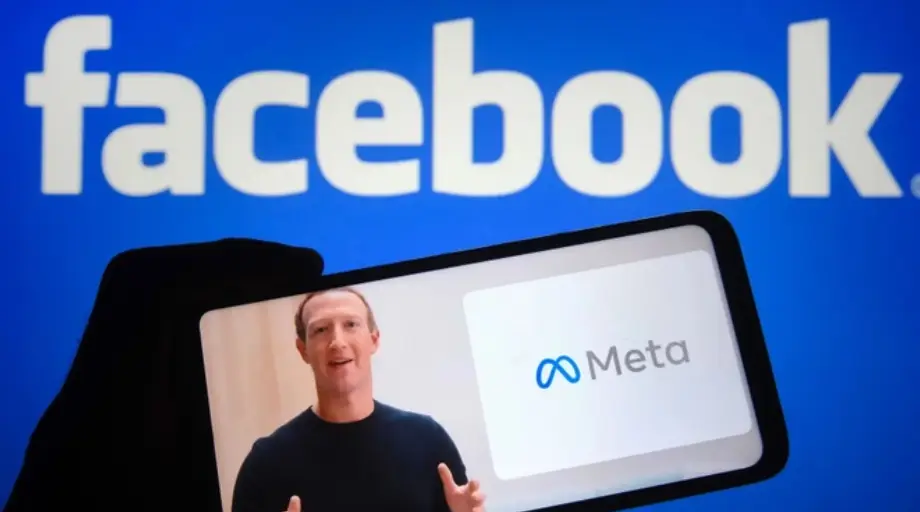
7. Corporate Governance Reforms and the Oversight Board
By the end of the 2010s, Facebook’s internal mechanisms for accountability were widely seen as inadequate. The Cambridge Analytica scandal, Russian election interference, and global disinformation campaigns exposed the platform’s structural inability to self-regulate.
Public trust had plummeted. Regulators were circling. Employees were voicing frustration internally, and investors were proposing governance reforms.
Faced with intensifying scrutiny and the limitations of traditional corporate boards, Facebook (now Meta) launched an unprecedented initiative: the Oversight Board. Often dubbed a “Supreme Court for Facebook,” the Oversight Board was presented as a novel governance mechanism, blending corporate policy enforcement with elements of constitutional and judicial design.
7.1 The Origins of the Oversight Board
Announced in 2018 and officially launched in late 2020, the Oversight Board was conceived as a response to Facebook’s growing struggle with high-stakes content decisions:
- Should a head of state be allowed to spread disinformation?
- Should hate speech in a local dialect be removed, even if it has political implications?
- When users appeal a post removal, who should decide?
Meta sought to externalize and formalize this decision-making process, creating an independent body tasked with reviewing the platform’s most controversial content moderation cases.
It was a strategic and symbolic governance reform:
- Strategic, because it offloaded reputational
- Symbolic, because it signaled the company’s willingness to share
7.2 Structural Design and Funding
The Oversight Board’s independence was central to its credibility. To establish it as a genuinely autonomous entity, Meta made several key structural commitments:
- An irrevocable $130 million trust fund to finance the board for several years, ensuring independence from annual budget pressures.
- A separate legal incorporation: the Oversight Board LLC, distinct from Meta Platforms,
- No Meta employee can serve as a board
- Board members are appointed by the board itself, after initial appointments by
The board currently has 22 members (as of 2025), representing former judges, human rights experts, academics, and journalists from around the world.
7.3 Jurisdiction and Powers
The board has two primary responsibilities:
- Case Review and Rulings
- Users or Meta can refer cases involving content that was removed or left
- The board issues binding decisions—Meta must follow them unless doing so would violate
- Policy Recommendations
- The board can offer guidance on Meta’s content policies (e.g., hate speech, misinformation).
- These are non-binding, though Meta is required to respond
Importantly, the board does not have jurisdiction over all platform decisions:
- It cannot rule on ad targeting, algorithmic distribution, or shadow
- It cannot mandate systemic changes to engagement
7.4 Key Cases and Precedents
Since its first case in 2021, the Oversight Board has issued dozens of decisions. Several stand out:
7.4.1 Trump Suspension Case
In January 2021, after the Capitol riots, Facebook indefinitely suspended Donald Trump’s account.
- The board upheld the suspension but criticized the vague timeline.
- It forced Meta to define a clear penalty framework for high-profile accounts.
- This led to Meta’s two-year suspension and review clause for
Impact: This case validated the board’s authority and compelled Meta to develop more transparent escalation protocols.
7.5 Operational Transparency and Accountability
The Oversight Board has emphasized transparency:
- Every decision is published with detailed legal and human rights
- Meta must respond publicly to each policy
- The board publishes annual impact reports, disclosing compliance rates and procedural
As of 2025:
- Meta has implemented approximately 70% of the board’s recommendations.
- High-profile decisions receive media attention, forcing the company to justify deviations or
7.6 Internal Resistance and Cultural Tensions
Despite formal independence, the Oversight Board’s effectiveness depends on Meta’s cooperation. Internal documents and former employees describe:
- Occasional delays in handing over case files.
- Tensions when board rulings intersect with commercial
- A tendency within Meta to treat the board as an external consultant, not a co-
For example, in the Trump case, Meta insiders admitted they were reluctant to surrender narrative control to the board but felt political pressure made it necessary.
7.7 Criticisms and Limitations
Critics from civil society and academia have raised valid concerns:
- Narrow Jurisdiction: The board can only rule on content decisions—not on the algorithms that surface
that content in the first place.
- Volume and Scope: The board can only hear a few dozen cases Facebook makes millions of moderation decisions daily.
- Non-Binding Policy Advice: The most systemic reforms—about engagement incentives, transparency of shadow bans, or political ad disclosures—remain voluntary.
- Power Asymmetry: Mark Zuckerberg remains board chair and The Oversight Board cannot overrule corporate priorities or change structural incentives.
7.8 Oversight Beyond the Board: Other Reforms
The Oversight Board was accompanied by other governance reforms:
- The creation of a Privacy Committee at the board level, per the 2019 FTC
- Appointment of a Chief Compliance Officer reporting to the Audit
- The launch of Meta’s Transparency Center, an online portal disclosing enforcement actions, rule changes, and performance metrics.
Yet many of these remain internal-facing. Their success depends on Meta’s willingness to accept external accountability, which remains partial and evolving.
7.9 Evolving in the Metaverse Era
As Meta pivots toward the metaverse—immersive virtual environments, real-time interaction, digital avatars— the Oversight Board faces new challenges:
- 3D content moderation is technically and ethically
- Abuse in VR spaces (e.g., harassment, child safety) requires new
- Jurisdictional limits may constrain the board’s ability to intervene in metaverse
Meta has hinted at expanding the board’s role to cover immersive content, but as of 2025, it remains focused on Facebook and Instagram posts.
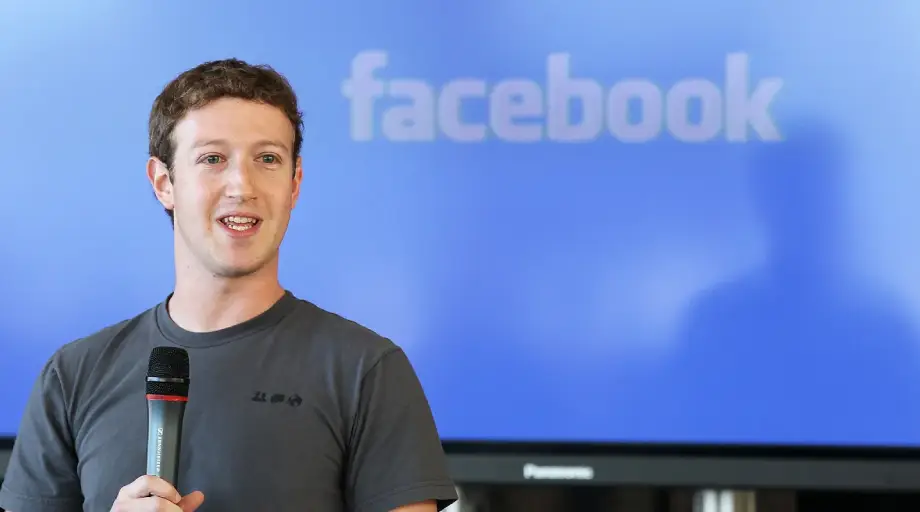
8. Comparative Analysis with Other Tech Firms
To truly understand Meta’s governance, it is instructive to step back and compare its structures, practices, and cultural dynamics to those of other leading technology companies. While every Big Tech platform is unique, the contrasts and similarities in their governance models reveal much about how power, accountability, and ethics are negotiated across the industry.
8.1 Alphabet (Google)
Alphabet is arguably the only other platform of comparable scale and influence. Like Meta, Google has faced sustained criticism over privacy, antitrust, and disinformation.
8.1.1 Corporate Structure and Dual-Class Shares
- Alphabet uses a dual-class share structure similar to Meta’s.
- Founders Larry Page and Sergey Brin, and former CEO Eric Schmidt, retained majority voting power through Class B shares.
- This structure insulated leadership from shareholder pressure, echoing Mark Zuckerberg’s
- Unlike Meta, however, Alphabet transitioned to a holding company model in 2015, which compartmentalized risk across different units.
- For example, YouTube operates semi-independently within
8.1.2 Governance and Culture
- Alphabet’s board has often deferred to leadership, but it has established a more mature Audit and Compliance Committee
- In 2019, after employee protests over Project Maven (military AI contracts) and Project Dragonfly (censored search in China), Google implemented AI Ethics Guidelines—a level of formalization that Meta has largely avoided.
- Google’s approach to content moderation has remained more opaque than Meta’s:
- YouTube’s policies are criticized for inconsistent
- Internal documents (the “YouTube Papers”) revealed a similar pattern of engagement-first
Comparison: Meta and Alphabet share:
- A dual-class voting system entrenching founder
- A reliance on algorithmic amplification without transparent
- A track record of reactive policy adjustments rather than proactive
8.2 Twitter (Pre- and Post-Musk)
While Twitter is smaller in scale, it provides a vivid counterpoint in governance volatility.
8.2.1 Pre-Musk Era
- Twitter operated as a public company with a conventional one-share-one-vote structure, lacking a founder with entrenched control.
- This made Twitter more vulnerable to activist
- Its Trust and Safety teams built some of the earliest transparency tools (the Twitter Transparency Report).
- The company invested heavily in election integrity, particularly after
8.2.2 Post-Musk Takeover
- In October 2022, Elon Musk acquired Twitter and took it
- The transition produced dramatic governance changes:
- Dissolution of the
- Firing of thousands of employees, including Trust and Safety
- Suspension of journalists and reinstatement of banned
- Musk’s unilateral decision-making mirrored a hyper-centralized governance model, but without even the pretense of independent oversight.
Comparison: While Meta retains formal structures like the Oversight Board and independent committees, Musk’s Twitter demonstrates what happens when a platform’s governance becomes entirely personality-driven. For all its flaws, Meta’s governance has not embraced this degree of chaos.
8.3 Apple
Apple offers an instructive contrast in corporate governance and privacy philosophy.
8.3.1 Board Structure and Accountability
- Apple has a one-share-one-vote structure without a controlling
- Tim Cook, while highly influential, does not hold super-voting
- Apple’s board includes:
- Independent directors with expertise in operations, finance, and civil
- A strong Audit Committee and a dedicated Privacy Oversight
8.3.2 Privacy as a Strategic Differentiator
- Apple has invested heavily in building a privacy brand:
- App Tracking Transparency (ATT) was a major policy shift, restricting user data collection across apps.
- Differential privacy techniques protect user information even during
- These moves antagonized Meta and Google but won public
8.3.3 Content Moderation and Speech
- Unlike Meta, Apple does not operate large-scale social
- Content governance is mostly limited to the App Store, where Apple enforces rigorous
- This creates less exposure to disinformation but more criticism over
Comparison:Apple illustrates that:
- Strong privacy governance can become a market
- A single-class share structure can promote board
- A clear, consistent philosophy (privacy as a right) can drive cultural
Meta has lacked this clarity and has wavered between user trust and advertiser demands.
8.4 Microsoft
- Governance Reforms Under Nadella:The board invested heavily in:
- Ethics and compliance
- Diversity, equity, and inclusion
- Cross-company transparency
- Privacy and AI Ethics: Microsoft adopted the Responsible AI Standard, which governs:
- Fairness and non-
- Privacy and
- The company built an internal Office of Responsible AI with authority to intervene in product
- This approach reflects a willingness to sacrifice short-term revenue for long-term trust—something Meta has struggled to emulate.
8.4.3 Antitrust Legacy
- Having survived the 1990s DOJ antitrust suit, Microsoft remains highly cautious of regulatory
- This experience gave the company a more mature posture toward
Comparison:Microsoft shows that:
- Cultural transformation is possible in a tech
- Governance reform can coexist with strong financial
- Ethics infrastructure, when empowered, can shape product
For Meta, the lesson is clear: change is achievable, but it requires more than incremental policy updates—it demands cultural reinvention.
8.5 Amazon
Amazon’s governance provides another point of reference, particularly regarding centralized founder control.
8.5.1 Founder Authority
- Jeff Bezos held substantial influence until stepping down as
- Amazon’s board has historically deferred to operational leadership, similar to Meta’s
8.5.2 Privacy and Data
- Amazon has faced significant criticism over:
- Alexa voice data
- Surveillance practices with Ring
- The company has avoided high-profile disinformation scandals, largely because it does not run major social platforms.
Comparison:Amazon demonstrates that:
- Centralized control does not necessarily produce the same civic harms—but where incentives clash with privacy, governance gaps appear.
- Meta’s combination of social reach and founder control creates a unique risk
8.6 Thematic Patterns Across Firms
A comparative synthesis highlights key themes:
- Founder Control Board Independence
- Meta, Alphabet, and Amazon have retained founder
- Apple and Microsoft demonstrate more distributed
- Ethics and Compliance Infrastructure
- Microsoft and Apple have institutionalized ethics as a strategic
- Meta and Alphabet have taken more reactive
- Transparency and Oversight
- Meta’s Oversight Board is unique but
- Twitter’s trajectory underscores the dangers of unregulated private
- Strategic Clarity
- Apple’s privacy-first strategy provides a clear North
- Meta has oscillated between growth and trust, eroding
Meta stands alone in scale, ambition, and controversy. Yet its governance challenges are emblematic of a broader industry tension: how to reconcile technological innovation, shareholder value, and ethical responsibility.The experience of its peers shows that alternative models are possible—models that distribute power more evenly, institutionalize ethics, and align incentives with public good. Whether Meta can evolve toward this model, or whether it will remain bound by the gravitational pull of growth-first culture, is the central governance question of its next decade.

9.Future Outlook and Recommendations
Balancing Innovation and Ethical Responsibility: Facebook’s (Meta) Corporate Governance in the Age of Misinformation
As we conclude this case study, the tension at the heart of Meta’s story becomes unmistakably clear: the very architecture that enabled Facebook’s rapid rise—agile engineering, centralized leadership, and relentless growth targeting—is now a major liability in a world where social platforms are civic infrastructure.From algorithmic amplification of falsehoods to the exploitation of user data, Meta has repeatedly found itself navigating controversies that raise fundamental questions about corporate ethics, social responsibility, and governance adequacy. Despite reforms like the Oversight Board, privacy settlements, and global transparency initiatives, the underlying issue remains unresolved: Can a company built on maximizing engagement genuinely serve democratic society?The future of Meta—and the tech industry more broadly—will hinge on the willingness to acknowledge this paradox and realign its values, architecture, and operations to meet the demands of a changing world.
9.1 The Evolving Regulatory Landscape
9.1.1 A More Assertive Global Governance Model
Across the world, governments are no longer willing to passively observe. From the EU’s Digital Services Act (DSA) and Digital Markets Act (DMA) to the Indian Personal Data Protection Bill and Brazil’s LGPD, a regulatory wave is forming. These laws converge on several expectations:
- Platforms must reduce systemic risks related to misinformation and
- Users must have greater transparency and control over their
- Governments and citizens demand accountability for algorithmic
For Meta, this marks the end of an era in which voluntary self-governance was sufficient. The compliance era of platform governance is here—and it is likely to grow more demanding, not less.
9.1.2 Challenges of Harmonization and Jurisdiction
However, a global platform cannot rely on a fragmented patchwork of national laws. With over 3 billion users, Meta faces the unique challenge of jurisdictional inconsistency:
- Laws in Europe require content takedowns within 24
- In the S., First Amendment protections limit government regulation of speech.
- In authoritarian regimes, “disinformation laws” are weaponized to silence
Meta must now build systems flexible enough to meet diverse legal regimes while also navigating normative trade-offs—between protecting speech and preventing harm.
9.2 Innovation Under Scrutiny
9.2.1 AI, the Metaverse, and New Frontiers of Risk
As Meta moves beyond the social feed into augmented reality, virtual spaces, and generative AI, the stakes are even higher.The metaverse promises rich, immersive interaction—but also introduces new vectors of harassment, manipulation, and surveillance:
- How will hate speech manifest in 3D environments?
- Can real-time interactions be moderated ethically and effectively?
- What are the consent boundaries in virtual identity use?
Meanwhile, Meta’s rollout of AI tools for creators and advertisers introduces algorithmic risks with little precedent. Deepfakes, synthetic text, and manipulative targeting all raise governance questions that current frameworks—like the Oversight Board—are not equipped to handle.
9.2.2 Ethical Tech as Strategic Imperative
The next generation of platforms will not be judged solely by revenue or innovation speed, but by how they incorporate responsibility into design.For Meta to lead, it must embed ethical review into every development cycle:
- Bias audits for
- Impact forecasting for product
- Diverse, empowered teams to challenge
9.3 Reimagining Corporate Governance
9.3.1 Moving Beyond Founder-Centric Control
Mark Zuckerberg’s enduring control—via dual-class shares and chair/CEO roles—remains a structural governance obstacle. While not unique to Meta, it has exacerbated the company’s inability to absorb external critique and act preemptively.For long-term credibility, Meta must consider:
- Appointing an independent board chair.
- Phasing out the dual-class voting
- Empowering committees with real oversight authority (e.g., an Algorithm Ethics Committee with binding power).
These changes would not only improve internal decision-making—they would also signal to stakeholders that Meta is ready for true institutional maturity.
9.3.2 Strengthening the Oversight Board
The Oversight Board remains a bold experiment, but its influence must expand:
- Give the Board jurisdiction over algorithmic transparency, not just post-level
- Increase case throughput with hybrid models (human-AI triage).
- Make more policy recommendations binding under predefined
The Board should also play a role in metaverse governance, shaping community standards in immersive spaces.
1.4 Cultural Transformation: From Growth to Responsibility
9.4.1 Metrics Matter
Culture is what people do when no one is watching—and culture in tech is shaped by metrics.
As long as Facebook engineers are rewarded for engagement spikes and time-on-site, safety and ethics will remain secondary. Meta must build new KPIs into its culture:
- Trust scores by
- Reduction in misinformation
- User safety impact by
These metrics should affect performance evaluations, bonuses, and promotion pathways.
9.4.2 Listening to Internal Dissent
Many of the company’s best warnings came from employees—data scientists, moderators, and policy analysts raising flags that were ignored or sidelined. Meta must create safe, celebrated channels for internal dissent:
- Whistleblower protections beyond legal
- Anonymous issue
- Cross-functional Ethics Boards with decision-making
1.5 Recommendations
Drawing from the analysis throughout this case study, the following recommendations are proposed to help Meta better balance innovation and ethical responsibility:
1. Restructure Executive Power
- Separate the roles of Chair and
- Introduce term limits or performance evaluations for executive
2. Make Algorithms Accountable
- Open selected algorithmic models to audit by independent
- Allow users to opt out of algorithmic ranking
3. Mandate Transparent Moderation
- Standardize content moderation procedures across
- Publish anonymized data on moderation appeals and
4. Invest in Global Linguistic and Cultural Capacity
- Expand local-language content teams in non-Western
- Empower regional offices with more autonomy to address local
5. Design for Informed Consent
- Rebuild data permissions from the ground
- Make consent specific, granular, and easy to
6. Expand the Oversight Board’s Mandate
- Cover metaverse governance and advertising
- Increase the pace and scale of case
7. Ethics by Design
- Integrate ethical review into every development
- Include human rights impact assessments in product
9.6 The Future of Corporate Responsibility in Tech
Meta’s next chapter will not be defined by the sophistication of its algorithms or the scale of its VR headset shipments. It will be defined by whether the company can grow up—govern itself wisely, act with humility, and accept limits on power.The public no longer sees tech platforms as neutral tools. They are governance institutions—quasi-public systems that shape speech, markets, and behavior. The expectations of the 2020s are clear:
- Protect users, not just
- Elevate truth, not just
- Democratize power, not just
If Meta fails to meet these expectations, it risks not only fines or user loss—but irrelevance in a new era where trust is the only durable currency.
1.7 Conclusion: Governance as Destiny
Meta’s history offers no easy answers. Its success was forged in a startup culture that prioritized speed, engineering, and relentless user growth. But its failures—Cambridge Analytica, Myanmar, COVID-19 misinformation—are the result of governance structures that lagged behind power.
And yet, the opportunity remains. Meta has the resources, reach, and ambition to pioneer a new governance paradigm—one that matches technological power with ethical responsibility. But this will only happen if the company chooses transformation over legacy, and accountability over control.
Corporate governance is not a legal formality. It is a choice. A culture. A system of values encoded into policy and practice.